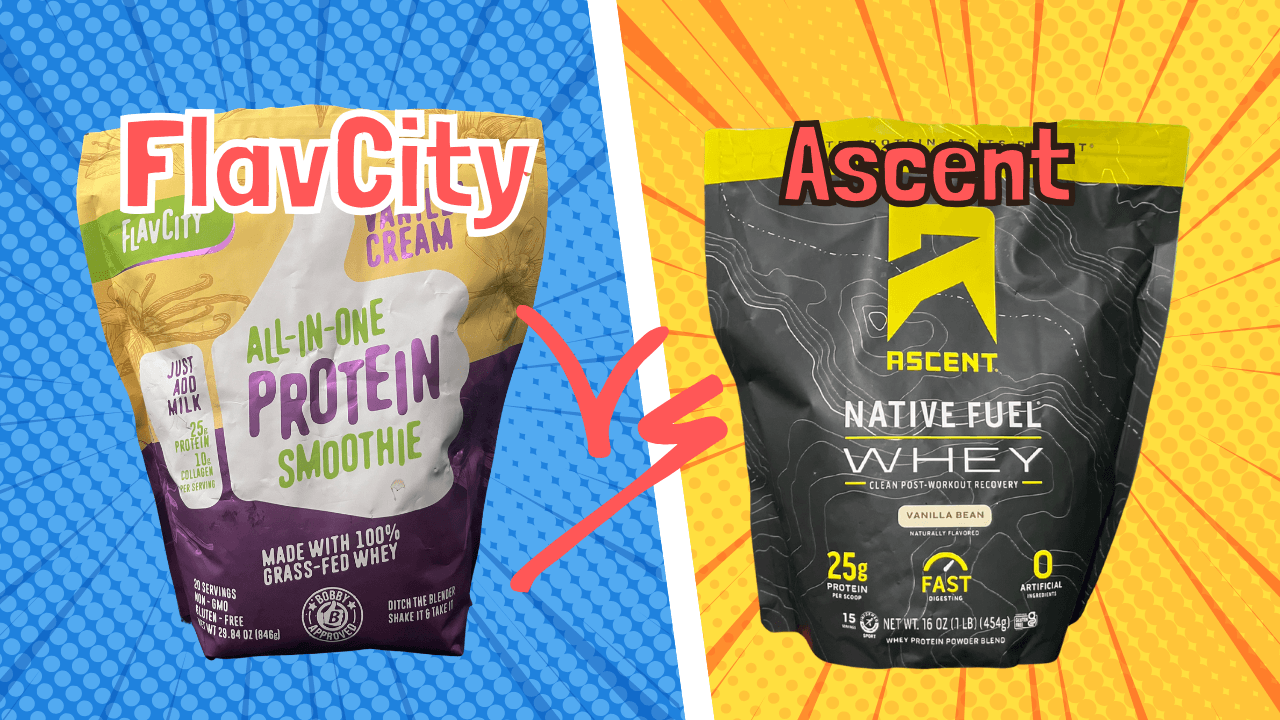
FlavCity vs Ascent
These two are compared because they both sell a “clean” protein story to people who want something better than neon-tub junk. In the supplement aisle, they look like normal adults. They go very different ways under the label.
This comparison answers the most important question for buyers: are you getting a better post-workout protein, or just a prettier story with a shaker bottle attached? My fullFlavCity review andAscent review remain the source of each product’s final verdict and score. This article is the side-by-side court version, not a re-score
FlavCity vs Ascent TL;DR
Quick Answer — Which Is Better: Flav City or Ascent?
Ascent is the winner. It is the better protein for performance because it has more leucine, a higher protein density, fewer carbs, a lower price per serving, and an official Informed Sport certification. FlavCity is the better-tasting lifestyle shake, but it costs more and doesn’t answer enough important questions. One is made more like a protein for recovery. The other one looks more like a health smoothie and has a protein name tag on it.
How I Approach This FlavCity vs Ascent Comparison
I gave each product a grade based on how well it did on its own. I am putting them side by side and not giving either one a new score. As an NSCA-CSCS and CISSN reviewer, I care less about brand-name perfumes and more about factors like muscle protein synthesis relevance, amino acid transparency, protein density, third-party verification, ingredient function, mixability, and whether the price includes receipts.
I don’t vote for any brand in my conclusion. I buy, test, read, email, and then write. I also talk about these things on YouTube, but the same rule applies: if the label gets cute, I get less polite. Some of the links may be affiliate links that help the site without costing you anything extra, but they don’t buy anyone a softer landing.
Table of contents
- FlavCity vs Ascent
- FlavCity vs Ascent TL;DR
- How I Approach This FlavCity vs Ascent Comparison
- Protein Transparency & Amino Integrity
- Does Either Brand Show Signs of Amino Spiking?
- Third-Party Testing — Who’s Actually Verified?
- Sourcing Transparency & Label Honesty
- Ingredients & Sweeteners — Clean or Just Clean Looking?
- Heavy Metals & Prop 65 Concerns
- Taste & Mixability — Which One Drinks Better?
- Nutrition Facts & Protein Density Comparison
- Price per Serving — Which Is the Better Value?
- Who Each Brand Is Best For
- FlavCity vs Ascent — Which Fits Your Priorities Better?
- FlavCity vs Ascent — FAQ
Protein Transparency & Amino Integrity
This is where the split gets obvious.
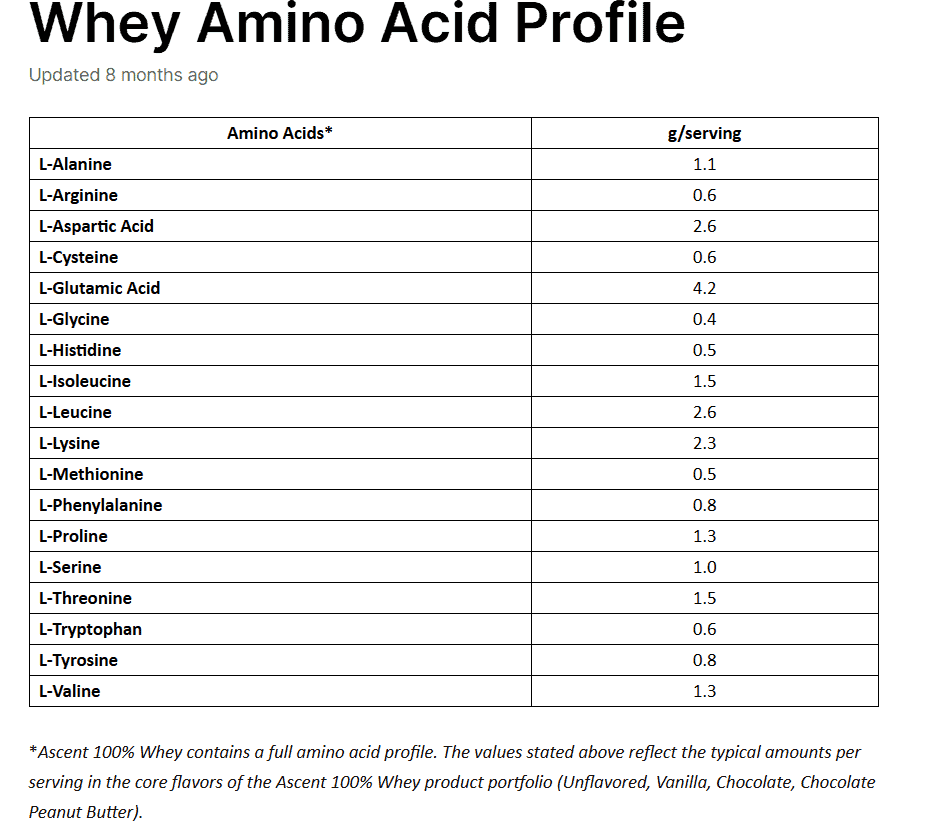
Ascent has 2.6g of leucine and 5.5g of total BCA. The comparison table shows the amount per serving, which makes it much easier to see how useful it is after a workout. FlavCity says it has 25g of protein, but 10g of that comes from collagen, and the brand doesn’t say how much leucine or total BCAAs it has. That matters because collagen doesn’t promote muscle growth in the same way whey does.
FlavCity’s problem isn’t the usual label trickery. It is the fog of measurement. I can see how the formula is put together, but I can’t confirm the whey-driven amino payoff with the level of accuracy that serious buyers should expect at this price. Ascent has its own problems, but it still helps you better understand how proteins work.
Verdict: Ascent is easier to measure.
Does Either Brand Show Signs of Amino Spiking?
Neither one reads like a traditional amino-spiked fraud job.
The main difference is that FlavCity tells you about the collagen up front. It doesn’t hide cheap aminos in a mystery matrix. The worry is that collagen makes the headline protein number look higher, but the whey-only muscle-building value remains unclear without an amino panel.
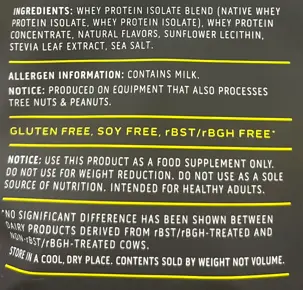
Ascent is not the same. I didn’t call it amino spiked, but the quiet addition of soy under “natural flavors” is a different problem. That’s not so much about classic spiking as it is about thinning out the formula and making things less clear. That update is important if you bought it thinking it was a clean dairy-only whey.
Amino Spiking Verdict: FlavCity makes things unclear by not saying how much amino acid is in their products. A hidden change to the formula at Ascent raises concerns.
Third-Party Testing — Who’s Actually Verified?
Informed Sport is the only real certification trail that matters in public view for Ascent. That doesn’t answer every question about purity or replace a full COA trail, but it is still a real verification marker.
FlavCity says third-party testing of ingredients is done and that they say the right things online, but in my review, there were no batch-matched COAs or finished-product records for buyers to check. “We test” is just a bedtime story at that point, unless the paperwork comes in.
Third-party verdict: Ascent has the stronger proof layer, despite both brands having transparency gaps.
Sourcing Transparency & Label Honesty
FlavCity strongly supports grass-fed beef, but there isn’t much that a buyer can check for themselves. No certification name, no supplier anchor, no country-of-origin information, and no way to check the dairy program. It is a story about getting things with the receipts blacked out.
Ascent is not a grass-fed product, but it does look like it is made from milk from “trusted farmers” and seems to be mostly from the U.S. The problem is that it still doesn’t give enough information about filtering and sourcing, and customer service was about as helpful as a brick.
Label integrity verdict: In practice, FlavCity markets better than it works. Ascent talks less, but it also explains things less.
Ingredients & Sweeteners — Clean or Just Clean Looking?
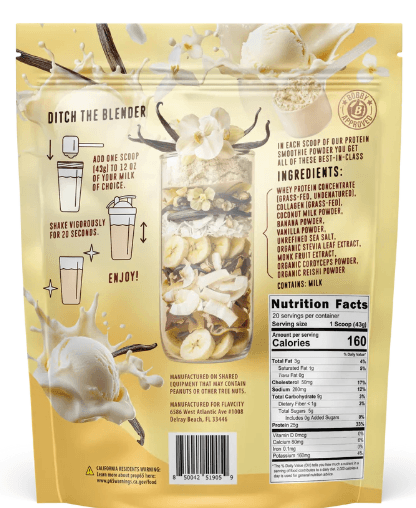
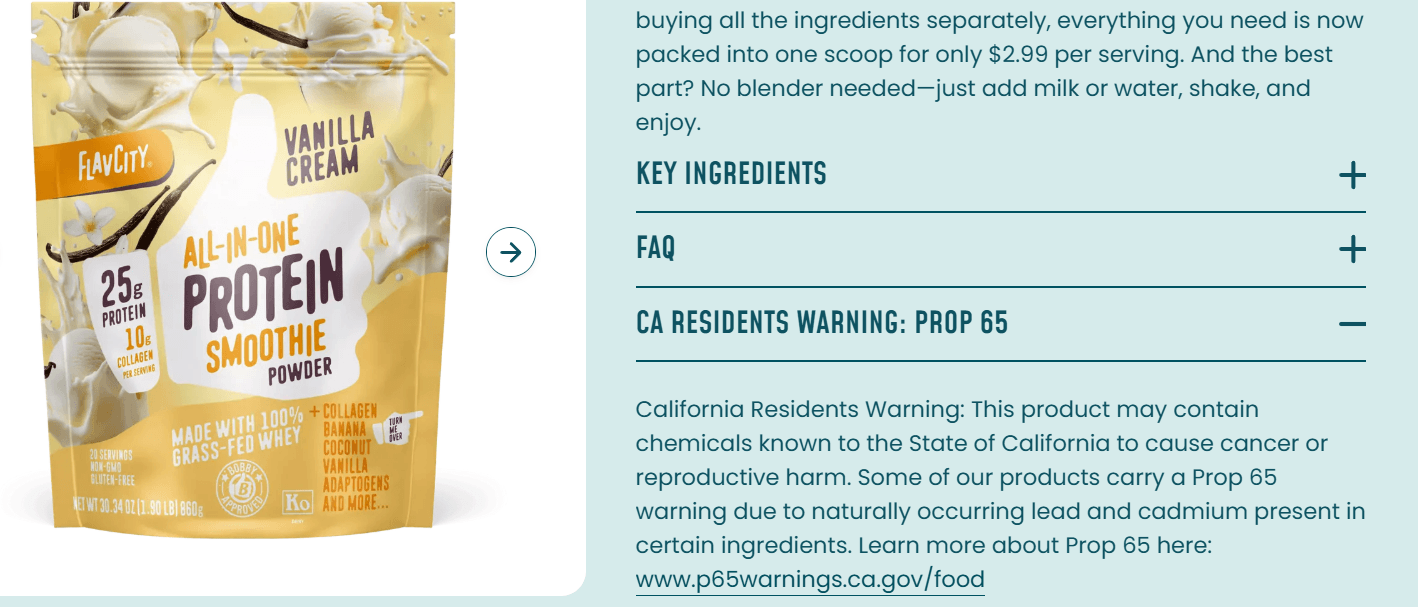
In one way, FlavCity is easier to read, and in another way, it has a more complex formula. The label says: whey concentrate, collagen, coconut milk powder, banana powder, vanilla, mushrooms, monk fruit, and stevia. It was made to taste good, feel good, and make smoothies. It wasn’t made to be good at using protein.
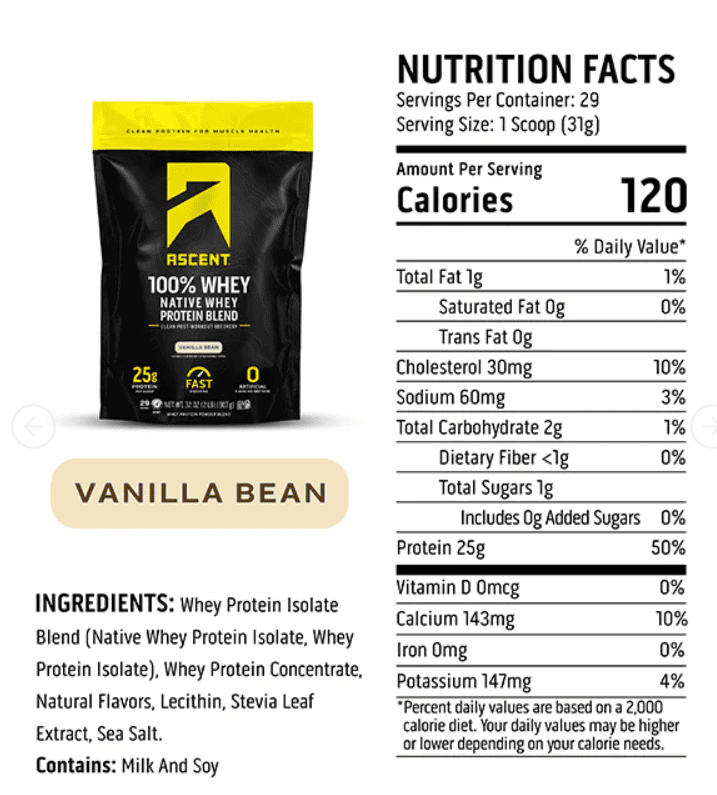
Ascent has a thinner formula that includes native whey, isolate, concentrate, lecithin, stevia, salt, and natural flavors. In writing, it is the easiest performance formula. The problem is that the soy issue is hidden under natural flavors, which takes away from its clean-label halo.
Ingredients verdict: In plain English, FlavCity has the easier-to-read formula. The Ascent formula is more performance-focused. FlavCity is more focused on the experience.
Heavy Metals & Prop 65 Concerns
FlavCity has the bigger problem here. There was no Prop 65 warning on my bag, but the brand has used online California disclosure language, and there is proof that Prop 65 is being enforced for some products. If buyers don’t have batch-level heavy metal data, they are left with a fog machine.
Ascent also doesn’t make heavy metal results public, but the concerns for heavy metal toxicology are lower. Its problem is that it doesn’t have clear purity, not that it has an enforcement cloud.
Toxicology verdict: Neither brand provides buyers with extensive documentation on heavy metals, but FlavCity has more documented issues.
Taste & Mixability — Which One Drinks Better?
FlavCity wins when it comes to drinking. For a smoothie-style formula, it mixes surprisingly well, and the flavor is easy to use every day, even though “Vanilla Cream” is really banana and coconut in a vanilla trench coat.
Ascent is good, but I still found clumps in the shaker wall and a finish that was too stevia-heavy, which can taste like medicine if your taste buds aren’t in the mood. Plus, it’s watery, it’s for the post-workout crowd.
Taste: FlavCity is the best for taste and daily drinking.
Nutrition Facts & Protein Density Comparison
This is when Ascent starts talking less and benching more.
According to the comparison table, FlavCity has 25g of protein in a 43g scoop, but only about 58% of that is protein by weight. If you take out the collagen effect, it’s only 38%. With 25g in a 31g scoop, Ascent has 81% protein by weight. That’s a huge difference in how well protein works.
FlavCity also brings 5g of sugar and 9g of carbs. Ascent has less fat with 2g of carbs and 1g of sugar. If you want more real protein per gram of powder, Ascent is the clear winner. FlavCity’s lower density makes sense for its smoothie-style design, but it is still less effective.
| FlavCity vs Ascent: Nutrition and Price Breakdown | ||||
| Key Differences & Comparison Metrics | FlavCity Vanilla (New Formulation) | %DV | Ascent Vanilla | %DV |
| Leucine | Emailed, No Reply | 2.6g | ||
| Leucine Percent | Emailed, No Reply | 10.4% | ||
| Total BCAAs | Emailed, No Reply | 5.5g | ||
| Protein Density | 58% (Total Protein)38% (No Collagen) | 81% | ||
| Protein per Serving | 25g (16.5g with 10g Collagen) | 33% | 25g | 50% |
| Carbs per Serving | 9g | 3% | 2g | 1% |
| Fiber per Serving | <1g | 3% | <1g | 0% |
| Total Sugars | 5g | — | 1g | — |
| Calories | 160 kcal | 120 kcal | ||
| Serving Size | 43g | 31g | ||
| Number of Servings | 20 | 29 | ||
| *March, 2026 | $59.99 | $45.94 | ||
| Price per Serving | $3.00 | $1.58 | ||
Price per Serving — Which Is the Better Value?
FlavCity costs $3.00 for each serving. Ascent is at $1.58.
That is not a close battle. Ascent has a higher protein density, more leucine, and is most suitable for post-workout recovery, all for almost half the price. FlavCity has the better lifestyle shake, but the value drops when the paperwork stays this thin.
You can see the current prices by clicking on my FlavCity affiliate link (https://amzn.to/4a9XHER) or my Ascent affiliate link (https://amzn.to/3EVZhNo). That helps the site without costing you anything extra.
Price verdict: Ascent wins for protein value, so the buyer comes first. FlavCity is the only place to go if you want smoothies that taste good from the start.
Who Each Brand Is Best For
Flav City Is Best For:
- buyers who want a smoothie-style protein, not a stripped-down recovery shake
- people who care more about flavor and daily drinkability than amino precision
- shoppers who like collagen included upfront rather than hidden
- busy users who want a wellness-style shake experience
Ascent Is Best For:
- lifters who want a more performance-relevant post-workout protein
- buyers who care about leucine disclosure and better protein density
- people who want lower carbs and lower sugar per scoop
- shoppers who want stronger value relative to proof
- athletes who care about the Informed Sport certification
FlavCity vs Ascent — Which Fits Your Priorities Better?
If your priority is muscle-building utility, cleaner performance macros, better protein density, and a lower cost per scoop, Ascent is the better fit. It is not perfect, and the hidden soy issue still annoys me, because it should. But it gives you more measurable protein value.
FlavCity is the better-tasting and more lifestyle-friendly shake, and my full FlavCity review explains that tradeoff in detail. For the stronger recovery-focused buy, I would lean toward Ascent; you can read the full Ascent review before spending money.
FlavCity vs Ascent — FAQ
Ascent is better for building muscle because it has more leucine, a higher protein density, and a more whey-driven post-workout profile.
Ascent has a formula that focuses more on performance, while FlavCity has an ingredient list that is easier to read. Better depends on whether you care more about how good the smoothie tastes or how quickly it helps you recover.
Yes, in general. Ascent still has problems with transparency, especially on the soy issue, but it provides more useful amino data and a real public certification.
FlavCity costs as much as a high-end all-in-one smoothie. The problem is that the proof stack isn’t as important as the price tag.
Based on the reviews, FlavCity tastes better. It also mixes better for daily use, even with some leftovers.
Ascent is the better deal. It costs much less per serving and offers better protein efficiency and verification support.
Neither review leads to an extreme conclusion, but FlavCity has the more substantiated concern because it is more visible under Prop 65 and lacks heavy metal data that buyers can check.

Meet James, a decade-long devotee to transforming fitness journeys, both in-person and online. As a virtual and remote personal trainer, he merges passion with expertise to deliver unparalleled fitness guidance. James isn’t just about workouts; he’s a protein powder aficionado, always on the hunt for the next best blend to enhance your gains.
Holding Bachelor’s Degrees in Exercise Sports Science and Pre-Law, James’s academic foundation is as solid as his fitness regimens. His certifications read like a who’s who of fitness excellence: NSCA (CSCS), Precision Nutrition Level 1, Online Trainer Academy (OTA), C-ISSN, and more. Whether you’re looking to overhaul your fitness routine, find the perfect protein, or navigate the intersection of wellness and law, James is your go-to guide for all things fitness.
Leave a Reply