
FlavCity vs Truvani
People compare these two because they both live in the same high-end whole foods lane. FlavCity and Truvani both sell “no toxins” wellness products with fewer ingredients and from cleaner sources. They target people who want something better than the junk in the supplement aisle. Both brands want premium trust but don’t provide premium-sized verification gaps, and both have Proposition 65 concerns that make the clean-label story less clear.
This comparison shows where each product fits, what the labels say, what they don’t say, and which one makes more sense for you based on whether you want a better shake every day or a simpler protein shake after working out. My full FlavCity review and Truvani review remain the source of each final verdict and overall recommendation. This article is the side-by-side version, not a re-trial.
FlavCity vs Truvani TL;DR
Quick Answer — Which Is Better: FlavCity or Truvani?
FlavCity wins this comparison because it does the one thing that Truvani never quite gets right: it makes a product that people will want to use every day. It tastes better. It mixes better. It may not be the best protein shake to have after a workout, but it knows what it wants to be. Truvani, on the other hand, charges a lot of money for organic minimalism but doesn’t make the drink taste premium.
If you want a shake every day, FlavCity is the better choice. If all you care about is avoiding collagen in a simpler whey concentrate, Truvani makes the cleaner case, but it still leaves too much unproven to be trusted easily.
How I Approach This FlavCity vs Truvani Comparison
The results here are based on my separate reviews. I’m not going to score either product again. I’m comparing them side by side based on things that are important to serious lifters and supplement buyers, like how well they build muscle protein, how transparent the amino acids are, how dense the protein is, how well they work, how easy they are to mix, and how much they cost compared to other products.
I don’t give praise just because a bag says “clean” in a nice font. I’m an NSCA-CSCS and CISSN reviewer. I read the label, see what the brand will say, test the product, and then say what I think. I don’t get paid to promote brands, and yes, I talk about these things on YouTube too. Some links may be affiliate links, which means that the site gets money from them without you having to pay anything extra. That support doesn’t make criticism less harsh.
Table of contents
- FlavCity vs Truvani
- FlavCity vs Truvani TL;DR
- How I Approach This FlavCity vs Truvani Comparison
- Protein Transparency & Amino Integrity
- Does Either Brand Show Signs of Amino Spiking?
- Third-Party Testing — Who’s Actually Verified?
- Sourcing Transparency & Label Honesty
- Ingredients & Sweeteners — Clean or Just Clean Looking?
- Heavy Metals & Prop 65 Concerns
- Taste & Mixability — Which One Drinks Better?
- Nutrition Facts & Protein Density Comparison
- Price per Serving — Which Is the Better Value?
- Who Each Brand Is Best For
- FlavCity vs Truvani — Which Fits Your Priorities Better?
- FlavCity vs Truvani — FAQ
Protein Transparency & Amino Integrity
At this price, neither brand provides the amino transparency I want, which is a problem because both are sold as premium, clean-label proteins.
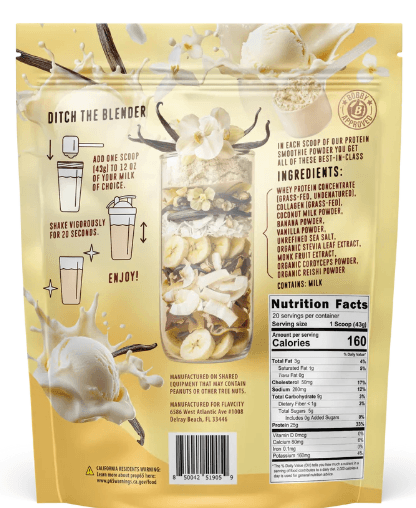
FlavCity does not show the number of amino acids, leucine, or total BCAAs. That matters even more because 10 grams of the protein on the list comes from collagen, which doesn’t build muscle as effectively as whey. To FlavCity’s credit, the label clearly states that it contains collagen. The formula doesn’t hide the trick, though. It’s just asking you to believe the whey part without giving you the numbers to back it up.
Truvani has the same amino acid transparency issue, but it looks different. There is no published amino acid profile. No leucine was revealed. There is no public BCAA number. Yes, it avoids the collagen issue, making the formula cleaner to use after working out. But a cleaner structure doesn’t mean better proof. You are still guessing without amino data.
Neither brand gives me the amino transparency I’d want at this price, which is a problem when both are sold like premium clean-label proteins.
FlavCity does not publish an amino acid profile, leucine number, or total BCAA count. That matters even more because 10 grams of the listed protein comes from collagen, which does not carry the same muscle-building value as whey. To FlavCity’s credit, the collagen is disclosed right on the label. So the formula is not hiding the trick. It is just asking you to trust the whey portion without giving you the numbers to verify it.
Truvani has the same core amino transparency problem, but with a different costume. No published amino acid profile. No disclosed leucine. No public BCAA number. Yes, it avoids the collagen issue, which makes the formula cleaner structurally for post-workout use. But a cleaner structure is not the same as better proof. Without amino data, you are still guessing.
Protein transparency: FlavCity is more open about what is diluting the protein story, while Truvani is more straightforward as a whey formula. Neither gives you the receipts that serious buyers should get.
Does Either Brand Show Signs of Amino Spiking?
FlavCity doesn’t taste like a typical amino-spiked product. The main difference is that the collagen is shown up front. This is more of a blend with limited transparency than a hidden-filler setup. FlavCity doesn’t hide what’s in the tub, which is the problem. The issue is that you still can’t be sure how much leucine or BCAA comes from the whey part.
Truvani raises a different kind of alarm. While I can’t confirm it’s amino spiked, the lack of an amino profile, leucine data, and the constant clean-label positioning without public proof make me more skeptical, not less. When a brand pushes purity this hard but doesn’t give you the one dataset that would answer the question, being careful isn’t an overreaction. It makes sense.
Bottom line: FlavCity makes classic amino spiking less of a worry because it shows the collagen. Truvani is more worrisome because the proof never shows up.
Third-Party Testing — Who’s Actually Verified?
Neither brand is doing very well. FlavCity says that third-party testing is done on ingredients. Still, in my review, there were no batch-matched COAs, no published records of finished products, and no visible certification trail for the protein itself. That makes “we test” a test of trust.
Truvani tells a similar story, but with better packaging. The brand says it checks for contaminants and follows strict rules, but it wouldn’t give a full COA or toxicology report. USDA Organic is a real certification, but it doesn’t mean buyers can check for amino integrity, heavy metals in the lot, or the purity of the finished product.
Bottom line: Truvani has a stronger certification signal on paper, but neither brand provides the testing proof that premium protein should.
Sourcing Transparency & Label Honesty
FlavCity says “grass-fed” loudly and backs it up with facts. No certification with a name. No dairy source. No co-op. No anchor for sourcing. It tells a convincing story, but then it stops right where the proof should start.
At least Truvani has USDA Organic and Non-GMO certification, but I still don’t see the kind of independent sourcing proof I would expect from a high-end brand when it comes to grass-fed language. It also wouldn’t make it clear where the source is in a way that closes the loop. So, even though Truvani gives the buyer a little more to hold on to, the story of the product’s origin is still not finished.
Bottom line: FlavCity pushes the grass-fed story harder. Truvani has more documents, but neither brand is enough.
Ingredients & Sweeteners — Clean or Just Clean Looking?
This is where the brands really break up. The formula for FlavCity is more engineered. Whey protein, collagen, coconut milk powder, banana powder, vanilla powder, mushrooms, monk fruit, and stevia. It was made to taste good, feel good, and be easy to use in smoothies. It sounds like a wellness shake first and a performance protein second.
It’s a lot easier to use Truvani. There isn’t much else in it besides organic whey concentrate, organic vanilla or cocoa (depending on the flavor), monk fruit, and a little bit of other stuff. No stevia. No soy. No gum circus. No confetti cannon with filler. It is the simpler formula, and it is not close.
Bottom line: Truvani is easier. FlavCity is more planned out.

Heavy Metals & Prop 65 Concerns
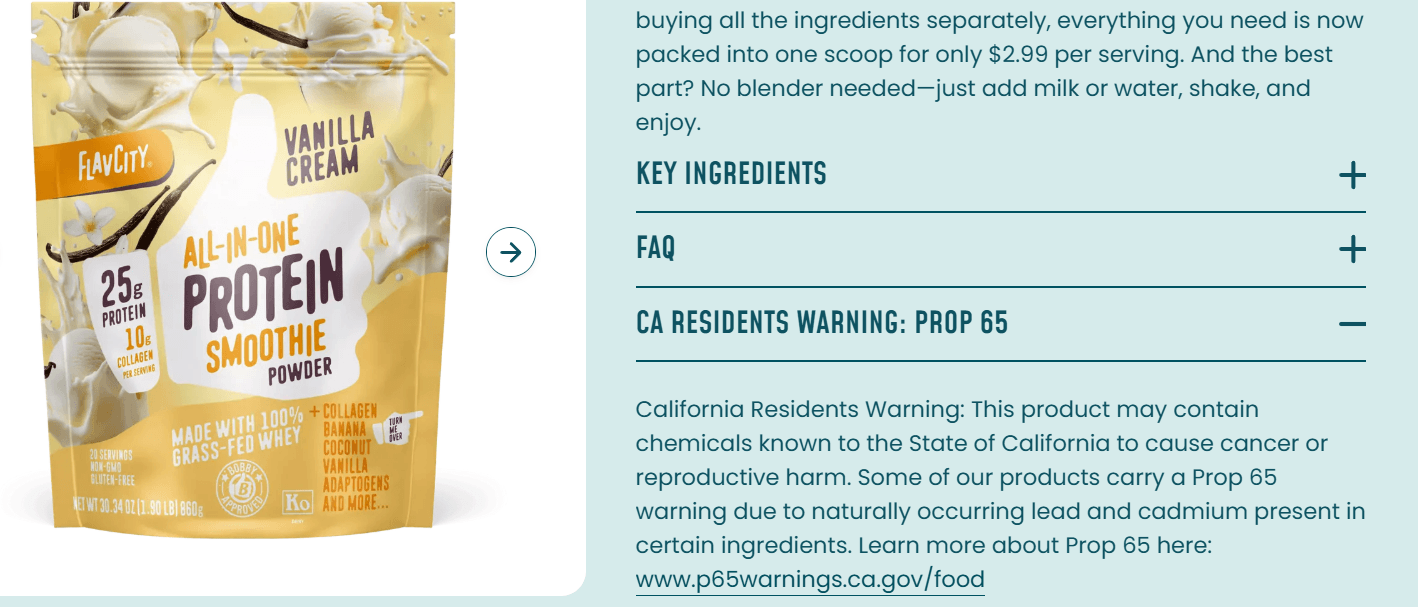
There are problems with both brands here, but they are different types of problems. FlavCity has a documented Prop 65 trail behind it, but still doesn’t provide buyers with batch heavy metal data they can check. The bag I looked at didn’t have the warning, but the online disclosures and enforcement history make it hard to trust.
Truvani goes straight to the point. The bag has a Prop 65 warning on it, and the brand says it has tested, but it still doesn’t make full lot-by-lot toxicology data or complete COAs available. That isn’t much of a victory, but it’s better than pretending the problem doesn’t exist.
Bottom line: neither brand gives buyers a clear view of the heavy metal that a high-end product should. FlavCity seems less clear. Truvani seems more willing to give in.

Taste & Mixability — Which One Drinks Better?
Without much trouble, FlavCity wins this. It tastes better, mixes well, and is easy to drink every day. Vanilla Cream tastes more like banana, coconut, and vanilla than the name suggests, but the flavor is still there. The product’s best features are its smoothie-like body and easy-to-drink flavor.
Truvani also mixes very well, and, in terms of pure texture, it might even beat FlavCity. But the premium story starts to fall apart when it comes to taste. Vanilla works. Chocolate has a bitter taste. The packaging says it will be a treat, but the package tastes cheap.
Bottom line: FlavCity has a better overall drinking experience.
Nutrition Facts & Protein Density Comparison
According to the comparison table below, FlavCity contains 25 grams of protein per 43-gram scoop. This means that 58% of the weight is protein, and if you look at the non-collagen protein reality, it’s closer to 38%. Truvani has 20 grams of protein in 26.75 grams, which is 74.7% of the weight. That is the cleaner profile in terms of pure scoop efficiency.
FlavCity also has more carbs, sugars, calories, and non-protein passengers. Some of that is on purpose because the formula is designed to be a smoothie replacement rather than just plain whey. Okay. But it still means Truvani has more protein per gram of powder.
The problem is that density is only one part of the story. Truvani gives you the leaner scoop, but the lack of leucine and amino acid data leaves a gap for serious buyers who want proof.
| FlavCity Protein vs Truvani: Nutrition and Price Breakdown | ||||
| Key Differences & Comparison Metrics | FlavCity Vanilla (New Formulation) | %DV | Truvani Vanilla | %DV |
| Leucine | Emailed, No Reply | Requested/Proprietary | ||
| Leucine Percent | Emailed, No Reply | Requested/Proprietary | ||
| Total BCAAs | Emailed, No Reply | Requested/Proprietary | ||
| Protein Density | 58% (Total Protein)38% (No Collagen) | 74.7% | ||
| Protein per Serving | 25g (16.5g with 10g Collagen) | 33% | 20g | 40% |
| Carbs per Serving | 9g | 3% | 6g | 2% |
| Fiber per Serving | <1g | 3% | 2g | 7% |
| Total Sugars | 5g | — | <1g | — |
| Calories | 160 kcal | 100 kcal | ||
| Serving Size | 43g | 26.75g | ||
| Number of Servings | 20 | 20 | ||
| *March, 2026 | $59.99 | $59.99 | ||
| Price per Serving | $3.00 | $2.00 | ||
Price per Serving — Which Is the Better Value?
Truvani has a better price per serving on paper. FlavCity costs $3.00 per scoop, while Truvani costs $2.00, which is a big difference between the two brands in the same premium whole-food lane. If you want cleaner macros and a simpler whey concentrate, it’s easier to make the case for Truvani, which has a higher protein density and a simpler formula.
FlavCity makes money differently. It tastes better, mixes better, and feels more complete as an everyday shake, which is important if you want to use the product every day instead of letting it die half-full in the pantry. The problem is that the proof still doesn’t match the high price.
In the end, Truvani is the better deal if you care most about how much protein you get for your money and how much it costs per scoop. FlavCity only makes sense if you are willing to pay more for drinks that taste good every day. If you check either one through my affiliate links, it helps support the site at no extra cost to you: FlavCity herehttps://amzn.to/4a9XHER and Truvani here https://amzn.to/41Fo3db.
Who Each Brand Is Best For
FlavCity Is Best For:
- buyers who want a smoothie-style protein
- people who care more about taste and daily use over protein quality
- shoppers who want a clearly disclosed collagen and protein blend
- convenience-first users who want a wellness shake, not a strict post-workout powder
Truvani Is Best For:
- buyers who want the simpler ingredient list
- people who prioritize USDA Organic and a more minimalist formula
- shoppers who want better protein density per gram of powder
- users mixing protein into oats, smoothies, coffee, or baking
- people who care more about clean-label structure than premium flavor
FlavCity vs Truvani — Which Fits Your Priorities Better?
FlavCity is the better choice if the lane is used every day, shaken, and tasted. That’s why the product exists in the first place. It tastes better, mixes better, and the label is more open in one important way: it tells you the collagen is there, rather than pretending it fell from the sky. It is still expensive, still not very good at checking amino acids, and still not a great choice for after a workout, but for the “healthy shake” buyer, it makes more sense than Truvani. And yes, your final score showed that.
Truvani is the cleaner idea, but not the cleaner buy if the lane is post-workout protein. It doesn’t contain any collagen, which makes it better for recovery. But then it steps on a rake right away by hiding the amino profile, not revealing leucine, and asking the buyer to believe a premium organic story without any proof. So, even though it’s the right kind of formula to use after a workout, it still asks you to take a big leap of faith.
FlavCity vs Truvani — FAQ
Truvani has a slightly higher protein density, but neither is great for people who want to build muscle because neither shows all the important amino acid data.
The list of ingredients in Truvani is cleaner. FlavCity is more complicated and made to make smoothies taste and feel better.
Truvani is a little better because it is USDA Organic-certified, but neither brand provides enough information on amino data and full testing proof.
Overall, FlavCity tastes better and works better as a daily shake. Truvani mixes well, but the taste doesn’t match the high-end vibe.
Truvani is a better deal because it costs less per serving and has more protein per serving. FlavCity charges a lot of money for a formula that is less proof-light.
Yes. In different ways, both raise concerns. FlavCity’s documentation is less clear, and Truvani has a visible Prop 65 warning but doesn’t publish full lot-level proof.
If you want to see leucine levels, public amino profiles, and stronger third-party verification, serious lifters and data-driven buyers should probably skip both.

Meet James, a decade-long devotee to transforming fitness journeys, both in-person and online. As a virtual and remote personal trainer, he merges passion with expertise to deliver unparalleled fitness guidance. James isn’t just about workouts; he’s a protein powder aficionado, always on the hunt for the next best blend to enhance your gains.
Holding Bachelor’s Degrees in Exercise Sports Science and Pre-Law, James’s academic foundation is as solid as his fitness regimens. His certifications read like a who’s who of fitness excellence: NSCA (CSCS), Precision Nutrition Level 1, Online Trainer Academy (OTA), C-ISSN, and more. Whether you’re looking to overhaul your fitness routine, find the perfect protein, or navigate the intersection of wellness and law, James is your go-to guide for all things fitness.
Leave a Reply