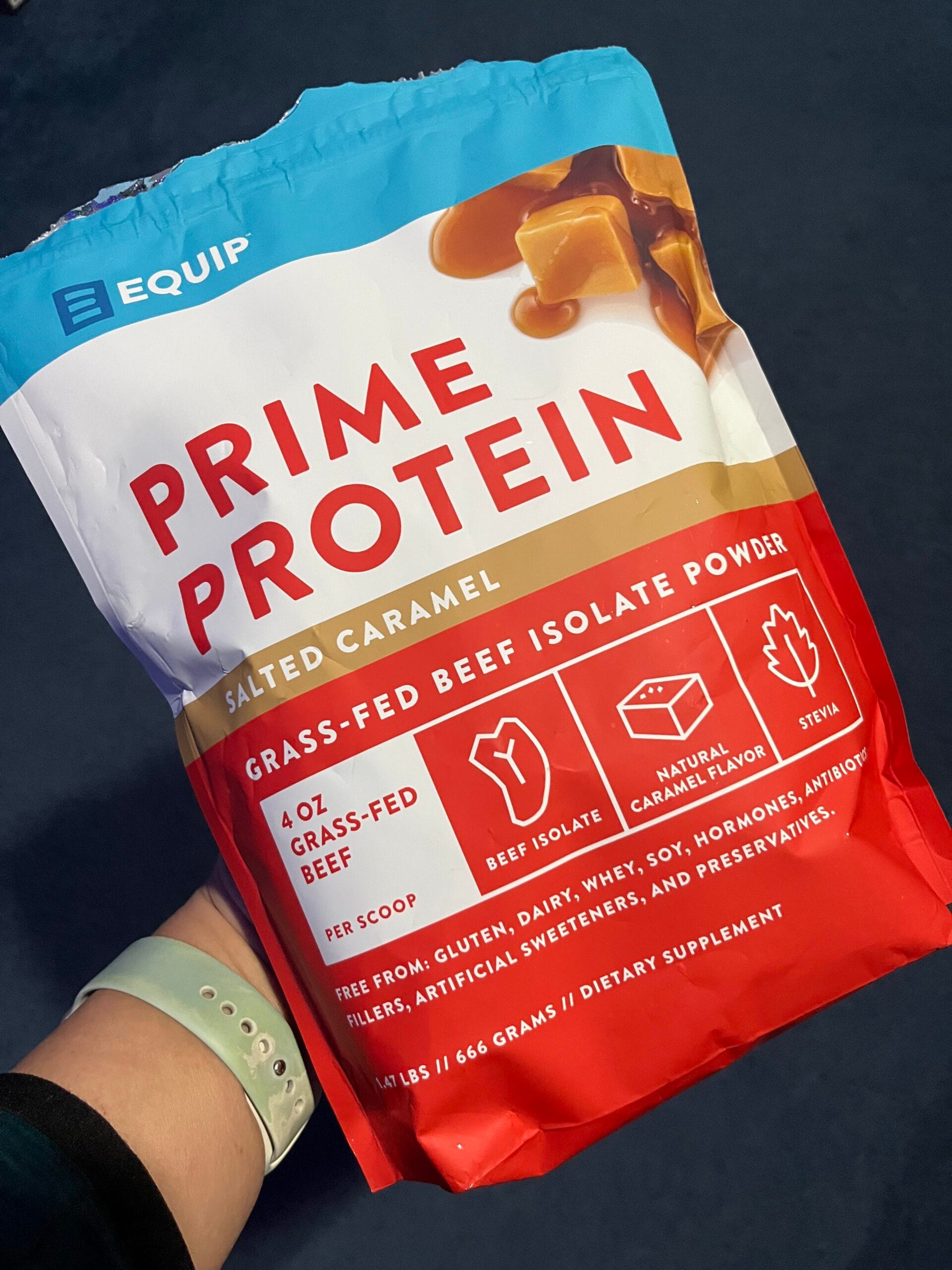
Is Equip Protein Powder Good? A Credibility Analysis Based on Reviewed Products
This article is only about signals of credibility at the brand level. Read my full review of Equip Prime Protein to get the full breakdown of the product, the score, and advice on how to buy it. That review is still the most reliable source for product-specific conclusions. I’m looking at the repeating patterns behind Equip Foods to see how well the brand’s claims, disclosures, and quality signals hold up when you stop admiring the clean label and start asking for receipts.
TL;DR — What I Consistently See Across Reviewed Products
One thing that stands out to me about all the Equip Protein work I’ve done is that the brand does a better job of showing itself as clean than as fully auditable. The label is simple, the formula is simple, and the brand does more testing than most beef protein supplement companies do. But the proof stack still has soft spots where serious buyers usually want a tighter closure.
The second pattern is that Equip Prime Protein doesn’t look like a classic mess of amino acids. The scoop-to-protein math is tight; there is a beef protein amino acid profile, and protein panels tested by a third party are also part of the story. The more important problem is not fake protein inflation. The level of performance context and buyer-proof transparency isn’t as high as the level of marketing polish.
The third pattern is that the credibility of the Equip Brand depends a lot on the standard you use. If you only want a few simple ingredients and some real lab paperwork, Equip looks good. If you want current batch-matched verification, clear sourcing, clear grass-fed proof, and a quick payoff after working out from one serving, the picture gets worse very quickly.
How I’m Approaching the Question of Whether Equip Is Good
As a certified strength and conditioning specialist (NSCA) and sports nutrition professional (CISSN), I always use the same evidence-first framework for all of my brand-level analyses. I’m not adding any new lab work or tests from outside sources here. I’m reviewing the patterns already established in my long-form protein reviews for this brand.
In this article, I don’t want to make a final decision, give a score, or offer buying advice. It’s to see how consistently the brand shares information, backs up its claims, and deals with the trust factors that serious buyers care about. The full standalone protein reviews still have product-specific conclusions, scores, and buying advice.
You can find my full supplement breakdowns and discussions about brands on YouTube if you want to see the same evidence-based approach in action.
There are no affiliate links or ads in this article.
Table of contents
- Is Equip Protein Powder Good? A Credibility Analysis Based on Reviewed Products
- TL;DR — What I Consistently See Across Reviewed Products
- How I’m Approaching the Question of Whether Equip Is Good
- What I’m Looking At in This Analysis
- What the Equip Label Makes Clear, and What It Doesn’t
- Testing, Verification, and What Is Actually Confirmed
- Sourcing and Manufacturing Claims in Context
- Ingredient Disclosure and Formulation Consistency
- Safety, Prop 65, and Disclosure History
- Equip Protein Vs; Brands Readers Commonly Compare to Equip
- What “High Quality” and “Legit” Mean Depends on the Standard
- Is Equip Protein Good?
What I’m Looking At in This Analysis
I’m not going to change into a lab coat halfway through the page or treat this like a new review. I’m looking at what the finished Equip Protein review already said and asking a more specific question: how often does the paperwork keep up with Equip Supplements’ high-end brand talk?
That means I’m paying attention to trust signals that recur. Amino acid disclosure. Leucine clarity. Math for protein. Clear labels. Quality of testing. Getting proof. Safety information. To put it another way, the difference between a product that looks clean on a website and one that stays clean when a buyer starts poking it with a stick.
What the Equip Label Makes Clear, and What It Doesn’t
One of the best signs of transparency from Equip Protein is that the brand doesn’t keep amino data completely secret from buyers. There is an amino acid profile, and each serving has about 0.93 g of leucine. That matters because it gives buyers something real to work with, rather than making them guess how well something works based only on marketing copy.
The math for protein also helps. With 21 grams of protein in a 22.2-gram serving, there isn’t much room for filler-heavy nonsense, which makes the label look more credible at first glance. In that area, Equip Prime Protein looks better than many weaker beef protein powder formulas.
But the story about transparency doesn’t stay that clear throughout. Equip still has a Supplement Facts panel missing the protein %DV, making it harder for customers to compare protein products quickly. “Natural flavors” also hides part of the formula in a black box. So, the pattern I keep seeing is this: Equip gives enough information to ease worries about amino-spiking, but not enough to make the full label feel completely safe for buyers.
Testing, Verification, and What Is Actually Confirmed
To be fair, Equip Foods does have real third-party testing. Ifound that Light Labs had documentation from an ISO/IEC 17025 lab that included panels for protein, heavy metals with numbers, glyphosate not found, bisphenols below 1 ppb, and an amino acid profile published. In a category where many brands would rather just say “clean” into a ring light and hope no one asks any more questions, that is real proof.
It hasn’t been clearly established what the exact connection is between that paperwork and the label version the buyer has now. The Equip Foods keeps saying that the protein verification is older and doesn’t match the current bag exactly, with a difference of about 1 g. That doesn’t make the testing go away. It does make it less likely that the verification is fully up-to-date and neatly batch-matched.
That difference is important. Testing is definitely real. A clean, decision-grade proof chain from the current label to the current verification is not publicly substantiated to the same standard. That gap changes “tested” to “tested, but still needing the buyer’s interpretation,” which is not the same thing.
Sourcing and Manufacturing Claims in Context
This is one of the more gentle parts of the Equip story. The brand relies heavily on grass-fed beef isolate positioning, but the review provides no evidence to support it. There is no certification badge, no named verification program linked to it, and no sourcing documentation was provided after the outreach. That doesn’t mean the claim is false right away. This does mean that the buyer is being asked to think of it more as a marketing term than a set standard.
The same problem comes up when looking for more sources. The Equip Foods doesn’t make it clear where the buyer can find the core ingredient, whether it’s from a domestic or international source, a named supplier, or an origin path. For a high-end beef protein powder, that still leaves a big “trust me” area around the claim, which would be much stronger if it were easier to prove.
Ingredient Disclosure and Formulation Consistency
The ingredient list for Equip Prime Protein is very simple, which is a good thing. Usually, based around three or four ingredients are nice in a category where the back label often reads like a scavenger hunt put together by a group of people. One of the things that makes the brand more trustworthy is its simplicity. It tells a clear story and doesn’t have the “kitchen sink” feel that weaker formulas often have.
But being minimalist doesn’t mean being completely open. “Natural flavors” is still a broad term, meaning some parts of the flavor system are treated as private rather than fully visible. The review also makes it clear that the label looks more minimalist than fully auditable. This is an important difference for buyers who think that short ingredient lists mean complete openness.
The main problem with formulation consistency is not a major reformulation that has been documented. The problem is that the current presentation doesn’t match up with the older protein verification. That kind of gap doesn’t show that the formula changed in a big way. It does stop the buyer from getting the clean version-to-proof alignment that premium positioning usually means.
Safety, Prop 65, and Disclosure History
The safety side of the Equip Protein review is better than the sourcing side. There were numbers for heavy metals. No glyphosate was found. The amount of bisphenols was less than 1 ppb. That’s real proof of contamination, and it’s more than what most beef protein brands put on the table.
The safety story falls short on traceability. The problem isn’t that the review found a huge toxicology nightmare hiding in a cow suit. The problem is that the results aren’t packaged in the best way for the buyer, from lot to label. My research didn’t find a buyer-verifiable disclosure call for Prop 65 either way, so I’m not going beyond that.
The main safety pattern here is simple: there is real testing, but the brand doesn’t always connect the paperwork that is posted with the exact version that is being sold.
Equip Protein Vs; Brands Readers Commonly Compare to Equip
People who ask if Equip Protein Powder is good usually don’t just ask that. They are trying to compare Equip to better-known options based on the things that really matter, like third-party testing, amino acid disclosure, clear sourcing, protein quality, formulation style, and the overall price-to-proof ratio.
I didn’t include the comparison layer in this article on purpose. The purpose of this page is to help readers understand the Equip Brand credibility pattern, not to accidentally turn into a side-by-side roundup. When the dedicated comparison articles come out, that’s where people should go to get clear answers to the more specific head-to-head questions.
- Equip Protein vs Clean Simple Eats
- Equip Protein vs AGN Roots Whey Protein
- Equip Protein vs Transparent Labs
- Equip Protein Powder vs FlavCity
- Equip Protein vs Just Ingredients
- Equip Protein vs Promix
- Equip Protein vs Paleovalley
What “High Quality” and “Legit” Mean Depends on the Standard
Many supplement arguments go wrong because people use the same words to mean different things. When someone hears “high quality,” they think of a short list of ingredients, few additives, and some real testing for contaminants. Another way to say it is that it has current batch-linked verification, strong sourcing proof, clear labeling, and a serving that doesn’t need a math worksheet to build muscle. Both of these standards are real. It’s just that they aren’t the same.
That difference is important with Equip Protein. If your standard starts with simple formulations and real lab panels, Equip looks good. If your standard starts with fully buyer-verifiable grass-fed proof, proof-to-label alignment, and better one-serving performance efficiency, the same proof looks less impressive. That’s why I believe this brand isn’t just a simple yes-or-no case; it’s more like a question of which flaws you’re willing to put up with.
Is Equip Protein Good?
What I’ve written here only shows patterns of credibility at the brand level. This does not replace the full Equip Prime Protein review or any future comparison articles. There should still be separate reviews for each product, where the formula, verification, usability, and value questions are looked at at the product level instead of being combined into one big brand adjective.

Meet James, a decade-long devotee to transforming fitness journeys, both in-person and online. As a virtual and remote personal trainer, he merges passion with expertise to deliver unparalleled fitness guidance. James isn’t just about workouts; he’s a protein powder aficionado, always on the hunt for the next best blend to enhance your gains.
Holding Bachelor’s Degrees in Exercise Sports Science and Pre-Law, James’s academic foundation is as solid as his fitness regimens. His certifications read like a who’s who of fitness excellence: NSCA (CSCS), Precision Nutrition Level 1, Online Trainer Academy (OTA), C-ISSN, and more. Whether you’re looking to overhaul your fitness routine, find the perfect protein, or navigate the intersection of wellness and law, James is your go-to guide for all things fitness.
Leave a Reply