
Table of contents
- PEScience vs Syntha-6 Protein — Which Protein Powder Is Better?
- PEScience vs Syntha-6 Protein TL;DR
- How I Approach This PEScience vs Syntha-6 Protein Comparison
- Protein Transparency & Amino Integrity
- Does Either Brand Show Signs of Amino Spiking?
- Third-Party Testing: Who’s Actually Verified?
- Sourcing Transparency & Label Honesty
- Ingredients & Sweeteners — Clean or Just “Clean Looking”?
- Heavy Metals & Prop 65 Concerns
- Nutrition Facts & Protein Density Comparison
- Price per Serving — Which Is the Better Value?
- Taste & Mixability — Which One Drinks Better?
- Who Each Brand Is Best For
- Final Verdict — Should You Buy PEScience or Syntha-6?
- PEScience vs Syntha-6 Protein: Frequently Asked Questions
PEScience vs Syntha-6 Protein — Which Protein Powder Is Better?
These two products get compared because they sit in a similar price tier and both promise more than a basic scoop of whey. They mix thick, taste indulgent, and market themselves as “premium.” But once you stop reading the front label and start reading the numbers, PEScience and BSN Syntha-6 are not solving the same problem.
This PEScience vs Syntha-6 Protein comparison answers a simple question most labels avoid: which one actually functions as a meal replacement, and which one only flirts with the idea?
If your decision comes down to calories, fullness, protein density, and real-world use, this comparison draws a clear line.
Check out my reviews of both PEScience Select Protein (here) and BSN Syntha 6 (here).
PEScience vs BSN Protein, want to know which protein is best for your goals? Watch this video.
PEScience vs Syntha-6 Protein TL;DR
Quick Answer — Which Is Better: PEScience or Syntha-6?
BSN Syntha-6 is the better and more honest meal replacement. It delivers the calories, fiber, carbs, fats, and slow-digesting proteins required to stand in for food. PEScience is lower-calorie, easier to fit into a muscle-building plan, and easier to drink because it has no fiber. Still, it functions more as a “meal replacement light” than as a real one.
If your goal is fullness and losing weight, Syntha-6 wins. For those wanting less fiber and looking for a light-meal replacement, PEScience should be considered.
Concerned about protein integrity and assurance, neither brand is great.
Support these unbiased reviews by using my Amazon affiliate links if you choose to buy: PEScience Select Protein and BSN Syntha-6 Protein.
How I Approach This PEScience vs Syntha-6 Protein Comparison
I don’t write comparisons to crown favorites. I write them to clarify intent. As a certified strength and conditioning specialist (NSCA) and certified sports nutrition specialist (CISSN), I evaluate proteins the same way lifters actually use them: as tools with specific jobs.
This PEScience vs Syntha-6 Protein comparison is built directly from my full reviews of both products. No brand influence. No borrowed marketing language. Just what the labels show, what the math supports, and how each protein behaves in the real world.
Some links in this article are Amazon affiliate links. If you use them, I may earn a small commission at no extra cost to you. That support keeps these reviews independent and unapologetically critical.
Protein Transparency & Amino Integrity
Neither PEScience nor Syntha-6 publishes a full amino acid profile. That matters because protein claims without amino acid disclosure force buyers to trust the brand rather than verify the product.
PEScience adds leucine peptides but does not disclose the amount. Without that number, you cannot confirm whether the stated protein per serving reflects complete protein chains or nitrogen-boosted math.
Syntha-6 does not publish an amino profile either and has a documented history of glutamine peptides appearing on earlier labels and disappearing from newer ones. The protein matrix changed over time, and the most expensive protein fractions now appear lower on the ingredient list.
Micro conclusion: neither brand offers transparent verification of amino content. PEScience leans on undisclosed leucine fortification. Syntha-6 leans on a blended protein system with shifting disclosure.
Does Either Brand Show Signs of Amino Spiking?
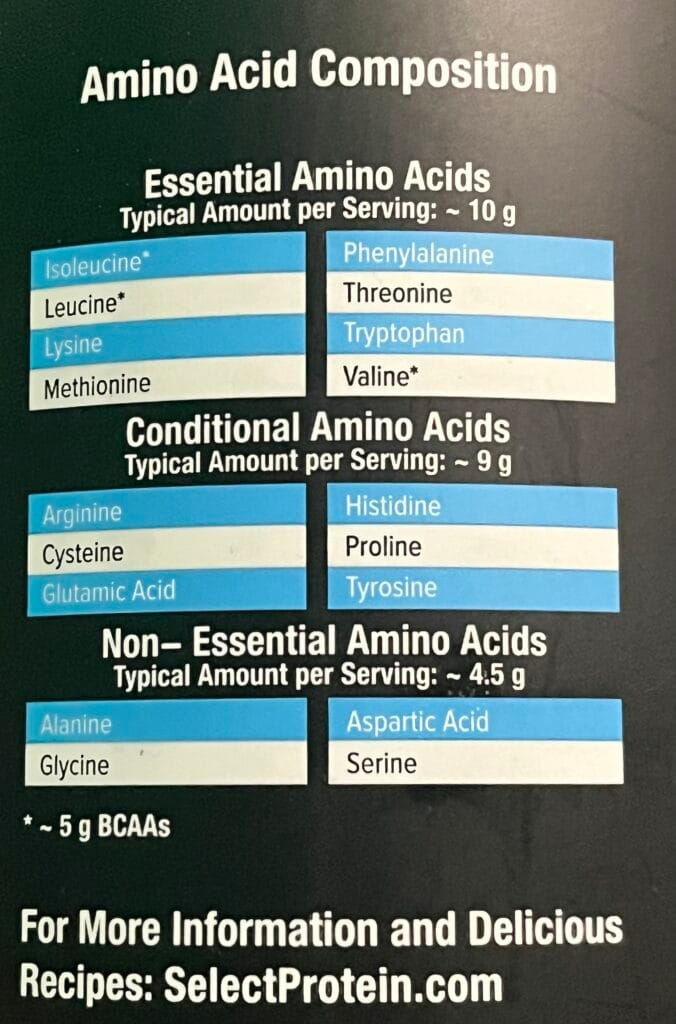
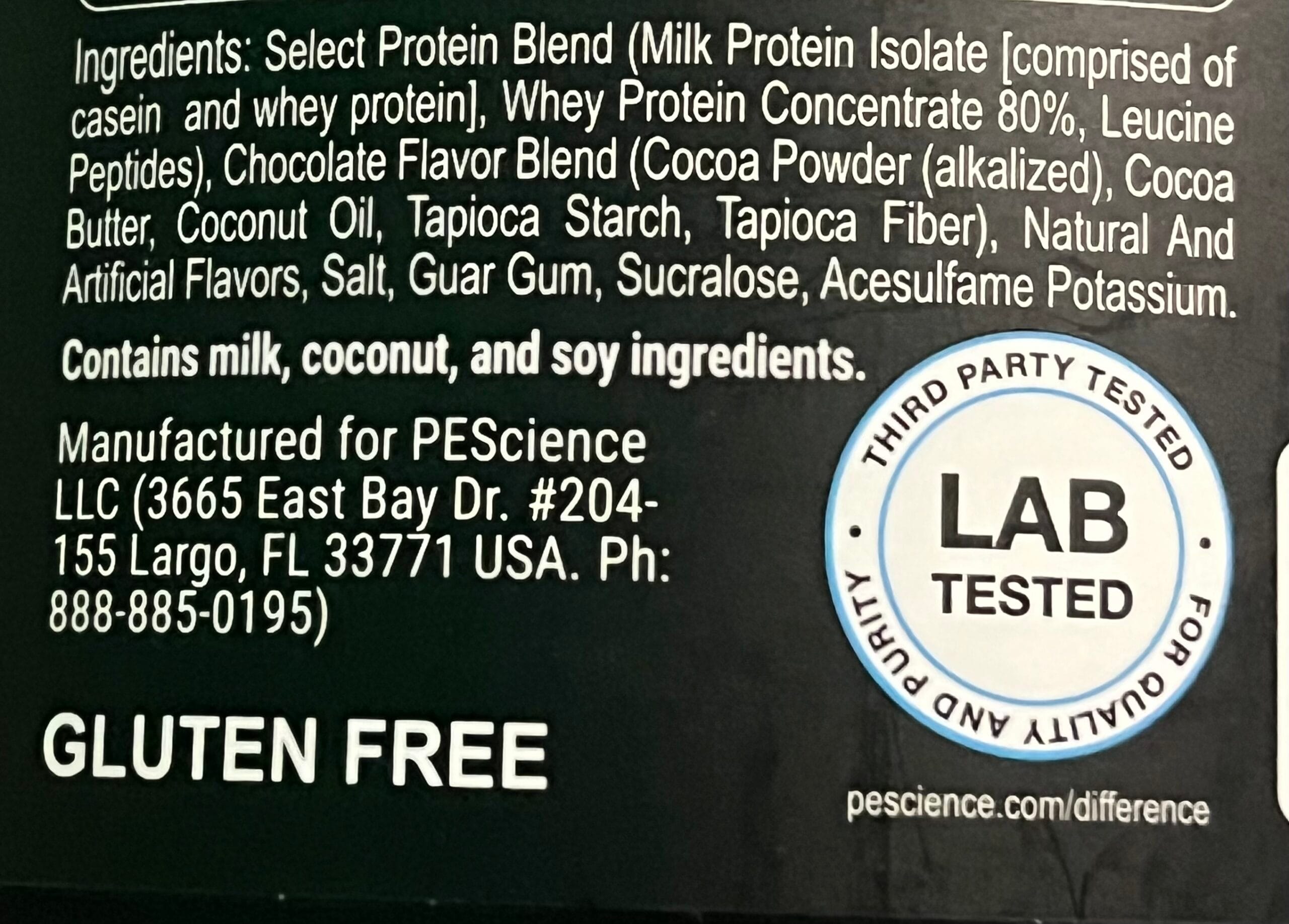
There are concerns with PEScience and amino spiking. Leucine peptides are listed immediately after the protein blend. That’s not the concern; it’s the listed amount of protein per serving, which includes the listed leucine peptides. How much high-quality, intact protein are you really getting in one scoop of PEScience Select?
Syntha-6 poses a greater risk of amino spiking compared with previous formulations. Syntha-6 refused to provide an amino acid profile, citing it as “proprietary.”
Clear answer: Neither brand exudes confidence in this department. Less information is never great for protein quality and integrity.
Third-Party Testing: Who’s Actually Verified?
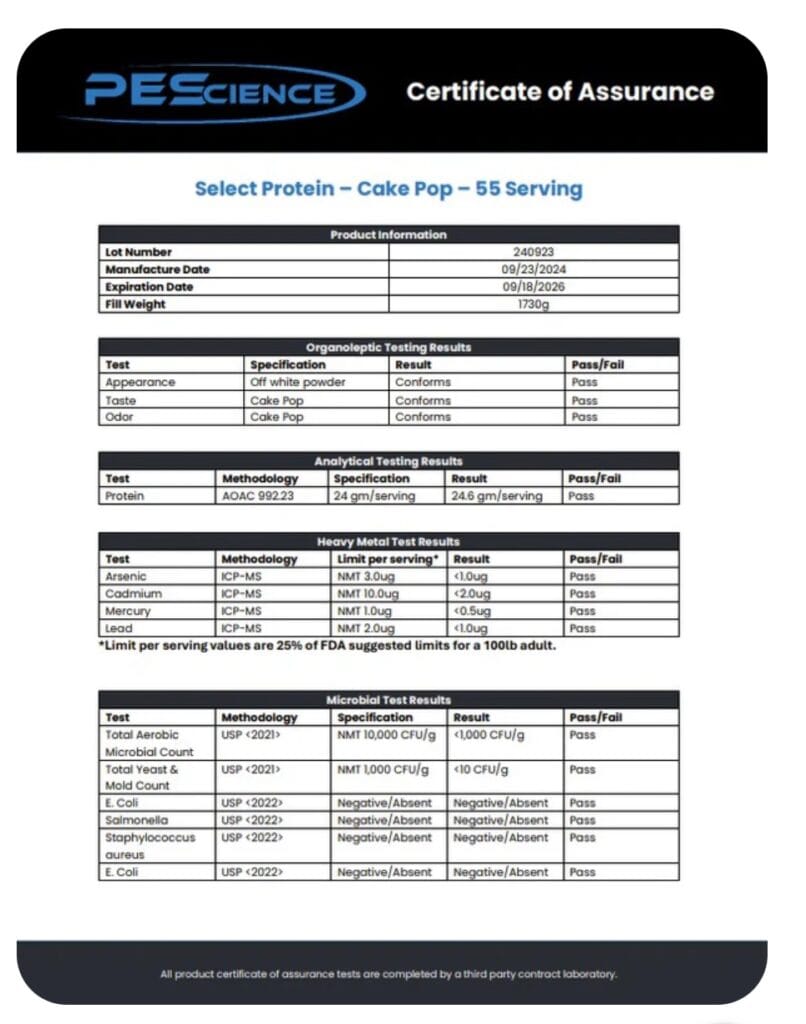
PEScience tests for safety. Toxicology and Certificate of Assurance are readily available for viewing. However, Lot batch testing isn’t available, so this might be a one-trick pony.
Ganbia supplies Syntha-6 protein; you don’t need to worry about ingredient cleanliness or quality assurance.
Winner? Important 3rd-party screening for protein integrity or banned substances is not available with either.
Sourcing Transparency & Label Honesty
PEScience is manufactured in the USA, but the sourcing of ingredients remains vague. It’s nice to see that PEScience is forward-thinking about including leucine in the ingredient list. The concern? We don’t know how much is being used. Of course, seeing “Natural and Artificial Flavors” is a constant with all brands. What’s behind that vague term?
Syntha-6 is also manufactured domestically, but ingredient evolution over time raises concerns about consistency. Protein sources shifted toward cheaper fractions, with less clarity batch to batch.
This is a case of cautious vagueness versus historical opacity. Neither brand provides full sourcing documentation.
Ingredients & Sweeteners — Clean or Just “Clean Looking”?
PEScience uses a shorter ingredient list built around milk protein isolate and whey concentrate, with gums and sweeteners supporting texture and flavor. If you want a slow-digesting protein that has zero fiber, PEScience should be considered. .
Syntha-6 ingredient list looks like a dictionary. Multiple protein sources, fiber, fats, and sweeteners to slow digestion and increase fullness.
PEScience is chemically simpler. Syntha-6 is intentionally complex.

Heavy Metals & Prop 65 Concerns
Both products are screened for heavy metals and do not carry Proposition 65 warnings. Based on the available data, neither poses a documented heavy-metal safety risk for daily use.
From a safety standpoint, both pass. However, neither brand will share the toxicology report numbers.
Nutrition Facts & Protein Density Comparison
PEScience delivers roughly 24 grams of protein in a 31-gram scoop, landing around 77 percent protein by weight. Calories stay low, carbs and fat stay controlled.
Syntha-6 delivers about 22 grams of protein in a 47-gram scoop, roughly 47 percent protein by weight. The rest is fiber, carbs, fats, and flavor system.
Translation: PEScience gives you more protein per gram of powder. Syntha-6 gives you more food-like structure per serving.
| PEScience vs BSN ProteinKey Differences & Comparison Metrics | ||||
| Key Differences & Comparison Metrics | PEScience Gourment Vanilla | %DV | BSN Syntha 6 Vanilla Ice Cream | %DV |
| Leucine (g) | Requested/Proprietary | Proprietary/Requested | ||
| Leucine Percent (%) | Leucine is a listed ingredient | Proprietary/Requested | ||
| Total BCAAs (g) | 5.0g | Proprietary/Requested | ||
| Protein Density % | 77% | 47% | ||
| Protein per Serving (g) | 24g | 47% | 22g | 44% |
| Carbs per Serving (g) | 2.5g | <1% | 15g | 5% |
| Fiber per Serving (g) | 0g | 0% | 6g | 21% |
| Total Sugars (g) | 1g | — | 4g | — |
| Calories | 120 kcal | 190 kcal | ||
| Serving Size (g) | 31g | 47g | ||
| Number of Servings | 27 | 48 | ||
| Amazon Price(December 2025) | $44.99 | $65.99 | ||
| Price per Serving | $1.67 | $1.37 | ||
Price per Serving — Which Is the Better Value?
Syntha-6 is cheaper per serving, especially in larger tubs. PEScience costs more per scoop but delivers higher protein density and fewer calories.
Value depends on intent. If you’re replacing meals, Syntha-6 offers more calories per dollar. If you’re supplementing protein intake without excess calories, PEScience stretches further.
Taste & Mixability — Which One Drinks Better?
Both PEScience and Syntha-6 mix cleanly and reliably — neither has a true mixability problem. The difference shows up after the shaker is already smooth. PEScience drinks lighter and finishes easier, while Syntha-6 drinks heavier by design, behaving more like food than a simple protein shake. That distinction isn’t about quality. It’s about purpose.
Flavor, Syntha-6 is arguably the best-tasting protein in the market. PEScience is in the same league.
Who Each Brand Is Best For
PEScience Is Best For:
- Gym-goers that want a low calorie protein
- People prioritizing flavor and mixability
- Multi-use and dessert-style shakes
- Fiber free protein that’s easy to drink
Buy PEScience Select Protein here if that fits your goal.
Syntha-6 Is Best For:
- Meal Replacement
- Wanting to feel full on a cut
- Anyone replacing food, not just supplementing protein
- People who are increasing their daily fiber
Buy BSN Syntha-6 Protein here if that’s your lane. If you’re interested in how to incorporate meal replacement protein powder in your weight loss routine, check out my Modified Velocity 2.0.
Final Verdict — Should You Buy PEScience or Syntha-6?
Syntha-6 wins as a meal replacement because it actually behaves like one. It delivers calories, fiber, fats, and slow-digesting proteins that keep you full and stable. It doesn’t pretend to be lean or surgical. It feeds you.
PEScience works better as a daily protein for muscle support, calorie control, and enjoyment. It tastes better, mixes better, and fits into more routines. But it does not replace meals the way Syntha-6 does, and its transparency gaps prevent it from being a true performance protein.
If you want food in a shaker, buy Syntha-6. If you want flavor-forward protein without blowing your calories, buy PEScience.
PEScience vs Syntha-6 Protein: Frequently Asked Questions
Not universally. PEScience is better for lower-calorie protein and post-workout use. Syntha-6 is better as a meal replacement.
Yes. Its calories, fiber, carbs, and fat support satiety and slow digestion.
It cannot be confirmed or ruled out due to missing amino data and undisclosed leucine amounts.
It can support muscle maintenance, but it is not optimized for post-workout recovery.
Both taste excellent. PEScience is smoother and easier to drink daily. Syntha-6 is easily the flavor king.
Syntha-6 performs better as a structured meal replacement. PEScience works better with a exercise plan.

Meet James, a decade-long devotee to transforming fitness journeys, both in-person and online. As a virtual and remote personal trainer, he merges passion with expertise to deliver unparalleled fitness guidance. James isn’t just about workouts; he’s a protein powder aficionado, always on the hunt for the next best blend to enhance your gains.
Holding Bachelor’s Degrees in Exercise Sports Science and Pre-Law, James’s academic foundation is as solid as his fitness regimens. His certifications read like a who’s who of fitness excellence: NSCA (CSCS), Precision Nutrition Level 1, Online Trainer Academy (OTA), C-ISSN, and more. Whether you’re looking to overhaul your fitness routine, find the perfect protein, or navigate the intersection of wellness and law, James is your go-to guide for all things fitness.
Leave a Reply