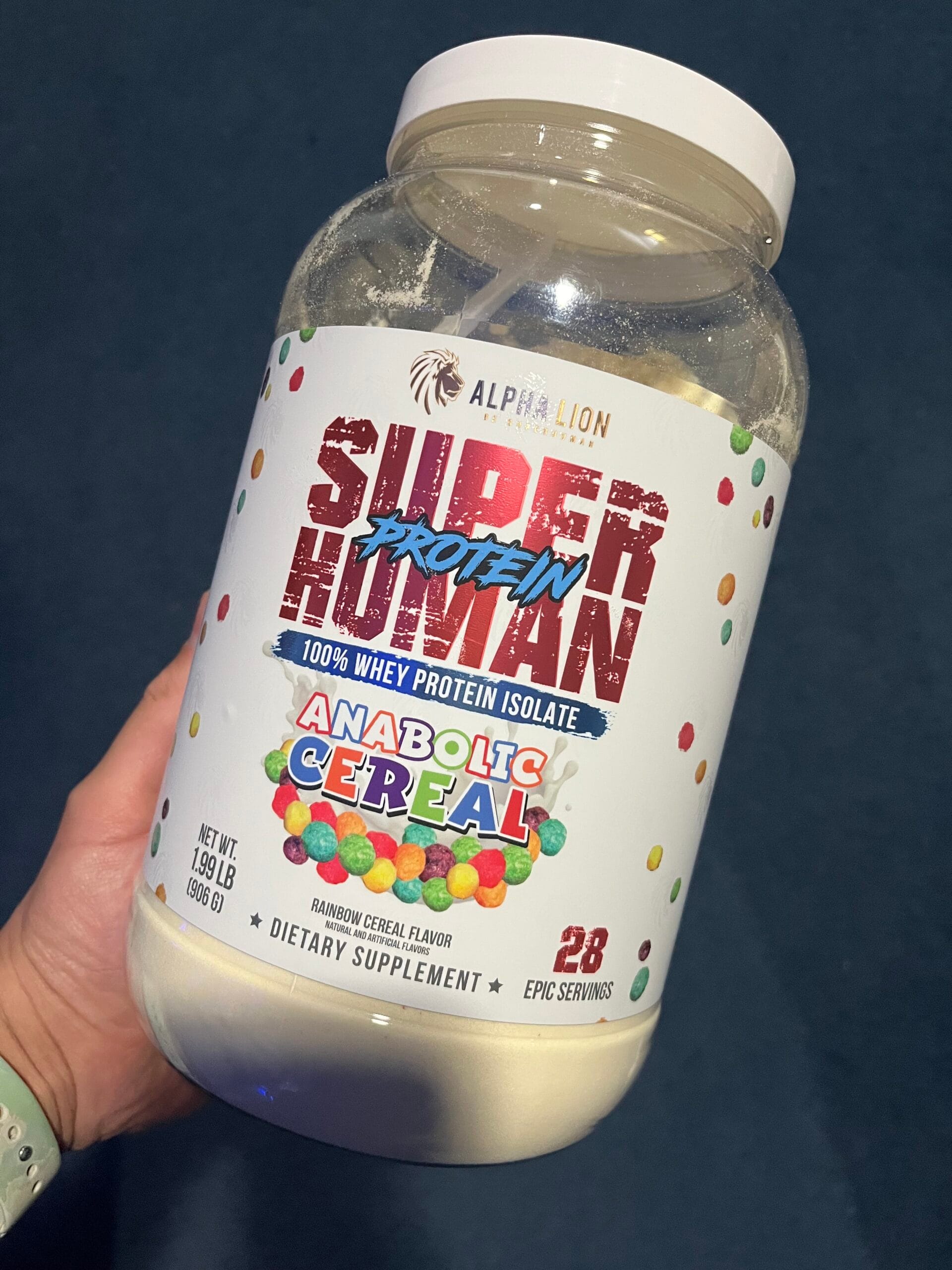
Is Alpha Lion High Quality, Good, or Legit? A Credibility Analysis Based on A Reviewed Product
Read my full Alpha Lion protein review to get the full breakdown of the product, the score, and advice on how to buy it. This article is more focused than that. I am only looking at Alpha Lion from the point of view of brand credibility: how it builds trust, how clearly it communicates important information, and whether the paperwork aligns with the marketing. The full standalone review is still the best place to find product-specific scores, conclusions, and advice on what to buy.
TL;DR — What I Consistently See Across Reviewed Products
One thing that stands out in all the Alpha Lion protein work I’ve done is that the brand usually gives buyers more information on the label than most tubs that are full of hype, but not enough independent proof to make the trust pitch feel complete. I can tell that you’re trying to look honest. I can also see where that openness ends.
I keep seeing the same divide between what is clearly stated and what is left vague. Alpha Lion is ready to list the ingredients, show the amino data, and write a polished story about how well it works. It hasn’t done the same for testing, toxicology, and more clarity in sourcing as it has for the work we’ve looked at here.
That’s important because “high quality” means different things to different people. Some people care most about how well things mix and how much detail is on the label. Some people care more about named labs, public COAs, and whether “100% transparency” holds up when real documents are looked at. The first standard makes Alpha Lion look stronger than the second.
How I Approach This: “Is Alpha Lion Good A Good Brand?” Analysis
As a certified strength and conditioning specialist (NSCA) and sports nutrition professional (CISSN), I use the same evidence-first framework for all of my brand-level analyses. I’m not adding any new lab work or testing from outside sources here. I’m reviewing the patterns already established in my long-form protein reviews for this brand.
In this article, I don’t want to make a final decision, give a score, or offer buying advice. It’s to see how consistently the brand shares information, backs up its claims, and deals with the trust factors that serious buyers care about. The full standalone protein reviews still have product-specific conclusions, scores, and buying advice.
You can see this same evidence-based method in action on video by going to YouTube and watching my full supplement breakdowns and brand discussions.
There are no affiliate links or ads in this article.
Table of contents
- Is Alpha Lion High Quality, Good, or Legit? A Credibility Analysis Based on A Reviewed Product
- TL;DR — What I Consistently See Across Reviewed Products
- How I Approach This: “Is Alpha Lion Good A Good Brand?” Analysis
- What I’m Looking At in This Analysis
- Transparency Signals I Keep Seeing Across Reviews
- Testing, Verification, and What Is Actually Confirmed
- Sourcing and Manufacturing Claims in Context
- Ingredient Disclosure and Formulation Consistency
- Safety, Prop 65, and Disclosure History
- Brands Readers Commonly Compare to Alpha Lion
- What “High Quality” and “Good” Mean Depends on the Standard Applied
- So, Is Alpha Lion a Good Brand?
- What This Analysis Can and Cannot Do
What I’m Looking At in This Analysis
I am not trying to turn one protein tub into a grand theory of the company. What I’m doing is more focused and helpful than that. I’m looking at the credibility signals used in the review work so far, such as clear labels, amino disclosure, testing language, sourcing language, ingredient transparency, and safety documentation.
That means no new research dump, no new lab work, and no new guesses that look like insight. I’m sticking to what I’ve already looked at and asking a simple question: how often does the proof that Alpha Lion asks for premium trust show up on time?
Transparency Signals I Keep Seeing Across Reviews

Alpha Lion is not hiding behind a thick fog bank. It’s important to say that clearly. In the protein work I looked at, I found a named whey isolate source, leucine, total BCAAs, and panel math that mostly makes sense. In a category full of brands that treat amino transparency like a hostage negotiation, this is better than average.
This tells me that Alpha Lion knows what smart buyers want to see. The brand knows that putting names on inputs, leucine data, and protein math on a label makes it look more real. And to be fair, they do. A tub with 2.744 grams of leucine and 5.74 grams of total BCAAs looks more serious than one that just screams “anabolic” in a louder font.
That doesn’t mean the case about transparency is over. The “no amino spiking” claim is still based on information the brand controls, not on information the public can verify. The label can make people less suspicious, but it won’t stop them from being suspicious. I didn’t see a classic old-school circus with amino-spiking here. I did see a common move by a high-end brand: give the buyer enough information to feel safe, then ask for one last leap of faith, where independent proof should be doing the heavy lifting.
Testing, Verification, and What Is Actually Confirmed
This is where the brand starts to lose ground.
What I was able to directly confirm in the review work is limited. Alpha Lion said in an email that a third party tests its protein for purity, potency, microbes, and heavy metals. That is a true statement. What I didn’t get was the part that makes the claim strong: a named lab, a public COA, a toxicology report, or batch-level paperwork for the finished product.

That difference is important. A testing claim is not the same as a testing trail that has been proven to be true. I’m not saying that there isn’t any testing. What I’m saying is that the public proof wasn’t in the work that was looked at. For a brand that uses phrases like “100% transparency” and “no secrets,” there is still a hole big enough to drive a branded shaker cup through.
I also didn’t see any visible certification of the finished product from NSF, Informed Sport, Informed Protein, Labdoor, or a similar outside program in the Alpha Lion protein work I looked at. So the brand’s best verification language is still behind its publicly documented support.
Sourcing and Manufacturing Claims in Context
It’s easier to understand Alpha Lion’s sourcing story at the supplier level than at the origin level. I found that the protein source was Provon, which is a Glanbia whey isolate ingredient. The label also says that the product is made in the USA with both domestic and imported ingredients. That gives buyers more than just a vague name for the blend and a shrug of the shoulders.
But it doesn’t fully answer the question about where serious buyers get their goods. I still don’t have a clear dairy-origin trail, a record of where the plants came from, a way to identify the co-op, or any public records that show where the milk came from. I have supplier branding, but not full clarity on the origin.

That is a big difference. It’s helpful to name the company that makes the ingredient. It’s not the same as giving buyers a clear path from the source of the milk to the finished powder.
Ingredient Disclosure and Formulation Consistency
Alpha Lion’s ingredient disclosure is good, but not minimal, and these two things are not the same.
I saw a clearly labeled whey isolate (Provon), extra ingredients like DigeZyme and AstraGin, and a recipe that doesn’t pretend that cereal pieces fell from the sky by divine intervention. The label provides buyers with a lot of information. That is a good thing for Alpha Lion, since many high-end tubs are more expensive.
The layered flavor system makes the formula less clear. Both natural and artificial flavors are present in and around the cereal inclusion setup. There is sucralose, but not a specific amount, and the overall build feels more engineered than restrained. None of that proves that the product is bad. It does tell me that the formula is selling both an experience and an isolate.
That pattern fits with the brand as a whole. Alpha Lion is usually better at styled disclosure than at plain simplicity. It gives buyers more to read, but not always more to check.
Safety, Prop 65, and Disclosure History
The Alpha Lion protein product examined did not have a Proposition 65 warning on the label or the sales page. That’s better than seeing one. It is not the same as getting a clean toxicology file.
I also noted that Alpha Lion didn’t provide the toxicology report or batch-specific heavy metal results for the finished protein I requested. That silence is more important because Alpha Lion LLC was named in a 2020 California Proposition 65 notice about other supplements. That notice doesn’t show that the protein in question has the same problem. It does mean that the brand can’t just wave its hands when customers ask tough safety questions.
So the picture of safety isn’t a smoking crater, but it’s not completely safe either. The label is calm. The paperwork is quieter than I would like it to be.
Brands Readers Commonly Compare to Alpha Lion
People who ask if Alpha Lion is real, good, or high-quality usually don’t do so in a vacuum. They are comparing it to other brands that have different trade-offs in third-party testing, amino acid disclosure, sourcing clarity, and the price-to-proof ratio.
The most common comparison set for this protein is in the review that accompanies it.
- Alpha Lion vs AGN Roots
- Alpha Lion vs Transparent Labs
- Alpha Lion vs Optimum Nutrition Gold Standard
- Alpha Lion vs MyProtein
- Alpha Lion vs Ascent
- Alpha Lion vs Ghost
- Alpha Lion vs Ryse
- Alpha Lion vs ProJym
- Alpha Lion vs Isopure
- Alpha Lion vs Dymatize
Most of the time, buyers are trying to figure out if they want cleaner sourcing, stronger certification, better value, or a performance formula that looks better.
That is the next step that will help. Not “which tub has the loudest branding perfume,” but “which brand standard is most important to you after the front-label swagger leaves the room?”
What “High Quality” and “Good” Mean Depends on the Standard Applied
A lot of buyers talk past each other here.
Alpha Lion will look pretty good if you think a good protein brand should have a good label, clear amino data, a strong mixability, and a product that acts like real whey in the shaker. I found enough proof on paper to see why some people buy from there.
If your standard is stricter, like public-facing verification, named labs, easy-to-find COAs, clearer sourcing, and safety documentation that doesn’t go quiet when asked for it, the same evidence looks weaker. That doesn’t mean the brand isn’t real. It does mean that the brand needs to rely more on trust-heavy marketing than the word “transparency” usually means.
That is the real difference. The evidence doesn’t look the same under all standards, so buyers should be honest about which standard they’re using before they start using words like “legit” or “high quality.”
This study examines only credibility patterns at the brand level. It is not meant to replace brand comparisons or evaluations of individual products. My full standalone protein reviews have product-specific ratings, scores, and buying advice. The tubs themselves have to back up the claims that are printed on them.
So, Is Alpha Lion a Good Brand?
At first glance, Alpha Lion looks better than many flashy supplement brands because its labels usually include more information for buyers. I found named whey sourcing at the ingredient level, leucine, total BCAAs, and a formula that at least tries to look more open than the average premium tub shouting through a smoke machine. That is enough to keep the brand out of the obvious-nonsense group.
The same problem that kept coming up in the full review work is what stops me from calling that case clean: Alpha Lion is better at showing credibility than at fully documenting it. The brand uses strong language about being open, but public proof doesn’t always match. I didn’t get a named lab, a public COA, a toxicology report, or batch-level documentation of heavy metals for the finished protein. The sourcing story also ends too soon for serious buyers.
If someone asks me if Alpha Lion is a good brand, I would say it looks more trustworthy than many marketing-first supplement companies, but not as well supported as a brand whose documentation speaks for itself rather than the copy. To put it another way, Alpha Lion meets the low standard of looking like a real protein brand. It doesn’t completely pass the higher bar of proof-first trust.
What This Analysis Can and Cannot Do
This analysis shows how credible a brand is, not a final decision on every Alpha Lion product with a lion on the tub. I’m looking at how the brand usually handles disclosure, verification, sourcing language, and marketing that relies on trust when those claims are checked.
It doesn’t replace comparing brands or evaluating individual products. Those pages have a different purpose. They handle product-specific label math, scoring, performance, value, and the questions about buying that only make sense when you try the tub itself.
If you want scores, verdicts, and buying advice for specific products, you’ll only find them in my full standalone protein reviews. That is where the last decisions should go.

Meet James, a decade-long devotee to transforming fitness journeys, both in-person and online. As a virtual and remote personal trainer, he merges passion with expertise to deliver unparalleled fitness guidance. James isn’t just about workouts; he’s a protein powder aficionado, always on the hunt for the next best blend to enhance your gains.
Holding Bachelor’s Degrees in Exercise Sports Science and Pre-Law, James’s academic foundation is as solid as his fitness regimens. His certifications read like a who’s who of fitness excellence: NSCA (CSCS), Precision Nutrition Level 1, Online Trainer Academy (OTA), C-ISSN, and more. Whether you’re looking to overhaul your fitness routine, find the perfect protein, or navigate the intersection of wellness and law, James is your go-to guide for all things fitness.
Leave a Reply