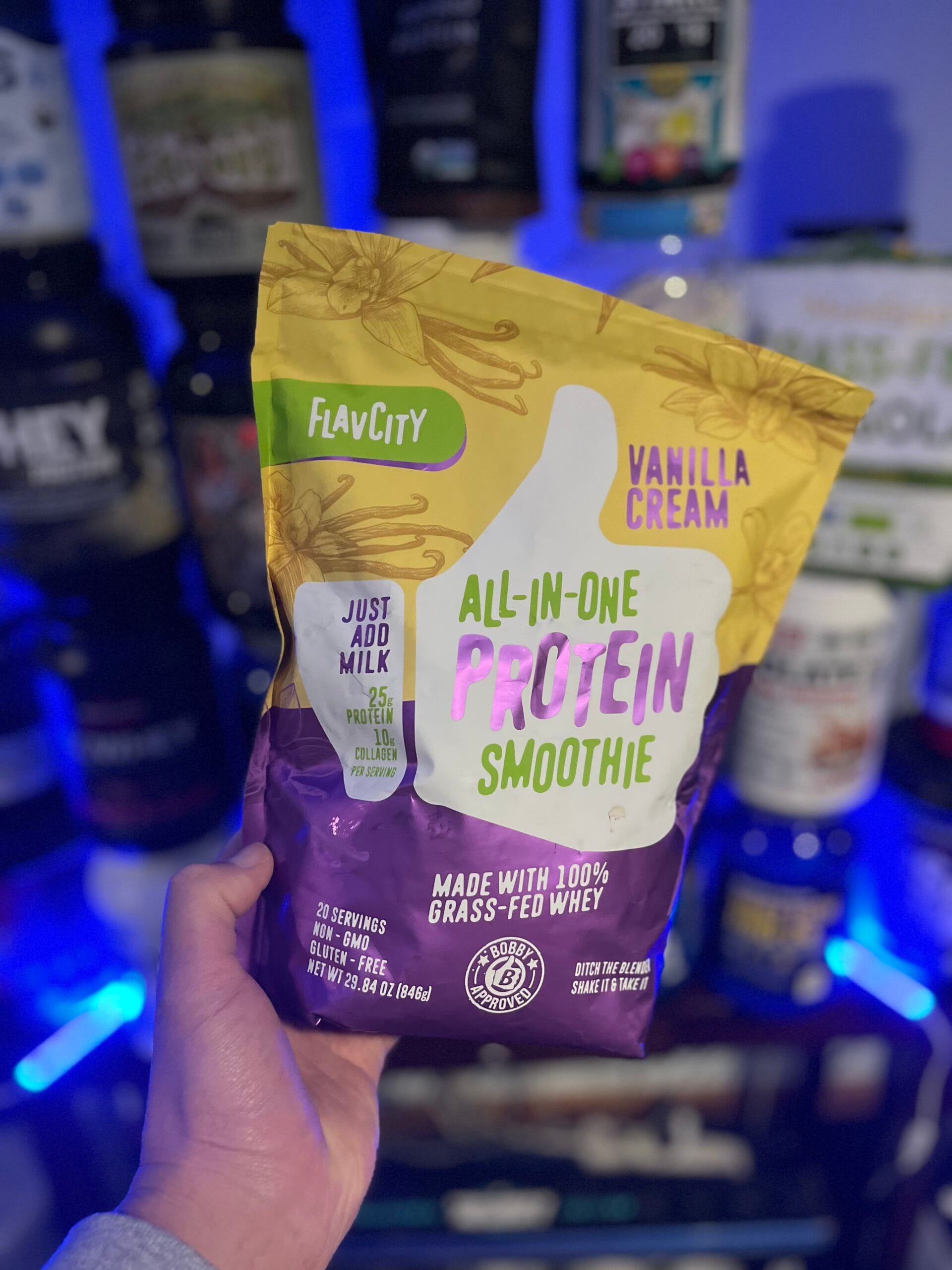
Is FlavCity Good? Is FlavCity a Good Brand?
This article is only about signals of credibility at the brand level. Read my full FlavCity Protein Powder Review for the full breakdown of the product, the score, and advice on how to buy it. That review is still the most reliable product-specific review I have. I’m asking a more specific question here: when FlavCity talks like a high-end, health-first brand, do its openness and record-keeping really back up that image?
TL;DR — What I Consistently See Across Reviewed Products
One thing that stands out across all the products I’ve looked at is that FlavCity is better at showing off the front of the house than at documenting the back of the house. I keep seeing labels that are specific enough to make me trust them more than the average supplement tub, but they still have soft spots where serious buyers want harder proof.
The second pattern is a split between checking and using. The brand’s “healthy shake” image is supported by the formula style, how easy it is to read the ingredients, and how easy it is to drink every day. The proof layer, which includes amino data, batch-level testing records, sourcing documentation, and other information that sets premium branding apart from premium substantiation, is still not very convincing.
That matters a lot, depending on what you think quality should really mean. Some people who buy protein smoothies want them to be clean, taste good, and not have any obvious label nonsense. Some people want receipts.
How I’m Approaching the Question of Whether FlavCity Is Good?
As a certified strength and conditioning specialist (NSCA) and sports nutrition professional (CISSN), I use the same evidence-first framework for all of my brand-level analyses. I’m not adding any new lab work or testing from outside sources here. I’m reviewing the patterns already established in my long-form protein reviews for this brand.
In this article, I don’t want to make a final decision, give a score, or offer buying advice. It’s to see how consistently the brand shares information, backs up its claims, and deals with the trust factors that serious buyers care about. The full standalone protein reviews still have product-specific conclusions, scores, and buying advice.
You can see this same evidence-based method in action on video by going to YouTube and watching my full supplement breakdowns and brand discussions.
There are no affiliate links or ads in this article.
Table of contents
- Is FlavCity Good? Is FlavCity a Good Brand?
- TL;DR — What I Consistently See Across Reviewed Products
- How I’m Approaching the Question of Whether FlavCity Is Good?
- What I’m Looking At in This Analysis
- Transparency Signals I Keep Seeing Across Reviews
- FlavCity Third Party Testing, Verification, and What Is Actually Confirmed
- Sourcing and Manufacturing Claims in Context
- Ingredient Disclosure and Formulation Consistency
- Brands Readers Commonly Compare to FlavCity
- What “Good” Means Depends on the Standard
- Is FlavCity Good?
What I’m Looking At in This Analysis
I’m not trying to make a big deal out of one product and say it’s the whole company. I’m looking at the patterns of credibility established in the long-form review work that has already been done, and I’m asking a simpler question: how often does the documentation keep up when FlavCity makes a quality claim?
That means I’m only looking at the evidence I already looked at. I’m not adding any new tests, claims about sourcing, or research. I’m looking for patterns in disclosure, verification, consistency, and clarity for buyers because those are the things that usually tell me if a brand is just polished or really reliable.
Transparency Signals I Keep Seeing Across Reviews
The story about transparency here is mixed, which is why FlavCity makes it so hard for buyers who are unsure.
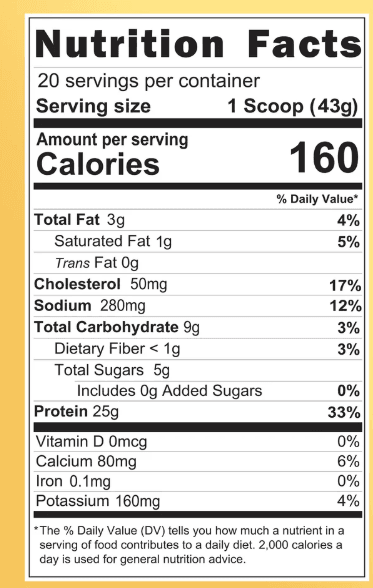
I looked at amino disclosure first because brands love to talk about “clean protein” until someone asks for leucine numbers. There isn’t a published amino acid profile for this case. That means we can’t be sure about leucine and the total BCAA yield. This doesn’t mean that the product is bad right away. It tells me the brand wants buyers to believe the protein story without providing the most basic proof of performance.
The math for the protein also raises an eyebrow for me. The label says there are 25 grams of protein, but the breakdown in parentheses doesn’t add up to that number. That still leaves questions about protein quality. A high-end product doesn’t have to be perfect down to the last molecule on the label, but it shouldn’t look like the math was put together quickly and then told to smile for the camera.
FlavCity is better at being clear about its basic ingredients. You can read the label. Instead of being hidden in a foggy “matrix,” collagen is shown directly. The add-ins that are like smoothies are clearly listed. So this isn’t the most obscure case. It’s a case of selective precision: the brand benefits from looking clean, but it’s quieter when buyers want proof.
FlavCity Third Party Testing, Verification, and What Is Actually Confirmed
FlavCity discusses testing the right way. The problem is that language and proof are not the same thing.

What I found directly confirmed is that the brand says third-party labs test the ingredients for contaminants and that the finished goods are tested for identity and purity. That is what the paperwork says. I didn’t find a buyer, an auditable trail to back it up. There were no current COAs given. There were no records linked to a batch. I didn’t see any evidence of NSF, Informed Sport, Informed Protein, Labdoor, or any other certification trail that was similar.
That difference is important. “We test” is a sentence. You can look at a standard for a batch-linked COA. Without that second piece, the brand is asking people to believe them rather than prove it.
That gap does a lot for the company’s reputation because they sell FlavCity Protein Powder for a lot of money. It makes “trusted source” branding more like a handshake in the dark.
Are FlavCity Products Safe?
What has been written down so far is not a clear safety story, but it is also not a simple one-line panic slogan.

There was a difference between what was on the packaging and what was said online. The bag examined did not have a Prop 65 warning. At the same time, the brand has a more general California disclosure online stating that some of its products contain lead and cadmium that occur naturally. I also saw Prop 65 warnings in the background for some FlavCity products. I couldn’t find any batch-level heavy metal data that would let a buyer check how much of the product they actually had.
That leaves the story about safety unfinished. The brand has safety words. The buyer does not get receipts for safety. That will be enough for some people. It won’t be for everyone, especially those who buy high-end products because they want fewer questions.
FlavCity Protein Safe for Pregnancy?
When you’re pregnant, vague safety language gets old very quickly. I don’t think FlavCity Protein is a product that is clear about pregnancy, based on the one I looked at. There was no Prop 65 warning on the bag I had, but FlavCity also has an online California disclosure stating that lead and cadmium may be found in some products. If you don’t have batch-specific heavy metal results, you don’t have the kind of clean, checkable safety trail that most pregnant women would want.
If someone is pregnant, they should talk to their OB-GYN or another qualified medical professional before using this kind of product. This is especially true when the brand’s safety information isn’t always consistent across packaging and online messaging.
Sourcing and Manufacturing Claims in Context
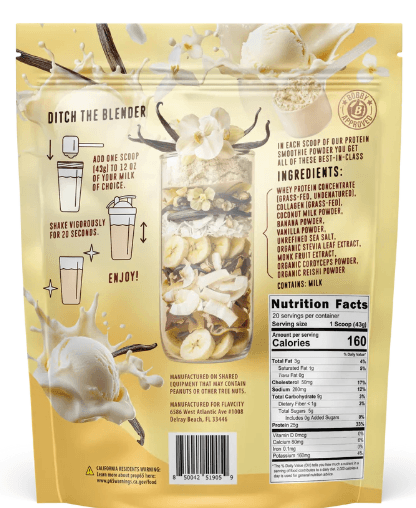
FlavCity clearly likes the story behind it. “Grass-fed” and “undenatured” are not said in a whisper. They are very important to the product’s identity.
The problem isn’t that those claims are made. The problem is that they are still claimed rather than anchored on their own. I couldn’t find a named whey supplier, a named grass-fed certification, a dairy co-op identifier, a country-of-origin statement, or a region tied to the product. That doesn’t mean the story about where the goods came from is false. It does mean the sourcing story is doing a lot of work without carrying around a lot of paperwork.

The same holds for producing high-quality language. The brand talks like a business that has rules. I kept thinking about this: standards sound better when they come with paperwork.
Ingredient Disclosure and Formulation Consistency
FlavCity does a better job of telling you what’s in their products than many other “clean protein” brands. The formula looks like a mix of whey protein and collagen, meant for smoothies. The sweetener system is clearly shown. The product doesn’t have the usual proprietary-blend theater. That part is really strong.
But consistency is a little harder to pin down. I noticed that the labels on the old and new versions differed in serving size, sodium, sugar, ingredient order, and the prominence of certain ingredients. None of that means that the formula got worse right away. It does mean buyers are relying on small changes within the company rather than on a clear history of how the formula was changed.

That matters for a brand that relies on trust, simplicity, and “real ingredients” so much. When the formula changes without any warning, the buyer has to use tubs and screenshots to figure it out. That’s not the best thing.
Brands Readers Commonly Compare to FlavCity
When people are trying to figure out whether FlavCity is real, good, or just very polished, they usually compare it to a small group of better-known options. It’s not just about the taste. They usually want to compare the price-to-protein ratio, third-party testing, amino disclosure, sourcing clarity, and protein density.
These names come up most often alongside FlavCity when comparing protein powders. These are FlavCity vs articles.
- Optimum Nutrition
- Clean Simple Eats
- Just Ingredients
- Truvani
- Garden of Life Sport
- Ascent
- Ballerina Farm
- Javy
- Devotion
- Transparent Labs
- Equip
- Ka’Chava review (not a comparison)
When readers want to know if they are getting a real high-quality protein drink or just a better marketing story, they often compare FlavCity to those brands. A broad brand debate is not the best next step if you are making that kind of decision. You can read the individual comparison pages and the full product reviews for each matchup.
What “Good” Means Depends on the Standard
This is where the conversation gets more real.
Some people say that high quality means that the ingredients are easy to read and can be used every day. FlavCity looks pretty good when you look at it that way. The formula looks cleaner than those of many competitors, the collagen is clearly shown, and the product acts more like a smoothie protein powder than a chemistry set in a tub.
Other buyers verify quality through verification, sourcing proof, amino disclosure, and batch testing. FlavCity looks a lot less stable under that standard. The same proof that makes the brand look good on the surface can feel under-documented when questions become more specific.
That’s why branding alone never gives a good answer to this question. It’s not just about whether the product is real and tastes good. It has to do with whether the proof matches the promise.
Is FlavCity Good?
FlavCity is popular because it taps into a real consumer need. People want protein that is clean. They want protein powder shakes that are healthy and made with ingredients they can recognize. They want a way to get around labels that look like chemistry homework. That’s one reason why the Bobby Approved ecosystem is so popular.
To be fair, the Bobby Approved lens can help with one small part of the job. It can help someone see if a FlavCity Protein Powder formula is cleaner than the average tub on the shelf. I get why people want to stay away from fake sweeteners, vague ingredient lists, and overly processed filler language.
But that doesn’t answer the harder question: Does “clean” mean fully documented, verified, and trustworthy?
I don’t think those are the same level of quality. It’s not enough that the ingredient list looks neat enough for an app scan. It’s what happens when buyers ask for the less exciting things, like amino data, batch-linked testing, proof of sourcing, and clear information about safety disclosures. That’s where the stress begins. Everyone wants to eat healthy. Not everyone who signs up expects to find gaps in their disclosures, GI complaints, and Prop 65 concerns in the background that seem like someone else’s problem.
That’s even more important when women want to know if FlavCity Protein Powder is safe to use while pregnant. “Bobby Approved” isn’t a full answer at that point. A FlavCity All-In-One Protein Smoothie may look like a smoothie protein powder made with real ingredients, but serious buyers may still have questions that they want answered before they use it every day.
Is FlavCity good, then? It all depends on the standard. If “good” means the label looks cleaner than the usual junk food in a tub, I can see the point. If “good” means that buyers are getting a blend of whey protein and collagen with documentation that is strong enough to match the wellness branding, the answer becomes a lot less comfortable.
At the very least, this article makes the trade-off clear. If someone still wants the FlavCity Vanilla Protein Powder, the FlavCity Vanilla Cream flavor, or the FlavCity All-In-One Protein Smoothie experience after seeing those gaps, that’s fine. At least they know what to expect. And honestly, that shouldn’t be too much to ask for a high-end protein shake replacement.

Meet James, a decade-long devotee to transforming fitness journeys, both in-person and online. As a virtual and remote personal trainer, he merges passion with expertise to deliver unparalleled fitness guidance. James isn’t just about workouts; he’s a protein powder aficionado, always on the hunt for the next best blend to enhance your gains.
Holding Bachelor’s Degrees in Exercise Sports Science and Pre-Law, James’s academic foundation is as solid as his fitness regimens. His certifications read like a who’s who of fitness excellence: NSCA (CSCS), Precision Nutrition Level 1, Online Trainer Academy (OTA), C-ISSN, and more. Whether you’re looking to overhaul your fitness routine, find the perfect protein, or navigate the intersection of wellness and law, James is your go-to guide for all things fitness.
Leave a Reply