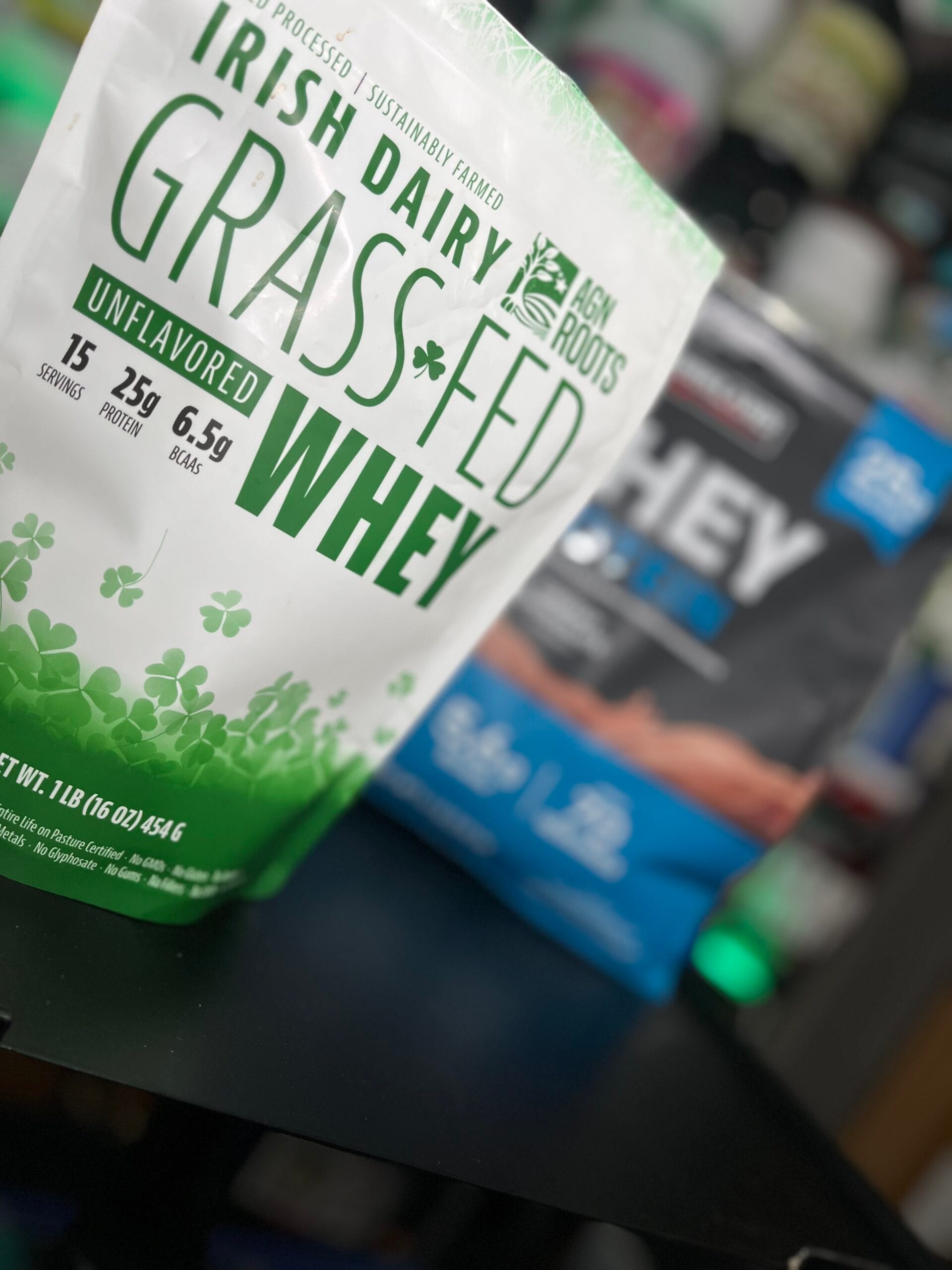
Kirkland vs AGN Roots — Which Protein Powder Is Better?
It’s not a casual comparison between Kirkland and AGN Roots. There is a disagreement about philosophy. One is a Costco bulk buy that protects the store and is based on value. The other is a whey isolate that prioritizes documentation and is based on verification and measurable amino acid output.
Each serving of both has 25 grams of protein. Only one shows you exactly how that protein works.
This comparison of Kirkland and AGN Roots does not replace individual reviews. All final scores, safety decisions, and amino findings come from the separate evaluations. This article presents the documented results side by side so you can choose the lane that best fits your needs.
Kirkland vs Grass Fed Whey Isolate Protein — What Are You Really Buying?
Kirkland vs AGN Roots TL;DR
Quick Answer — Which Is Better: Kirkland or AGN Roots?
If you want verified leucine, published amino data, third-party protein validation, and true grass-fed sourcing, AGN Roots is the better protein powder. If you care most about the cost per serving and Costco’s money-back guarantee, Kirkland is the better value. One can be checked. The other one is cheap. Pick based on how much risk you’re willing to take.
Table of contents
- Kirkland vs AGN Roots — Which Protein Powder Is Better?
- Kirkland vs AGN Roots TL;DR
- How I Approach This Kirkland vs AGN Roots Comparison
- Protein Transparency & Amino Integrity
- Does Either Brand Show Signs of Amino Spiking?
- Third-Party Testing — Who’s Actually Verified?
- Sourcing Transparency & Label Honesty
- Ingredients & Sweeteners — Clean or Just Clean Looking?
- Heavy Metals & Prop 65 Concerns
- Taste & Mixability — Which One Drinks Better?
- Nutrition Facts & Protein Density Comparison
- Price per Serving — Which Is the Better Value?
- Who Each Brand Is Best For
- Comparison Verdict — Which Fits Your Priorities Better?
- Kirkland vs AGN Roots Frequently Asked Questions
How I Approach This Kirkland vs AGN Roots Comparison
The first rule for this Kirkland vs. AGN Roots review is that I don’t change product scores in comparison articles. The full Kirkland review and the full AGN Roots review are the sources of the scores and conclusions. This article only compares what has been documented.
As a professional with the NSCA-CSCS and CISSN, I view protein through the lens of performance physiology, not brand stories. In a breakdown of Kirkland vs AGN Roots, that means putting first:
- Importance of muscle protein synthesis
- Confirmed amount of leucine
- Full disclosure of the amino acid profile
- Protein density based on weight
- Strength of third-party verification
- Functionality of ingredients
- Price compared to the proof on paper
When a brand publishes leucine, I figure out what that means for MPS. I say directly that a brand won’t give an amino profile. I make the line clear if testing is only done for banned substances.
This comparison between Kirkland and AGN Roots is not biased by any brand. I bought both items. I also explain these results on YouTube for people who like to see things in action. Some links may include affiliate links that help with testing without affecting the results. You can find full breakdowns and comparisons of this framework on my YouTube channel, https://www.youtube.com/@jkremmerfitness. Now let’s get clinical.
Protein Transparency & Amino Integrity
AGN Roots has a full amino acid profile and 3.05 grams of leucine in each 29-gram scoop. There are 6.5 grams of BCAAs in total. Leucine makes up 12.2% of the protein. That’s something you can measure. That can be understood. One scoop is clearly more than the ~2–3 g of leucine that is usually thought to be the most effective for MPS stimulation.
Kirkland says that their amounts for leucine is 2.65 grams and lists 5.6 grams of BCAAs.
From a muscle-building point of view, AGN Roots lets you figure out how sure you are. Kirkland wants you to think about how whey normally behaves.
Micro-conclusion: It’s easier to measure AGN Roots.
Does Either Brand Show Signs of Amino Spiking?
AGN Roots provides a full amino acid profile and states that each serving contains 3.05 grams of leucine. It also has Informed Protein certification, which means the 25 grams of protein listed are not artificially inflated by altering nitrogen levels. There are no documented concerns about amino spiking between the published amino breakdown and third-party protein verification.
There are no clear signs of amino spiking on the ingredient panel for Kirkland. The formula looks like a normal blend of whey isolate and concentrate.
Winner: AGN Roots. This isn’t a claim of manipulation. There is a gap in transparency. One brand shows that its protein is safe by providing proof. The other depends on how the label looks and how much the buyers trust it.
Third-Party Testing — Who’s Actually Verified?
Animal Welfare Approved, Informed Sport, and Informed Protein all give AGN Roots their seal of approval. Informed Protein checks the amount of protein listed and makes sure that no nitrogen has been added.
Kirkland has an Informed Choice certification that focuses on checking for banned substances. It doesn’t give out public COAs, amino verification, or heavy metals data. When asked, the documentation was treated as private.
Trust verdict: AGN Roots checks both safety and the quality of the protein. Kirkland only checks to make sure athletes are safe.
Sourcing Transparency & Label Honesty
The Truly Grass-Fed badge means that AGN Roots gets its ingredients from Ireland. The certification sets standards for pasture and rules for antibiotic- and hormone-free production.
Kirkland doesn’t say who makes the product or where it comes from. The label says that the product has organic ingredients, but there is no proof from a public certifier.
Winner: AGN Roots. This isn’t close if you care about where things come from.
Ingredients & Sweeteners — Clean or Just Clean Looking?
There are two things in AGN Roots: Irish whey isolate and sunflower lecithin that is not genetically modified. No sugar. No chewing gum. No fillers.
Kirkland’s whey protein blend includes both whey isolate and concentrate, along with several texture agents, fibers, oils, sucralose, and acesulfame potassium. The formula is designed to be creamy and look good on the shelf.
Winner: AGN Roots. There aren’t many formulations in AGN Roots. Kirkland is functional in terms of formulation.
Heavy Metals & Prop 65 Concerns
AGN Roots gives out certifications and adds layers of third-party validation. There is no record of a Prop 65 warning.
Kirkland’s packaging doesn’t have a visible Prop 65 warning, and they don’t share COAs or heavy metal test results. When asked, toxicology documents were not sent.
Grounded safety summary: AGN Roots gives you the paperwork. Kirkland doesn’t provide proof that its products are free of contaminants beyond what the label states.
Taste & Mixability — Which One Drinks Better?
In one standard serving, Kirkland mixes well. It mixes well in water, doesn’t make much foam, and doesn’t have the gritty texture that some cheap blends do. The chocolate taste is okay. It goes down easily, but it won’t taste like dessert protein.
AGN Roots also blends well, especially since it has no flavor. It spreads out evenly and doesn’t clump too much with just a little shaking. The flavor is mild, with a lot of dairy and a hint of nuts. No sugar. No fake taste left over. What you’re tasting is mostly whey.
Mixability verdict: Both work well in a shaker. If you want something sweet and chocolatey, Kirkland is the winner. If you like pure, unflavored products without any additives, AGN Roots is the best choice.
Nutrition Facts & Protein Density Comparison
Protein density tells you how much protein is in the scoop compared to other ingredients. When you compare AGN Roots to other powders, it has more protein per gram. That difference matters to lifters who keep track of their macro precision.
| Kirkland vs AGN Roots Whey Protein: Amino Profile and Nutrition Facts Compared | ||||
| Key Differences & Comparison Metrics | Kirkland Protein Powder Creamy Chocolate | %DV | AGN Roots Unflavored | %DV |
| Leucine | 2.67g | 3.05g (Informed Protein Verified) | ||
| Leucine Percent | 10.68% | 12.2% | ||
| Total BCAAs | 5.6g | 6.5g | ||
| Protein Density | 72% | 86% | ||
| Protein per Serving | 25g | 50% | 25g | 50% |
| Carbs per Serving | 4g | 1% | 1g | 0% |
| Fiber per Serving | 1g | 4% | 0g | 0% |
| Total Sugars | 1g | — | 0g | — |
| Calories | 130 kcal | 110 kcal | ||
| Serving Size | 35g | 29g | ||
| Number of Servings | About 70 | 47 | ||
| Amazon Price(January 2026 ) | $54.99 through Costco($69.99 Through an official 3rd-party seller) | $79.49 | ||
| Price per Serving | $1.00 | $1.69 | ||
Price per Serving — Which Is the Better Value?
Costco sells Kirkland for $1.00 per serving.
$1.69 for each serving of AGN Roots
Kirkland wins on raw cost. With almost 70 servings per tub, the value is even better.
AGN Roots costs more per scoop, but it comes with amino disclosure, protein verification, sourcing transparency, and multi-layer certification.
What you pay for will determine how much it is worth: protein per dollar or proof per dollar.
Who Each Brand Is Best For
Kirkland Is Best For:
- Lifters who care most about the cost per serving
- People who depend on Costco’s return policy
- Those who are okay with assuming normal whey amino behavior
- People who want protein that tastes good and will not break your wallet
AGN Roots Is Best For:
- Lifters who want to know for sure how much leucine they are getting
- People who need published amino profiles to buy
- Athletes who care about Certification of informed protein
- Consumers who put a lot of value on documentation for grass-fed sourcing
- Purists with few ingredients
Comparison Verdict — Which Fits Your Priorities Better?
When it comes to Kirkland vs. AGN Roots, it’s all about certainty and cost.
Kirkland works well in the shaker and keeps your money safe.
AGN Roots costs more, but it takes away the guesswork. You know how much leucine it contains. You know how much protein is in it. You know the rules for getting things. The certifications back up what the label says.
Final Verdict: If you really want to build muscle and are serious about it, AGN Roots is the better choice. Kirkland is still a good option if you want a cheap daily driver with a safety net for refunds.
Kirkland vs AGN Roots Frequently Asked Questions
Yes. Both have 25 grams of protein in each serving, but AGN Roots publishes information about amino acids and leucine, while Kirkland does not.
Each serving of AGN Roots has 3.05g of leucine. Kirkland offers leucine 2.67g.
Based on 3rd-party certifications, AGN Roots provides a clearer picture of MPS confidence.
Yes, through Informed Choice for things that are not allowed.
It has a lot of certifications, proof of amino transparency, and proof of grass-fed sourcing, which raise the costs of production and testing.
No. It mixes well and is a great deal. It doesn’t work well, but it does have some problems with documentation.

Meet James, a decade-long devotee to transforming fitness journeys, both in-person and online. As a virtual and remote personal trainer, he merges passion with expertise to deliver unparalleled fitness guidance. James isn’t just about workouts; he’s a protein powder aficionado, always on the hunt for the next best blend to enhance your gains.
Holding Bachelor’s Degrees in Exercise Sports Science and Pre-Law, James’s academic foundation is as solid as his fitness regimens. His certifications read like a who’s who of fitness excellence: NSCA (CSCS), Precision Nutrition Level 1, Online Trainer Academy (OTA), C-ISSN, and more. Whether you’re looking to overhaul your fitness routine, find the perfect protein, or navigate the intersection of wellness and law, James is your go-to guide for all things fitness.
Leave a Reply