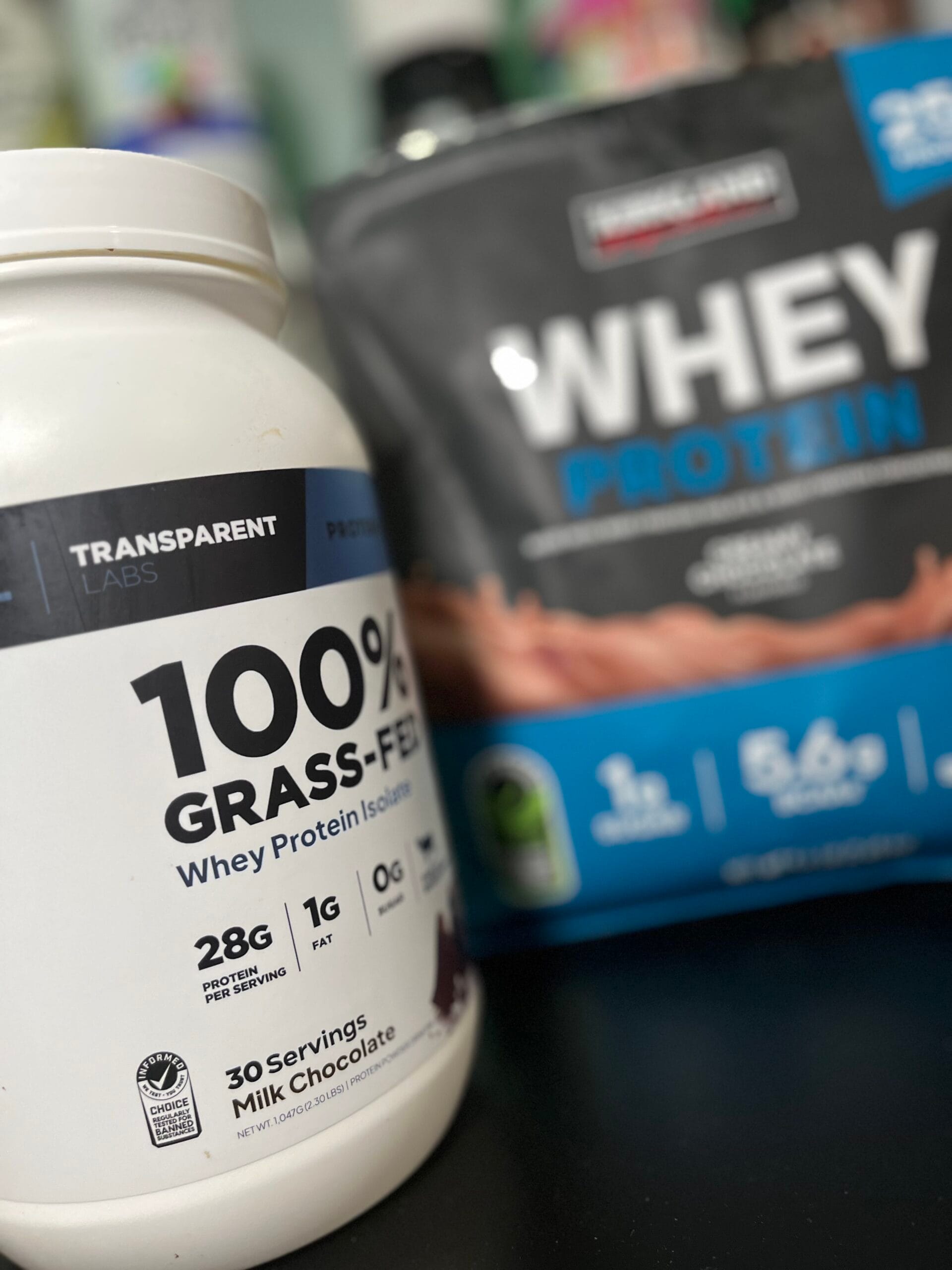
Kirkland vs Transparent Labs — Which Protein Powder Is Better?
There are very different reasons why Kirkland and Transparent Labs show up in the same cart. One is the Costco private-label workhorse, which is based on price and return protection. The other calls itself a disclosure-forward whey isolate with third-party verification at each layer.
This Kirkland vs. Transparent Labs comparison lines up the most important metrics for lifters: leucine yield, protein density, amino acid transparency, verification depth, and cost per scoop.
We only use the final scores and safety ratings from the Kirkland Protein Powder Review and the Transparent Labs Grass-Fed Whey Review to make things clear.
Costco Protein Powder vs Grass Fed Whey Protein Powder: Cheap or Certified?
Kirkland vs Transparent Labs TL;DR
Quick answer: Which is better, Kirkland or Transparent Labs?
Transparent Labs is the protein that is based on more evidence. It has 2.8g of leucine (verified by Informed Protein), a full amino acid profile, and verification from Informed Protein, Informed Choice, and Labdoor.
Kirkland wins on price, and Costco’s safety net for refunds, but wouldn’t provide a COA or heavy metals documentation when asked.
Transparent Labs is better if you want to measure MPS confidence. If you want cheap protein every day with little risk after you buy it, Kirkland is the best choice.
Table of contents
- Kirkland vs Transparent Labs — Which Protein Powder Is Better?
- Kirkland vs Transparent Labs TL;DR
- How I Approach This Kirkland vs Transparent Labs Comparison
- Protein Transparency & Amino Integrity
- Does Either Brand Show Signs of Amino Spiking?
- Third-Party Testing — Who’s Actually Verified?
- Sourcing Transparency & Label Honesty
- Ingredients & Sweeteners — Clean or Just Clean Looking?
- Heavy Metals & Prop 65 Concerns
- Taste & Mixability — Which One Drinks Better?
- Nutrition Facts & Protein Density Comparison
- Price per Serving — Which Is the Better Value?
- Who Each Brand Is Best For
- Comparison Verdict — Which Fits Your Priorities Better?
- Kirkland vs Transparent Labs Frequently Asked Questions
How I Approach This Kirkland vs Transparent Labs Comparison
The results of this Kirkland vs. Transparent Labs breakdown are based on separate reviews. This article does not give either brand a new score.
I have the NSCA-CSCS and CISSN certifications. My evaluation prioritizes the following factors: relevance to muscle protein synthesis, leucine content, how to calculate protein density, how to verify it with a third party, ingredient efficacy, and cost relative to the documentation. If leucine is revealed, I measure it. If it’s proprietary, I see it as a limit. If there is testing, I look at what it really proves.
No brand effect. No protection for sponsors. The same structure used in the individual reviews is applied here.
You can see this same evidence-first approach on YouTube at JKremmerFitness: https://www.youtube.com/@jkremmerfitness
Note for affiliates: Some links to retailers may pay you a commission at no extra cost. That doesn’t change what we found.
Protein Transparency & Amino Integrity
In the Kirkland vs. Transparent Labs comparison, this is the clearest difference.
Transparent Labs (French Vanilla) states that each serving contains 2.8g of leucine and lists all amino acids. The total BCAA content is 5.9g. The leucine content is 10.00%. That lets you treat one scoop as a specific MPS input instead of a guess based on chance.
Kirkland (Creamy Chocolate) lists 25g of protein and 5.6g of BCAAs.
In short, Transparent Labs can be measured. Kirkland needs to make an assumption.
Does Either Brand Show Signs of Amino Spiking?
Informed Protein certification and Labdoor verification are both available from Transparent Labs. Amino spiking got an 8 out of 10 in the standalone review. Based on published amino data and certification.
Kirkland’s ingredients don’t have any obvious issues. Still, the amino spiking score was only 5 out of 10. There is no proof of spiking, but it’s not third-party verified.
Transparent Labs passes the verification test. Kirkland leaves things up in the air.
Third-Party Testing — Who’s Actually Verified?
Transparent Labs holds:
- Informed Protein
- Informed Choice
- Lot testing
Kirkland has an Informed Choice certification, which helps keep athletes safe by screening them. But when asked for a COA, a heavy metals panel, or an amino profile, none were given in the review.
Transparent Labs has an edge in verification depth.
Sourcing Transparency & Label Honesty
Transparent Labs sells grass-fed products but does not hold USDA Organic or Truly Grass Fed certification, which could make consumers less likely to believe its sourcing claims. Kirkland doesn’t provide information about the manufacturer or how to trace the origin, which makes the situation less clear. Neither brand has full certification, so when evaluating quality and safety, customers should consider how strong their sourcing claims are.
Kirkland does not say who makes its products, where they come from, or provide any evidence to back up its sourcing claims. There isn’t much transparency in the sourcing process.
Neither brand is USDA-certified organic. Transparent Labs has better overall testing documentation, but neither of them fully closes the loop on grass-fed certification.
Ingredients & Sweeteners — Clean or Just Clean Looking?
Transparent Labs uses only whey isolate, natural flavors, stevia extract, cocoa (for flavored versions), and sodium chloride. No dyes or sweeteners that aren’t natural. The ingredients are very simple.
Kirkland’s product contains a blend of whey isolate and concentrate, along with several texture agents, including sunflower lecithin, sunflower oil, fibers, sucralose, and acesulfame potassium.
Transparent Labs uses natural zero-calorie sweetener stevia. Kirkland is designed to be cost-effective and have a good texture.
Heavy Metals & Prop 65 Concerns
Transparent Labs cites Dyadd Labs for toxicology testing, providing confidence in contaminant screening. You can use your lot number to retrieve the report.
Kirkland doesn’t publish the results of heavy metals tests and wouldn’t give them to us when we asked. The packaging reviewed did not include a visible Prop 65 warning, and no public toxicology report was available.
Transparent Labs trusts Labdoor’s heavy metals testing because it is open about its results. Kirkland, on the other hand, does not make its heavy metals results or testing documents public. This difference underscores the importance of third-party testing to ensure products are safe, which could affect how much people trust them and what they buy.
Taste & Mixability — Which One Drinks Better?
Transparent Labs mixes well with small amounts of other particles and has a strong flavor. There is stevia in the test, but it doesn’t taste too strong.
Kirkland mixes well at the standard serving size, with only a little bit of shaker cling. The taste is drinkable, but it’s not as good as it could be.
Transparent Labs has the best taste quality.
Both products are useful every day, taste good, and mix well. Transparent Labs offers a flavor that feels more upscale, which can improve your overall experience.
Nutrition Facts & Protein Density Comparison
Transparent Labs offers fewer carbs and more protein per scoop (before removing the inflating ingredients). However, protein density is the same on paper.
| Kirkland vs Transparent Labs Protein: Key Label and Value Differences | ||||
| Key Differences & Comparison Metrics | Kirkland Protein Powder Creamy Chocolate | %DV | Transparent Labs French Vanilla | %DV |
| Leucine | 2.67g | 2.8g (Informed Protein Verified) | ||
| Leucine Percent | 10.68% | 10.00% | ||
| Total BCAAs | 5.6g | 5.9g | ||
| Protein Density | 72% | 72% | ||
| Protein per Serving | 25g | 50% | 28g (25g of intact protein) | 50% |
| Carbs per Serving | 4g | 1% | 1g | 0% |
| Fiber per Serving | 1g | 4% | 0g | 0% |
| Total Sugars | 1g | — | 1g | — |
| Calories | 130 kcal | 130 kcal | ||
| Serving Size | 35g | 34.3g | ||
| Number of Servings | About 70 | 30 | ||
| Amazon Price(January 2026 ) | $54.99 through Costco($69.99 Through an official 3rd-party seller) | $59.99 | ||
| Price per Serving | $1.00 | $2.00 | ||
Price per Serving — Which Is the Better Value?
Kirkland: $54.99 at Costco for 70 servings, $1.00 for each serving
Transparent Labs: $59.99 for 30 servings, or $2.00 per serving.
Kirkland wins the cost per scoop. Transparent Labs costs about twice as much.
The question is whether the published leucine and amino acid data, along with multiple levels of verification, make the purchase worthwhile.
Who Each Brand Is Best For
Kirkland Is Best For:
- Budget-focused lifters
- High-volume daily users
- Buyers prioritizing Costco return protection
- Those comfortable with limited amino disclosure
Transparent Labs Is Best For:
- Lifters tracking leucine thresholds
- Buyers who want published amino profiles
- Athletes valuing Informed Protein verification
- Those avoiding artificial sweeteners
Comparison Verdict — Which Fits Your Priorities Better?
Transparent Labs receives a score of 39 out of 50 (78%) for transparency regarding leucine, publishing amino acid data, and having multiple third-party verifications. One scoop is easier to treat as a confirmed MPS input.
Kirkland gets a 34.5/50 (69%) score because it has a great cost per serving, but it can’t receive a higher score because it lacks the required paperwork.
If you want verified quality, Transparent Labs is a better choice.
Kirkland is still a good daily driver if you want to save money, but you’re sacrificing transparency.
Kirkland vs Transparent Labs Frequently Asked Questions
Transparent Labs provides 2.8g of leucine per serving and has published amino acid data, making MPS planning more accurate. Kirkland may help with growth, offering 2.67g of leucine per serving. But it is not third-party verified.
It all depends on how important you think documentation is. Transparent Labs does amino verification. Kirkland is cheaper and offers Costco refund protection.
In the comparison table, both are listed as having 72% protein density.
Informed Protein, Informed Choice, and Labdoor all verify Transparent Labs. Kirkland only has Informed Choice.
Transparent Labs discusses Dyadd Labs’ toxicology testing. Kirkland doesn’t publish results for heavy metals, but there was no Prop 65 warning on the packaging examined.
They both mix well. Kirkland is more basic but very drinkable, while Transparent Labs usually has better flavor quality.

Meet James, a decade-long devotee to transforming fitness journeys, both in-person and online. As a virtual and remote personal trainer, he merges passion with expertise to deliver unparalleled fitness guidance. James isn’t just about workouts; he’s a protein powder aficionado, always on the hunt for the next best blend to enhance your gains.
Holding Bachelor’s Degrees in Exercise Sports Science and Pre-Law, James’s academic foundation is as solid as his fitness regimens. His certifications read like a who’s who of fitness excellence: NSCA (CSCS), Precision Nutrition Level 1, Online Trainer Academy (OTA), C-ISSN, and more. Whether you’re looking to overhaul your fitness routine, find the perfect protein, or navigate the intersection of wellness and law, James is your go-to guide for all things fitness.
Leave a Reply