Table of contents
- Rival Nutrition vs Optimum Nutrition — Which Protein Powder Is Better?
- Rival Nutrition vs Optimum Nutrition TLDR
- How I Approach This Rival Nutrition vs Optimum Nutrition Comparison
- Does Either Brand Show Signs of Amino Spiking?
- Third-Party Testing: Who’s Actually Verified?
- Sourcing Transparency & Label Honesty
- Heavy Metals & Prop 65 Concerns
- Taste & Mixability — Which One Drinks Better?
- Protein Density & Nutrition Facts Comparison
- Price per Serving — Which Is the Better Value?
- Who Each Brand Is Best For
- Final Verdict — Should You Buy Rival Nutrition or Optimum Nutrition?
- Rival Nutrition vs Optimum Nutrition: Frequently Asked Questions
- Rival Nutrition vs Optimum Nutrition Sources
Rival Nutrition vs Optimum Nutrition — Which Protein Powder Is Better?
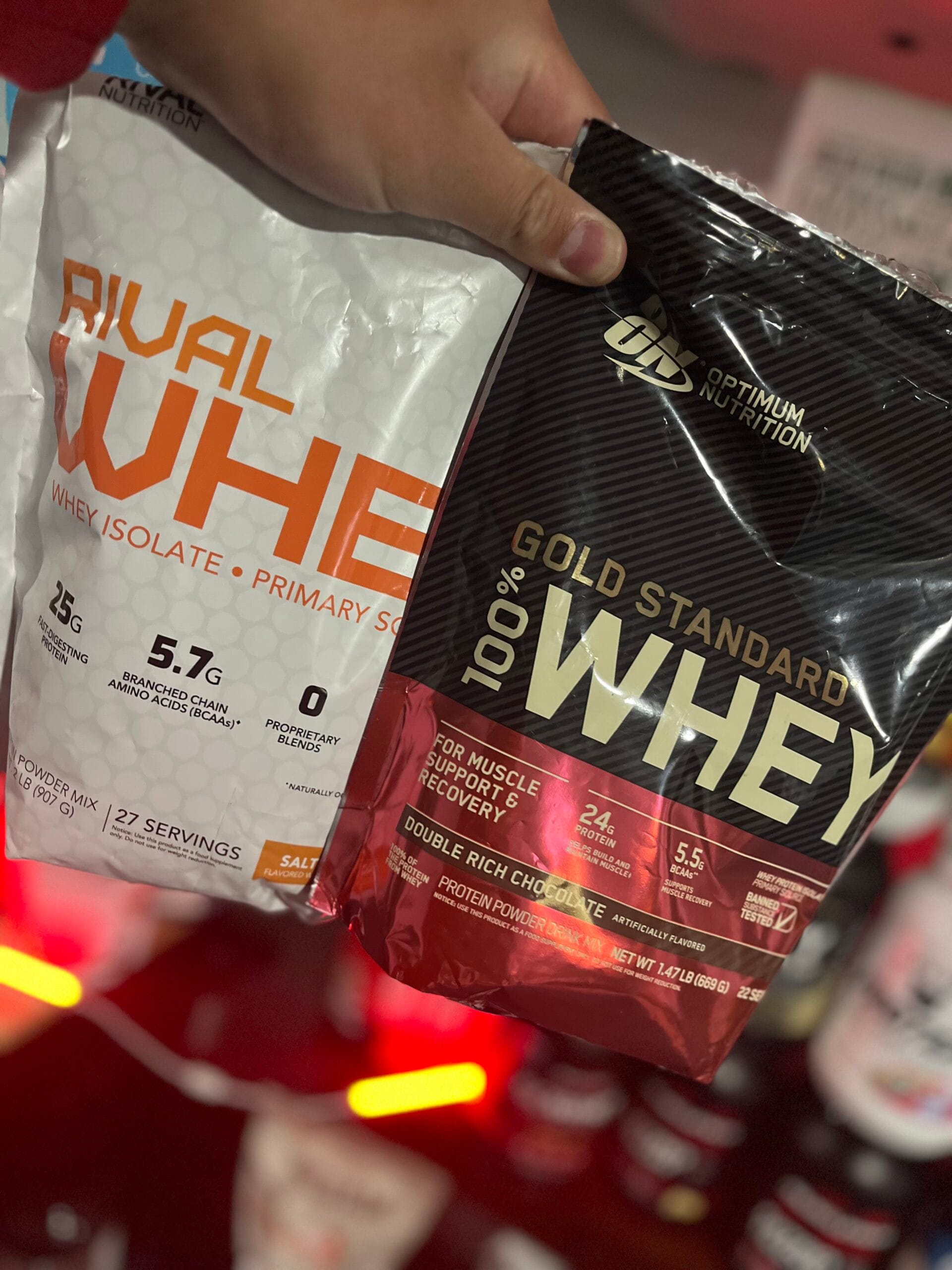
Rival Nutrition and Optimum Nutrition are often compared because they sit in the same functional lane: reliable whey protein marketed for daily training use, not boutique exclusivity. Both brands promise solid macros, good mixability, and dependable performance. What separates them isn’t taste hype. It’s how much of their protein quality can actually be measured.
This Rival Nutrition vs Optimum Nutrition comparison is designed to answer one question clearly: which protein makes it easier to understand what you’re paying for, and which one asks you to trust the label at face value. Here is my full review of Rival Clean Whey and my Optimum Nutrition Gold Standard Whey Review.
Want the spark notes? Watch my Rival Nutrition vs Optimum Nutrition comparison.
Rival Nutrition vs Optimum Nutrition TLDR
Quick Answer — Which Is Better: Rival Nutrition or Optimum Nutrition?
Optimum Nutrition is a legacy brand. Disclosed leucine content, a published amino profile, and clearer protein math make it easier to evaluate what you’re actually getting per serving, at a lower cost. Rival Nutrition wins on ingredient simplicity and natural sweeteners, but falls short on amino transparency and verification.
Overall Winner: Optimum Nutrition, based on value per serving. Rival Clean Whey for using no artificial ingredients.
Personal preference note: If you prioritize avoiding potential heavy-metal accumulation over amino transparency, Rival Nutrition Clean Whey is the safer choice from a formulation standpoint.
Help support these unbiased reviews by using my Amazon affiliate links for either brand. Buy Rival Nutrition here and Optimum Nutrition here.
How I Approach This Rival Nutrition vs Optimum Nutrition Comparison
This comparison follows the same standard I bring to every product I test: real expertise, clear analysis, and zero patience for marketing fluff. As an NSCA-certified strength coach and CISSN nutrition specialist, I spend an embarrassing amount of time reading labels, cross-checking amino data, and calling out brands that think nobody’s paying attention.
Whether a review—like this Rival Nutrition vs Optimum Nutrition comparison—starts from my own curiosity or comes straight from a YouTube request, the rule is always the same: no sponsorships, no handshakes, no quiet “brand partnerships.” What you read is grounded in what’s actually on the label and how the protein performs. If you want the video version of how I break these things down, you can always find me a thttps://www.youtube.com/@jkremmerfitness.
Transparency is non-negotiable. Yes, you may see affiliate links, but they don’t bend my opinion. If a protein is solid, I say it. If it’s underdosed, overhyped, or hiding behind vague claims, I say that too—especially in this matchup, where the numbers either hold up or fall apart fast.
Every review I write dives into the details that matter: ingredient quality, sourcing, third-party testing, amino integrity, taste, mixability, and actual protein yield—not the marketing-friendly numbers printed in bold. My goal is simple: help you understand exactly what you’re buying and whether it deserves a place in your routine.
At the end of the day, this Rival Nutrition vs Optimum Nutrition comparison is part of a bigger mission: honest, practical, bias-free protein analysis. You get the facts, you make the call. That’s how it should be.
Does Either Brand Show Signs of Amino Spiking?
Optimum Nutrition discloses 2.6 grams of leucine per serving, representing roughly 10.83% of total protein. That matters because leucine is a major anchor point for plausibility checks; when a product publishes leucine and a full amino profile, it becomes harder to hide behind a simple nitrogen-based protein number.
Rival Nutrition does not publish leucine data and keeps its amino acid breakdown proprietary. Protein is listed per serving, but without an amino map, there is no practical way to cross-check whether the nitrogen-based protein claim reflects true intact protein yield or a more “optimized” amino picture.
Both products land in a similar protein density range, with Rival at 78% and Optimum Nutrition at 77%. That similarity doesn’t eliminate spiking risk, but it does shift the burden of proof: Optimum Nutrition gives you more data to evaluate, while Rival asks for more trust with less verification.
Final Verdict: Tie
Optimum Nutrition and Rival Nutrition Clean Whey now occupy similar ground. Optimum Nutrition remains more interpretable due to the disclosed leucine and amino data, but the 2025 reformulation reduces its historical margin of confidence in formulation. Rival Nutrition Clean Whey offers simpler branding and natural sweeteners, yet provides no amino disclosure or verification.
With both products placing non-protein components high in the ingredient stack and neither offering batch-level validation, the decision comes down to which uncertainty you’re more comfortable managing rather than a clear technical winner.
Third-Party Testing: Who’s Actually Verified?
Optimum Nutrition references third-party testing focused on safety and banned substances rather than protein validation. While published amino and leucine data allow plausibility checks, no batch-level amino verification or protein integrity COAs are publicly available.
Rival Nutrition does not publish third-party amino verification, protein accuracy testing, or COAs. Protein content is declared per serving, but without amino disclosure, plausibility checks are not possible beyond nitrogen-based calculations.
Verdict: Neither brand has been independently verified for protein integrity. Optimum Nutrition provides more data to evaluate, while Rival Nutrition provides less data but makes fewer disclosure claims. As a result, amino spiking cannot be confirmed or ruled out for either product — the difference lies in interpretability, not proof.
Sourcing Transparency & Label Honesty
Neither brand provides deep sourcing documentation beyond standard label claims.
Rival Nutrition emphasizes clean formulation and naturally flavored positioning but does not back sourcing claims with formal certification.
Optimum Nutrition relies on established manufacturing practices and consistency rather than bold sourcing claims.
Takeaway: Neither offers full sourcing proof.
Heavy Metals & Prop 65 Concerns
Neither product carries a Proposition 65 warning, meaning detected heavy metals fall below California’s per-serving disclosure thresholds. However, compliance does not equal full transparency.
Rival Nutrition does not publish heavy-metal test results or Certificates of Analysis, leaving exposure assumptions unverified.
Optimum Nutrition has been flagged in Consumer Reports testing for detectable heavy metals, including lead, at levels that were compliant per serving but notable under repeated daily use. While no Prop 65 warning is required, these findings raise cumulative-exposure considerations for high-frequency consumers.
Safety summary: Both products meet regulatory thresholds per serving. Optimum Nutrition has independent evidence of trace heavy metals under Consumer Reports testing, while Rival provides no public heavy-metal data at all. Neither brand publishes comprehensive heavy-metal panels.
Taste & Mixability — Which One Drinks Better?
Both proteins mix easily with water and milk.
Optimum Nutrition delivers consistent texture and flavor across servings, making it easy to drink daily. Rival Nutrition mixes cleanly and avoids artificial aftertaste, which some users prefer.
Taste winner: Subjective, but Optimum Nutrition tastes better; Rival appeals to those avoiding artificial sweeteners. But you’re dealing with stevia.
Protein Density & Nutrition Facts Comparison
Here’s how the numbers stack when you look at what each scoop actually delivers.
Summary: Protein density is nearly identical. Differences come from disclosure, not macros.
| Rival Nutrition vs Optimum Nutrition | ||||
| Key Differences & Comparison Metrics | Naturally Flavored Rival Whey True Vanilla | %DV | ON the Gold Standard Vanilla Ice Cream | %DV |
| Leucine (g) | Requested/Proprietary | 2.6g | ||
| Leucine Percent (%) | Requested/Proprietary | 10.83% | ||
| Total BCAAs (g) | 5.7g | 5.5g | ||
| Protein Density | 78% | 77% | ||
| Protein per Serving (g) | 25g | 50% | 24g | 24% |
| Carbs per Serving (g) | 2g | 1% | 4g | 1% |
| Fiber per Serving (g) | 0g | 0% | 0g | 0% |
| Total Sugars (g) | 1g | — | 1g | — |
| Calories | 120 kcal | 120 kcal | ||
| Serving Size (g) | 32g | 31g | ||
| Number of Servings | 27 | 73 | ||
| Amazon Price(November 2025) | $42.99 | $85.99 | ||
| Price per Serving | $1.60 | $1.18 | ||
Price per Serving — Which Is the Better Value?
Using the shared Amazon pricing:
- Naturally Flavored Rival Whey (True Vanilla):
27 servings for $42.99 → about $1.60 per serving - Optimum Nutrition Gold Standard Whey (Vanilla Ice Cream):
73 servings for $85.99 → about $1.18 per serving
You’re paying a clear premium for Rival per serving, despite getting almost identical macros and less transparency. Optimum Nutrition offers slightly less protein per scoop, a disclosed amino profile, 2.6 g of leucine, and a lower price per serving.
Value verdict: If you look at “transparency per dollar” and “data per dollar,” Gold Standard wins easily. You pay less and know more. Rival charges more and tells you less.
Who Each Brand Is Best For
Rival Nutrition Is Best For:
- Casual gym-goers who want a naturally flavored, stevia/monk fruit–sweetened whey without artificial sweeteners
- People who specifically want to avoid Prop 65 warnings within the Rival lineup and are okay with trusting a 25 g claim without amino disclosure
- Anyone looking for a fast-mixing, no-fuss daily protein, and not obsessing over leucine thresholds
Optimum Nutrition Is Best For:
- Lifters who care about amino transparency and want a published amino-acid profile and stated leucine content
- People who want a blended protein can find it almost anywhere, in almost any flavor, at a sensible price
- Those who want “advertised” everyday performance and solid value from a legacy product without digging into boutique sourcing
Help support these unbiased reviews by using my Amazon affiliate links for either brand. Buy Rival Nutrition here and Optimum Nutrition here.
Final Verdict — Should You Buy Rival Nutrition or Optimum Nutrition?
Rival Nutrition and Optimum Nutrition solve different problems, and neither is a perfect answer.
Rival Nutrition offers a cleaner ingredient profile and avoids artificial ingredients, but provides no disclosure of amino acids or published heavy-metal data, leaving protein integrity and exposure assumptions unresolved.
Optimum Nutrition delivers an amino acid profile. Still, it has been flagged in Consumer Reports testing for trace levels of heavy metals, which are under California’s Prop 65 Warning. Yet, daily use means you’re accumulating heavy metals.
Winner: There is no clear winner. If ingredient simplicity and avoiding artificial sweeteners matter most, Rival Nutrition is the better fit. If measurable protein data and lower cost per serving are the priority, Optimum Nutrition makes more sense. From a performance standpoint, you are largely getting the same product. The difference lies in which uncertainty you are more comfortable accepting.
Help support these unbiased reviews by using my Amazon affiliate links for either brand. Buy Rival Nutrition here and Optimum Nutrition here.
Rival Nutrition vs Optimum Nutrition: Frequently Asked Questions
Rival Nutrition offers cleaner ingredients, but Optimum Nutrition provides better protein transparency and value. The better choice depends on whether you prioritize ingredients or documentation.
There’s no proof of amino spiking, but the lack of an amino profile means it can’t be ruled out.
Optimum Nutrition references third-party safety testing and provides amino acid disclosure, though batch-level protein verification is not publicly available.
Yes, but only in a limited way.
Rival Nutrition Naturally Flavored Whey is Informed Choice–certified, which means it is screened for banned substances. It does not verify leucine content, amino integrity, protein density, or heavy-metal levels. Rival confirmed that amino profiles, heavy-metal tests, and COAs are “not currently available to the public.”
Yes. Optimum Nutrition Gold Standard Whey provides 24 g of protein per serving, roughly 77% protein by weight, and a disclosed 2.6 g of leucine—enough to trigger muscle protein synthesis in the way high-quality whey typically does. The recent reformulation pushes “Natural and Artificial Flavors” higher on the label, which raises questions about ingredient balance, but the core amino data still supports its role as a dependable muscle-building protein.
No Prop 65 warning is present, but no published heavy-metal test data is available.
Choose Rival for ingredient simplicity and natural sweeteners. Choose Optimum Nutrition for transparency, value, and a recognized legacy brand.
Rival Nutrition vs Optimum Nutrition Sources
Consumer Reports. (2025, October 22). Protein powders and shakes contain high levels of lead. Consumer Reports. https://www.consumerreports.org/lead/protein-powders-and-shakes-contain-high-levels-of-lead-a4206364640/

Meet James, a decade-long devotee to transforming fitness journeys, both in-person and online. As a virtual and remote personal trainer, he merges passion with expertise to deliver unparalleled fitness guidance. James isn’t just about workouts; he’s a protein powder aficionado, always on the hunt for the next best blend to enhance your gains.
Holding Bachelor’s Degrees in Exercise Sports Science and Pre-Law, James’s academic foundation is as solid as his fitness regimens. His certifications read like a who’s who of fitness excellence: NSCA (CSCS), Precision Nutrition Level 1, Online Trainer Academy (OTA), C-ISSN, and more. Whether you’re looking to overhaul your fitness routine, find the perfect protein, or navigate the intersection of wellness and law, James is your go-to guide for all things fitness.
Leave a Reply