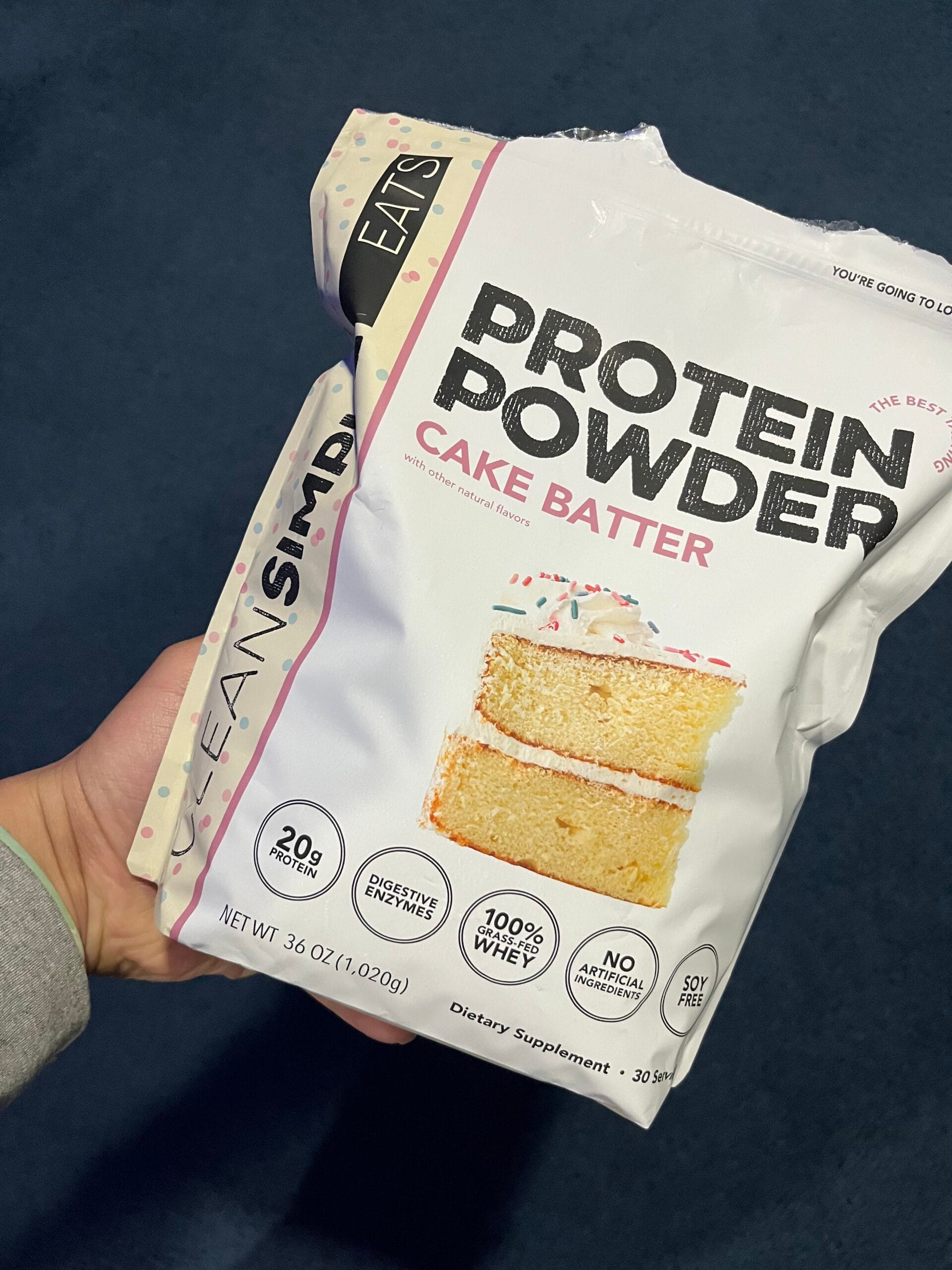
Is Clean Simple Eats Good? A Credibility Analysis Based on Reviewed Products
Is Clean Simple Eats good? That’s a great question! I did a full Clean Simple Eats protein review to answer that question. I scored the protein and gave advice on how to buy it. That review is still the most trusted source for product-specific scores, conclusions, and advice on what to buy. I’m focused on what’s most helpful for unsure buyers: whether Clean Simple Eats looks like a high-quality protein brand and whether the receipts match the polish.
TL;DR — What I Consistently See Across Clean Simple Eats
A lot of the products I’ve looked at say that Clean Simple Eats is better at showing off than proving. Now the label looks better than it did before. The formula has been made more exact. The user experience is always good. But when I talk about amino disclosure, sourcing specificity, and batch-level verification, things get a little less clear.
I keep seeing the same split between what is clearly stated and what is left vague enough that I need to trust it more than I would like. The brand does talk about some safety testing. It does put out some CoAs. It does tell buyers a polished story about the ingredients. It doesn’t always give the kind of current, product-specific protein verification that would make a high-quality whey feel completely solid.
This matters a lot, but it depends on what you think quality should actually mean. If you care about taste, mixability, and a cleaner-looking label, the brand can look pretty good. The picture gets more complicated if you want stronger amino transparency, clearer proof of sourcing, and better verification language.
How I’m Approaching the Question of Whether Clean Simple Eats Good?
I’m a certified strength and conditioning specialist (NSCA) and a certified sports nutrition professional (CISSN). All of my brand-level analyses are based on the same evidence-first framework. I’m not adding any new lab work or tests from outside sources here. I’m reviewing the patterns already established in my long-form protein reviews for this brand.
I don’t want to make a final decision, give a score, or offer buying advice in this article. It’s to see how consistently the brand shares information, backs up its claims, and addresses the trust factors that serious buyers care about. The full standalone protein reviews still have product-specific conclusions, scores, and buying advice.
If you want to see the same evidence-based method in action, you can watch my full supplement breakdowns and brand discussions on YouTube: https://www.youtube.com/@jkremmerfitness.
This article contains no affiliate links and no commercial placements.
Table of contents
- Is Clean Simple Eats Good? A Credibility Analysis Based on Reviewed Products
- TL;DR — What I Consistently See Across Clean Simple Eats
- How I’m Approaching the Question of Whether Clean Simple Eats Good?
- What I’m Looking At in This Analysis
- What the Brand Label Makes Clear, and What It Doesn’t
- Clean Simple Eats Testing, Verification, and What Is Actually Confirmed
- Sourcing and Manufacturing Claims in Context
- Clean Simple Eats Ingredient Disclosure and Formulation Consistency
- Clean Simple Eats Safety, Prop 65, and Disclosure History
- Brands Readers Commonly Compare to Clean Simple Eats
- What “Good” Means Depends on the Standard
- Is Clean Simple Eats Good?
What I’m Looking At in This Analysis
This is simple on purpose. I’m only using long-form reviews that have already been written for the brand. I’m not adding new tests, outside research, or new guesses to the article to make it sound busier than it is. The job here is to look at recurring patterns of credibility: what the label explains well, what the brand verifies well, and where the story still asks the buyer to do a little yoga with the facts.
What the Brand Label Makes Clear, and What It Doesn’t
The label makes it clear what the basic protein claim is. The harder part is figuring out if it makes the protein story clear. In my review, the amino acid profile changed over time for no clear reason, and the current leucine support still came through email rather than a shareable current CoA linked to the formula being sold now. That’s not proof of amino spiking. It shows that the amino conversation never really ends.
The leucine content is important because it helps me figure out whether a post-workout whey isolate is actually doing something or just wearing clean clothes, like a pressed white shirt. The current profile says each serving contains 1.848 grams of leucine, which is less than I would want for a high-quality isolate sold based on rust and quality language. The protein math isn’t wrong, but it’s also not as comforting as the branding suggests.
After that comes the panel itself. Clean Simple Eats uses a Supplement Facts format instead of a standard Nutrition Facts format, which changes how buyers read the product. The formula still shows protein at 40% of the Daily Value, which makes you wonder how strong the evidence is for that claim. This tells me the label is cleaner than it used to be, but not everywhere that matters.
Clean Simple Eats Testing, Verification, and What Is Actually Confirmed
It’s easier for me to confirm a story about safety testing than it is to confirm a story about full protein verification. The brand has a page on its standards, discusses third-party lab testing, lists ISO 17025-compliant labs and FDA-registered facilities, and makes CoAs for Simply Vanilla and Brownie Batter public. That is true. It isn’t nothing.
However, there is no batch-match proof of amino quality, leucine yield, or full label integrity across the line. The public CoAs that are available are records of contaminants and microbes rather than full protein receipts. There are no official certification programs, like Informed Choice, Informed Protein, NSF Certified for Sport, or Labdoor, that would fill that gap in the product line. So, yes, there is testing. No, the broader premium verification language is not fully supported as serious buyers might expect.
Sourcing and Manufacturing Claims in Context
This is when the brand sounds like it costs a lot of money before it sounds like it has a lot of details. I couldn’t confirm that Clean Simple Eats uses the term “grass-fed” with published farm-level sourcing documents, a dairy audit, a co-op identifier, or a widely accepted third-party grass-fed standard. That doesn’t mean the claim is false. It does mean that the claim isn’t carrying a lot of paperwork in public.
I couldn’t determine the source of the ingredients with much accuracy, other than the fact that the label didn’t say “made with domestic and international ingredients.” That leaves only whey from the USA. But that doesn’t really make it clear where the source is. The most important thing is that the brand tells a better story about where it gets its products than it does about how it gets them. That might work for a regular whey. That still leaves a gap for a high-end clean protein powder.
Clean Simple Eats Ingredient Disclosure and Formulation Consistency
The biggest change in the formulation that I saw was the move to a simpler ingredient list. The newer Birthday Cake formula got rid of a lot of the old stuff, like xylitol, IMO, coconut milk powder, non-fat dry milk, xanthan gum, and the old stevia and monk fruit stack. Instead, there is a shorter panel made of whey isolate, natural flavors, Reb M, sea salt, and beta carotene. That’s a real mess.
I love seeing a short panel. However, I don’t love seeing the term “natural flavors.” Examining current and past ingredient profiles, “natural flavors” is now at the top of the list. The FDA does not share what ingredients qualify under the “natural flavors” term. Technically, taurine and glycine are sweeteners that are allowed under the “natural flavors” term, which are tehcinicnally nitrogen heavy ingredinets. In turn, inflate the actual number of proteins. That’s why I keep saying the same thing: yes, it’s easier. Not quite fully transparent.
Clean Simple Eats Safety, Prop 65, and Disclosure History
Clean Simple Eats says it tests its products for heavy metals and pathogens. Great but why does the brand have an official Prop 65 warning page? There are public CoAs for only two flavors, and one outside test found a low level of lead in Chocolate Brownie Batter. Those are real data points.
Which products got targeted for failure to provide a Prop 65 warning? A legal settlement language I read pointed to Super Greens Mix Products rather than the protein powders. So, the safety story isn’t empty, but it’s not as big as the brand halo might suggest. I would call that selective reassurance, not general clarity.
Brands Readers Commonly Compare to Clean Simple Eats
People trying to figure out whether Clean Simple Eats is real, good, or just very polished usually compare it to a small group of better-known options. There is nothing strange about the usual questions. They want to look at the price-to-proof ratio, the formula’s style, third-party testing, amino disclosure, and sourcing clarity.
I keep seeing the names AGN Roots, Optimum Nutrition, and FlavCity when I was doing my research on Clean Simple Eats. When people want more amino disclosure and a better proof package, they compare it to AGN Roots. Optimum Nutrition comes up when people talk about trust, value, and more established verification language in the market as a whole. FlavCity comes up when buyers are looking at clean-label aesthetics, lifestyle marketing, and how much protein purity they are willing to give up for a wellness-first formula.
- Equip Protein vs Clean Simple Eats
- Clean Simple Eats vs AGN Roots
- Clean Simple Eats vs Just Ingredients
- Clean Simple Eats vs Flavcity
- Clean Simple Eats vs Orgain
- Clean Simple Eats vs 1up Nutrition
- Clean Simple Eats vs Devotion
- Clean Simple Eats vs PeScience
- Clean Simple Eats vs Isopure
- Clean Simple Eats vs Pro Dough
- Clean Simple Eats vs Kachava
- Clean Simple Eats Protein vs Truvani
- Clean Simple Eats vs Ghost
- Clean Simple Eats vs Keto Chow
- Clean Simple Eats vs Ballerina Farm
- Clean Simple Eats vs Legion Protein
- Clean Simple Eats vs Ascent Protein Powder
- Clean Simple Eats vs 1st Phorm
- Clean Simple Eats Protein Powder vs Optimum Nutrition
- Javvy vs Clean Simple Eats
- Ryse vs Clean Simple Eats
- Levels Protein vs Clean Simple Eats
What “Good” Means Depends on the Standard
This is where the whole thing starts to get a little tricky in a good way. Some buyers judge a product’s quality based on how it tastes, how well it mixes, and how well it fits into their daily lives. By that standard, Clean Simple Eats is really good at some things. I wrote down that it mixed well, tasted good, and had a cleaner ingredient list.
Other buyers define high quality by verification discipline, which includes amino transparency, current CoAs, better substantiated grass-fed claims, and stronger public receipts. By that measure, the same brand seems weaker. Same tub, but a different way to measure. That’s why I don’t think of “good” as the same thing.
Is Clean Simple Eats Good?
It all depends on what standard you use, which is why this brand keeps getting stuck in the gray area instead of a clear category.
Clean Simple Eats makes a good case for itself if you care about taste, how well it mixes, and how clean it looks compared to the old version. I found a product that is easier to drink than many high-end whey products, easier to use every day, and clearly better than the old version. For many buyers, that’s all it takes for a brand to look high-quality.
Your case gets weaker if you want stricter amino disclosure, better leucine transparency, stronger proof of sourcing, current batch-level verification, and when serious buyers can actually look at other 3rd party independently verified brands. That’s where the brand still leaves too much space between what sounds high-end and what is fully backed up. The formula got thinner. The paperwork didn’t get better as quickly.
That’s the line I keep going back to with Clean Simple Eats. It looks like it has more discipline now. It doesn’t seem like every important place has the same amount of documentation.
When people ask me if Clean Simple Eats is good, I don’t think a single-word answer is helpful. A polished protein brand may appeal to buyers who care most about how easy it is to use on a day-to-day basis. People who care most about proof, verification, and the depth of disclosure may see a brand that still wants more trust than it has earned in the public eye.
This article is only about brand-level credibility patterns. It doesn’t replace the product-specific scores, conclusions, or buying advice in my full reviews, and it doesn’t replace articles that compare products side by side, where it’s much easier to see the trade-offs.

Meet James, a decade-long devotee to transforming fitness journeys, both in-person and online. As a virtual and remote personal trainer, he merges passion with expertise to deliver unparalleled fitness guidance. James isn’t just about workouts; he’s a protein powder aficionado, always on the hunt for the next best blend to enhance your gains.
Holding Bachelor’s Degrees in Exercise Sports Science and Pre-Law, James’s academic foundation is as solid as his fitness regimens. His certifications read like a who’s who of fitness excellence: NSCA (CSCS), Precision Nutrition Level 1, Online Trainer Academy (OTA), C-ISSN, and more. Whether you’re looking to overhaul your fitness routine, find the perfect protein, or navigate the intersection of wellness and law, James is your go-to guide for all things fitness.
Leave a Reply