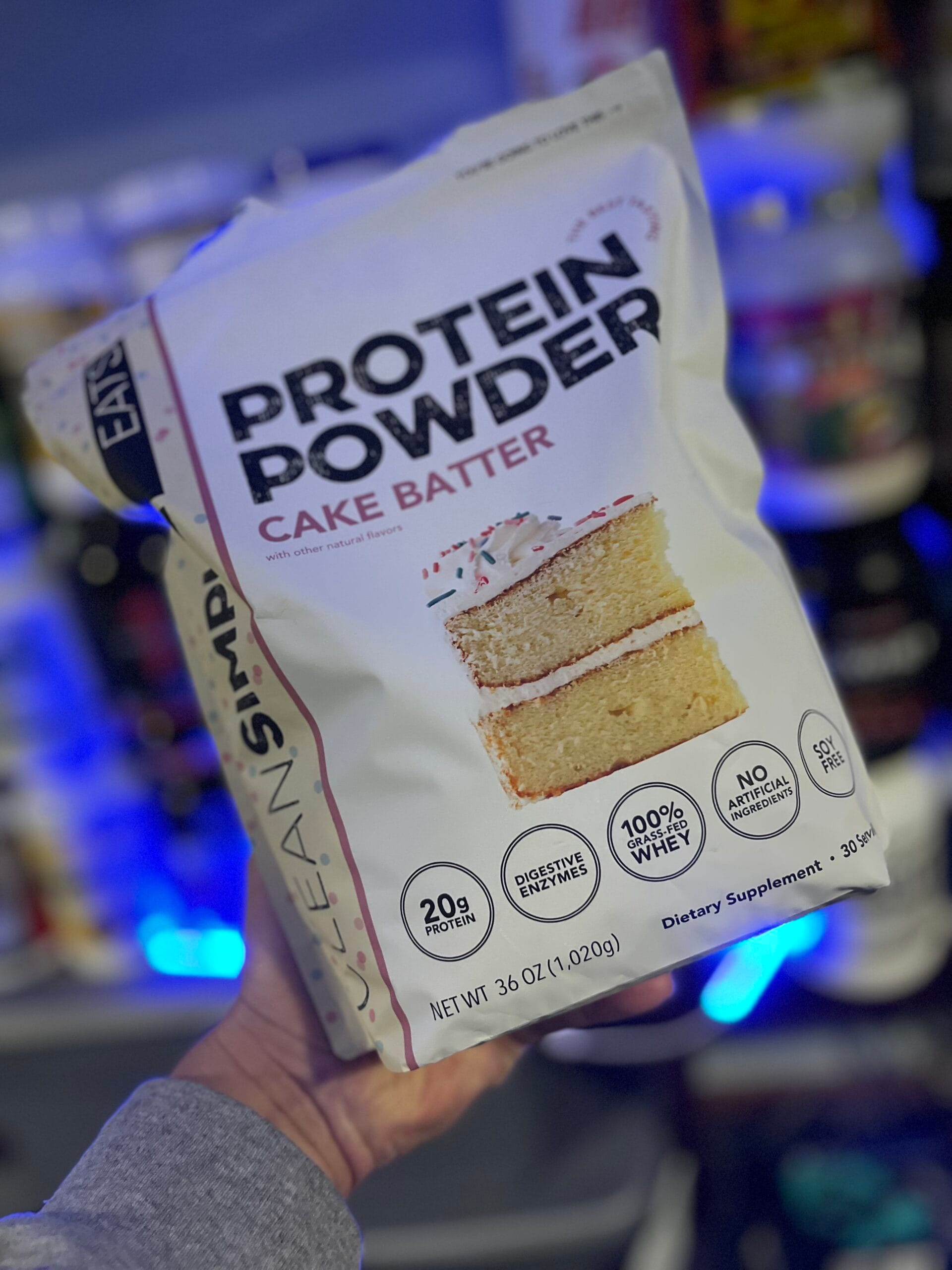
Clean Simple Eats Protein Powder Review: Worth the Hype or Just Expensive?
A clean protein powder with a strong flavor and good mixing ability, but a lot of the premium claims still come with less paperwork than they should. If you’re wondering if Clean Simple Eats is good, read my article here.
Clean Simple Eats Protein Powder Review TL;DR
- The biggest trust issue with this Clean Simple Eats Protein Powder Review is the integrity of the amino acids. The profile changed over time, leucine disclosure is limited, and the current formula still doesn’t have the kind of shareable batch-level proof that a premium whey should have.
- The brand does conduct some safety testing, but the third-party story is still limited. Public CoAs cover only a small part of the line and sound more like reports on contaminants than full protein verification.
- The proof didn’t get better as quickly as the label did. The protein %DV suggests something about quality, but the source remains unclear, and the grass-fed story still needs more polish than paperwork.
- At this price, the brand wants customers to pay extra for taste, mixability, and a cleaner look, but it doesn’t answer enough of the harder quality questions.
Final Score: 27/50 (54%) — Great Taste, Tough Recommendation.
Clean Simple Eats Protein Powder Tastes Premium. The Proof Does Not.
Summary
You are not paying for airtight proof when you buy Clean Simple Eats Protein Powder. You are paying for flavor, easy mixing, and everyday convenience. When you shake it up, Clean Simple Eats Protein Powder works like a high-end product: it has a smooth texture, a strong flavor, and no big clumps. But the harder questions never really go away. The amino story changed; leucine support is limited, grass-fed verification is thin, and the brand’s clean image is stronger than its paperwork. If taste and ease of use are more important to you than deep-label transparency, stronger amino receipts, or better value per serving, Clean Simple Eats Protein Powder is the best choice for you.
Pros
- Excellent flavor
- Smooth mixability
- Easy daily-use protein
Cons
- Limited amino verification
- Weak value for the price
- Premium claims outrun documentation
Representative Review Notice
This review represents the complete evaluation and final verdict for Clean Simple Eats protein.
All supporting analyses, safety breakdowns, brand-level articles, and comparison content defer to this page for scoring, conclusions, and purchase guidance.
Inside My Clean Simple Eats Honest Review Process
I’m a certified strength and conditioning specialist (NSCA) and sports nutrition professional (CISSN), and I do not grade protein powders based on branding, hype, or who is smiling in the ad creative. Every Clean Simple Eats honest review I publish gets put through the same process: label accuracy, amino integrity, verification transparency, safety disclosure, and how the product holds up in the real world.
If a brand makes a claim and cannot back it up, I count that against them. That rule applies throughout this Clean Simple Eats honest review. I am not here to recycle talking points or reward polished marketing copy.
This breakdown examines what the brand proves, what it leaves fuzzy, and where that matters for performance, trust, and perceived value. For the video version of this process, you can find my full reviews and comparisons on YouTube.
Table of contents
- Clean Simple Eats Protein Powder Review: Worth the Hype or Just Expensive?
- Clean Simple Eats Protein Powder Review TL;DR
- Inside My Clean Simple Eats Honest Review Process
- Amino Spiking & Protein Integrity (Short Answer)
- Clean Simple Eats Third Party Tested, Safety, and Quality Verification (Short Answer)
- Ingredient Accuracy, Grass-Fed Claims, and Safety Disclosures (Short Answer)
- Clean Simple Eats Nutrition Facts, Protein Density, and Label Integrity (Short Answer)
- Mixability, Texture, and Flavor Accuracy (Short Answer)
- Price, Value, and Availability (Short Answer)
- Clean Simple Eats Vs: How It Stacks Up Against Competitors (Short Answer)
- Clean Simple Eats Amazon Reviews: What Real Customers Are Saying (Short Answer)
- Clean Simple Eats Protein Powder Review – Final Thoughts (Before You Buy)
- Clean Simple Eats Review Review Round-Up (Score Summary)
- FAQ – Clean Simple Eats Review
- Disclosure & Affiliate Information
- Clean Simple Eats Protein Powder Review Sources
Amino Spiking & Protein Integrity (Short Answer)
It’s probably not in any clear-cut way, but it’s also not clean enough to put the question to rest.
- The amino acid profile changed over time, but the brand didn’t make it clear why the new numbers are different from the old ones.
- Natural flavors are one of the top four ingredients, which adds another important part of the formula that buyers can’t check for themselves.
- The product has a Supplement Facts panel that clearly shows the protein, but it doesn’t provide the practical clarity buyers expect from a clean protein powder they use every day.
- The brand didn’t provide a shareable current CoA for the formula sold now, which makes it harder to verify how much of the amino story is true.
Amino Spiking Score: 2.5/10
Is Clean Simple Eats Amino Spiked?
I couldn’t find any direct evidence that this clean protein powder contains amino acids. I found three good reasons to keep the question open: the amino acid profile changed over time, the brand’s clean-marketing stance doesn’t change the fact that natural flavors are high in the formula, and the product is sold under Supplement Facts rules that don’t make things as clear for buyers as many regular food labels do. That is not a gun that smokes. It is a good reason to ask better questions.
- The amino acid profile changed over time.
- Natural flavors make it hard to see through
- The Supplement Facts rules make it harder for buyers to understand what they are buying.
The real problem here is not a proven case of amino-spiking. The Clean Simple protein leaves buyers with a moving amino story, a flavor that isn’t very clear, and a label structure that doesn’t do much to clarify.
The Amino Acid Profile Changed Over Time
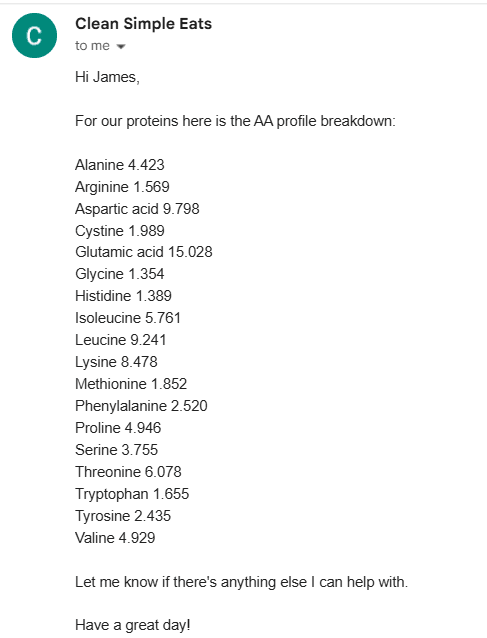
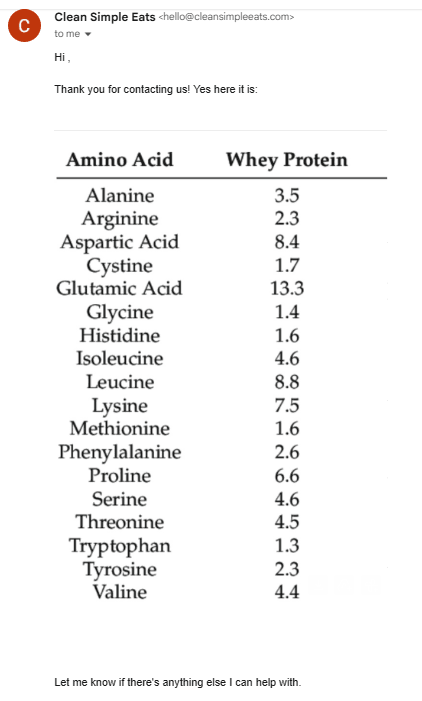
Yes, this is a real worry. In the old review of Clean Simple Eats Protein Powder, the problem isn’t that the amino values changed at all. The brand gave two different amino acid profiles for the same 20-gram protein claim without clearly explaining why the numbers changed. This goes against the kind of openness expected in a high-quality, clean protein powder and in a carefully marketed grass-fed whey protein isolate.
- The brand sent two amino acid profiles: one older and one newer. The two profiles didn’t match, even though they said the same amount of protein was in each.
- Leucine, isoleucine, lysine, threonine, glutamic acid, and proline are some of the amino acids that changed noticeably.
- When sourcing or making changes, things like that can happen. But when clean simple eats protein gives buyers two different amino snapshots without a clear explanation, it’s harder to trust the label story.
Why this is important: When the amino story changes but the explanation doesn’t, buyers are left to guess about the quality of the protein, whether it supports muscle protein synthesis, and whether this simple protein powder is as consistent as the branding suggests.
Natural Flavors Create a Transparency Problem
Yes, this is a real worry. Natural flavors are among the top four ingredients in Clean Simple Eats protein powder, meaning the term covers a large portion of the formula, not just a small amount. The issue is that natural flavors don’t automatically mean amino spiking. The brand uses a general term and also says that “our natural flavors are additives derived from natural extracts or juices from fruits, vegetables, plants, or spices,” which sounds clean but still does not tell the buyer what is actually in the flavor system.
- Natural flavors are among the top four ingredients, making them more important than a small note on the label.
- The brand uses vague, comforting language to talk about those ingredients, but the actual makeup is still hidden behind a general term.
- That term doesn’t tell the buyer what’s in the flavor system, so there’s a part of the formula that can’t be checked on its own.

Why this is important: When a simple protein powder sells itself on trust and the purity of its ingredients, a high-ranking but vague ingredient makes the label less clear and makes it harder to check the clean protein story.
Supplement Facts Rules Give Buyers Less Practical Clarity
Yes, this matters. Because the Clean Simple Eats label is based on dietary supplement rules rather than regular food rules, the way the formula is presented to customers differs. The FDA’s Dietary Supplement Labeling Guide, Chapter IV: Nutrition Labeling, states that dietary supplements use “Supplement Facts” rather than the usual food labeling framework. This is why this clean protein powder can look neat on the panel but not give as much practical information as many buyers expect from a simple protein powder.
- Clean Simple Eats is sold and labeled as a dietary supplement rather than as a regular food.
- The buyer sees a Supplement Facts panel instead of a Nutrition Facts panel. This is because it is still used as a daily protein source for shakes and drinks.
- For people who are comparing a naturally sweetened whey protein, a post-workout whey isolate, or a protein powder with the cleanest ingredients, the format is important because the label makes the protein claim clear without going into too much detail about how it works.
Why this is important: When the panel talks more about the product than explains it, buyers are less sure about the label’s integrity and the protein claim that goes with it.
Clean Simple Eats Amino Acid Profile
There is a difference between the old and new amino acid profiles. This doesn’t prove amino spiking, but it does show that the formula for this Clean Simple Eats protein powder has changed over time. For people who pay a lot for a clean protein powder, consistency is important because it’s part of the product, not an extra feature.
The simple answer is that the difference between the two profiles is most likely due to a change in sourcing, manufacturing, standardization, or a combination of the three. The problem isn’t that change happened. The problem is that the brand didn’t give buyers enough information to make it clear.
What Changed in the Amino Acid Profile?
The company gave us two amino acid profiles, one older and one newer. The numbers didn’t match up, even though each serving had the same 20 grams of protein. Leucine, isoleucine, lysine, threonine, glutamic acid, and proline are just a few of the amino acids that changed in noticeable ways.
In real life, protein production can change like that. When a simple protein powder gives customers two different amino snapshots without a clear explanation, though, the label is harder to trust.
Why Might the Old and New Profiles be Different?
It looks like something has changed in the sourcing, manufacturing, or standardization, and the label story didn’t do a good job of explaining it.
The first option is the source of the whey itself. It looks like older marketing relied on “New Zealand Whey.” The amino acid profile could have changed if the source changed later on. Different dairy regions, suppliers, and raw material inputs can change the amino makeup of a grass-fed whey protein isolate, even if the front label still says it’s the same clean, simple eats protein powder.

The second option is to make things. When a brand changes its supplier specs, processing methods, or batch-standardization targets, a protein formula can change on paper. This is especially likely for a product that is based on flavor, mixability, and repeated use in protein shakes and drinks.
The third problem is checking. If the older version promoted “New Zealand Whey” without a shareable CoA or a sourcing document, buyers were left with an ad claim rather than real proof. That doesn’t mean the claim is wrong. It does mean that the customer couldn’t easily tell if the older amino profile came from a different source or was just a better marketing story.
The practical takeaway is that the change in the amino profile looks more like a change in sourcing or manufacturing than a clear pattern of amino spiking. However, the lack of verification makes this clean protein powder less trustworthy than it should be.
Why Does This Matter for Buyers?
If someone is looking for a naturally sweetened whey protein, a whey isolate to use after a workout, or a protein powder with the cleanest ingredients, consistency is important. When the amino profile changes but the explanation doesn’t, trust goes down, labels become less clear, and the whole Clean Simple Eats protein story asks the buyer to place more faith in it than it should.
How Many Scoops of Clean Simple Eats Post-Workout to Stimulate Muscle Protein Synthesis (MPS)?
Likely, one scoop isn’t enough. According to the new amino acid profile the brand sent me by email, one serving has 1.848 grams of leucine. This is less than the usual 2 to 3 grams of leucine needed for muscle protein synthesis. That means that 1.25 scoops is the low end, while 1.5 scoops is a safer cushion.
That suggestion fits with the International Society of Sports Nutrition position stand on nutrient timing, which states that “a protein bolus of approximately 20–40 g has been shown to stimulate muscle protein synthesis (MPS) maximally” and that “a 20–40 g protein dose” best supports MPS rates across the day.
One scoop here has 20 grams of protein, which is at the very bottom of the protein range. It also has a little less leucine than it should. Whey is usually more leucine-dense gram for gram than a natural reference like skim milk. That’s why this post-workout whey isolate is still good for building muscle. The problem is that the amino profile came via email rather than a current CoA that could be shared, so the math is helpful but not fully verified.
- What we know is that the new amino acid profile says that leucine is 9.241 g per 100 g of protein, which means that one 20 g serving has 1.848 g of leucine.
- What we can’t confirm: the brand didn’t provide a shareable current CoA linked to the formula sold now, so buyers can’t check that the amino profile they received by email matches the tub they have.
- If you want this clean protein powder to really help MPS, you should use 1.25 to 1.5 scoops after your workout, or mix one scoop with a protein source known to be high in leucine.
If the amino profile in the email is correct, the minimum dose is 1.25 scoops, and 1.5 scoops is the safer choice. Or you could use 8 ounces of skim milk, which is high in protein, as your liquid.
Amino Spiking Score: 1.5 out of 10
This section receives a low score because the brand doesn’t provide buyers with a clear, verifiable amino story. The new amino profile raises some good points. Still, the company doesn’t provide a shareable CoA, public batch verification, or enough information about where the ingredients came from to explain why the numbers changed.
Natural flavors are also high on the list under a vague label term, making it even harder for customers to check on their own. The result is a protein that might still work well in practice, but it asks buyers to believe the ads rather than provide stronger evidence.
Clean Simple Eats Third Party Tested, Safety, and Quality Verification (Short Answer)
Yes, Clean Simple Eats has a real story about safety testing, but not a fully convincing one about how it works. The brand now has a standards page stating that it uses third-party lab testing, ISO 17025-compliant labs, FDA-registered facilities, and batch testing for heavy metals and pathogens. It also has public CoAs for Simply Vanilla and Brownie Batter.
- There is third-party testing right now, but it is limited. What is published supports testing for contaminants and microbes more than testing for full proteins.
- There aren’t many CoAs available, and they aren’t very useful. They cover two flavors and read more like toxicology and microbiology reports than full batch-level proof of amino quality, leucine content, or macro accuracy.
- My containers did not show any Proposition 65 disclosure. That means I can’t give the brand credit for a Prop 65 warning or take points away for hiding one based on this record alone.
- The marketing is still ahead of the paperwork. The claim that third-party testing sounds stronger on the label than in the published evidence, and the page doesn’t show official certification programs like NSF, Informed Choice, or similar ones.
Verdict on transparency: credible for basic safety checks, not enough for full protein verification, and still too polished for the amount of proof that has been published.
Is Clean Simple Eats Third-Party Tested?
Yes, but only in the way that matters least to a suspicious buyer. Clean Simple Eats now has a testing page that states they conduct third-party lab work, use ISO 17025-compliant labs, are FDA-registered, check raw materials, test finished products, and screen batches for heavy metals, pathogens, and gluten. It doesn’t publish the kind of current, batch-level protein verification that would answer the more difficult questions about amino quality, leucine yield, or full label integrity.
That difference is important. The brand talks a lot about being open. Its standards page says customers can review its “batch-level testing procedures” and “third-party certifications.” It also says that finished products are tested for “potency, label accuracy, and the absence of contaminants.” It also says it is “continuously expanding public access” to CoAs, but on that page, it only links to Simply Vanilla and Brownie Batter. That is real progress, but the window is still small, not a greenhouse.
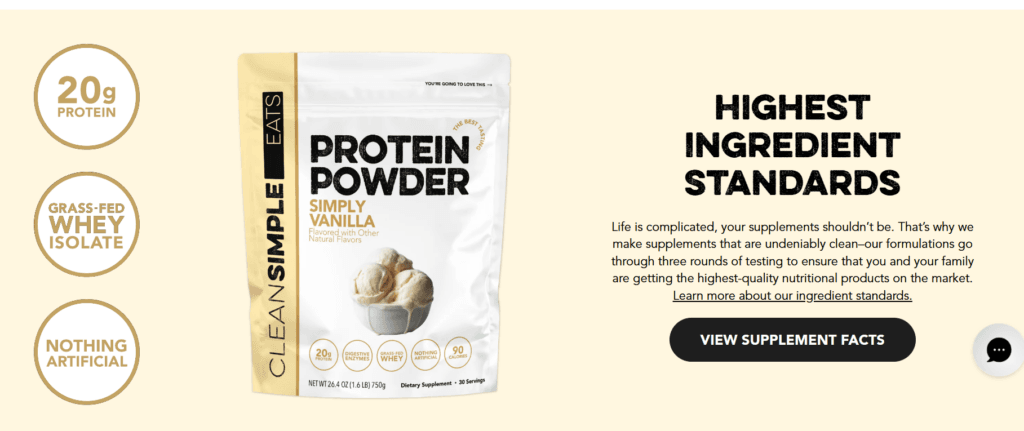
The issue is what those public records really do for the buyer. The CoAs you sent don’t really do full protein verification; they work more like toxicology and micro reports. They support the brand’s story about testing for safety. They don’t really check the amino acid profile, leucine content, or the broader questions about protein integrity that arise elsewhere in this review. The published backup does not support all of the claims on the front label with the same level of confidence. For example, it says “3rd party tested,” “rBST free,” “cBMP,” “no artificial ingredients,” and “soy free*.” The star is also important. It is common for supplements to say, “The Food and Drug Administration has not evaluated these statements.” However, this does not mean that a third party has checked them, and it is not a way to get around vague verification.
There is another gap here, and it is not small. The standards page discusses gluten allergen testing in clear language. Still, it doesn’t list official certification programs such as NSF Certified for Sport, Informed Choice, Informed Protein, or Labdoor. It also doesn’t publish a current full amino acid CoA that is linked to the retail formula, a recent leucine verification, or a clear macro and micro confirmation sheet that a serious buyer can check. That puts the brand in a weird middle ground: it’s more believable than a company that shows nothing, but it’s still not fully verified for buyers who care about performance, who need receipts.
My judgment is clear: the verification claims are partly true, missing some important information, and a little too polished for the amount of proof we have. It looks like Clean Simple Eats tests for safety and contamination in a way that makes sense. It doesn’t yet publish enough up-to-date, product-specific protein data to make its broader verification language feel complete.
Ingredient Accuracy, Grass-Fed Claims, and Safety Disclosures (Short Answer)
This part looks at the difference between what the label says and what can be proven, such as whether the clean protein powder is really grass-fed, whether safety warnings like a Prop 65 warning or useful documentation are really there, and whether the ingredients are clear.
Clean Simple Eats Ingredients List
The new Birthday Cake formula is much leaner than the old one, but it doesn’t look as simple as the branding suggests. Clean Simple Eats protein powder is made with grass-fed whey protein isolate, which is the best place to start for a clean protein powder. The difference is in what surrounds it, and in this case, the cast around it changed a lot.
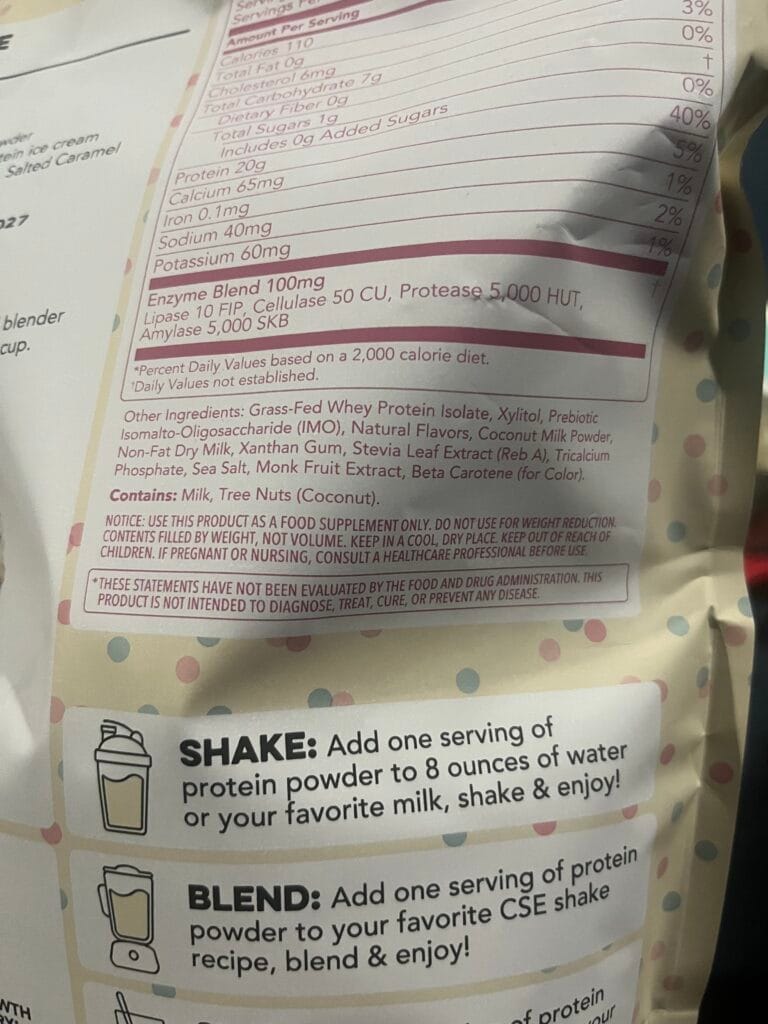
The old formula looked like a dessert protein that a group of people made. It had xylitol, IMO, coconut milk powder, non-fat dry milk, xanthan gum, stevia, monk fruit, sea salt, and color on top of the isolate. That made the product thicker, sweeter, and more textured, but it also made the label look busier than a simple protein powder that costs a lot of money.
The new formula is much shorter and only has whey isolate, natural flavors, Reb M, sea salt, and beta carotene. That is a good cleanup. The sweetener system has been simplified to just a stevia-based sweetener. The gum, the extra dairy support ingredients, and the old fiber-style filler are all gone. This makes the newer version easier to read and easier to call a “minimalist protein” for shakes.
But the new label doesn’t disappear just because it’s shorter. Natural flavors are still high in the formula, but now they are more prominent than before. This is important for interpretation, even though it doesn’t increase the length of the ingredient list. According to FDA rules, ingredients must be listed in order of weight, with the heaviest ones first. This means that placement still tells a story, even if it’s a short one. This formula isn’t just whey with a hint of flavoring, though. This whey protein has been naturally sweetened, but the flavor system is still working.
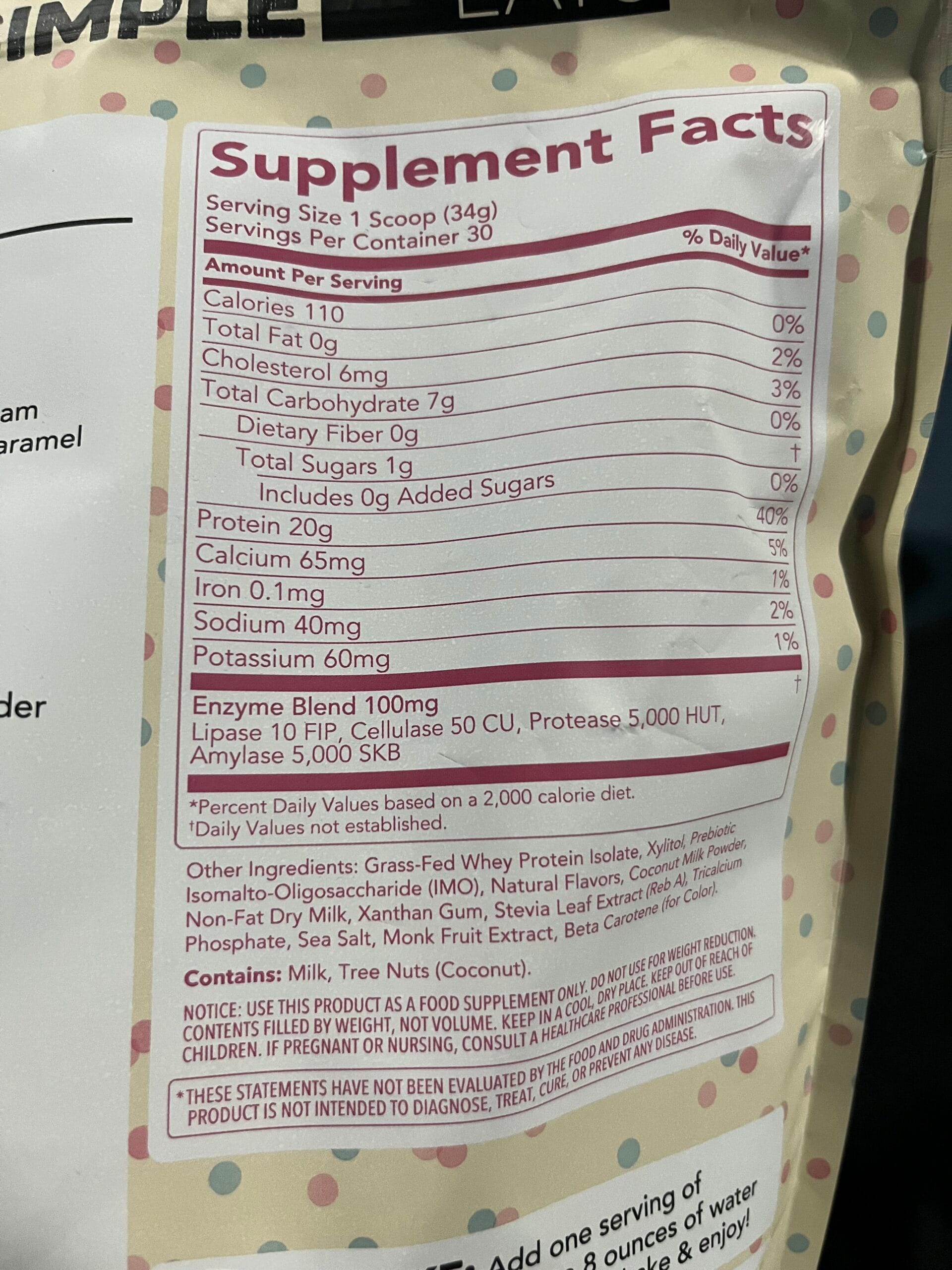
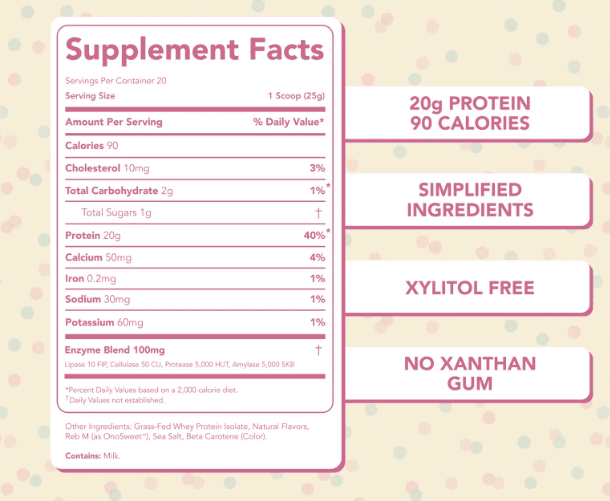
The rest of the panel is easy to understand. Reb M takes care of the sweetness; tricalcium phosphate probably helps with flow and prevents the food from sticking together; sea salt adds flavor; and beta carotene gives the food its color. There is no blend of digestive enzymes, no stack of emulsifiers, and no long tail of stabilizers. This makes the current version cleaner on paper than many tubs that are sold as post-workout whey isolate. But this isn’t a real stripped-down isolate with nothing to hide behind. Not ultra-minimal, but rather simplified.
What is missing is almost as important as what remains. The label doesn’t tell the buyer much other than the required ingredient order for a product sold as a premium isolate. There is no extra information about how the flavor system works, no more detailed breakdown, and nothing on the panel itself that turns a polished ingredient story into a very informative one. That doesn’t go against what labels should say. It just means the formula is easier to read than to understand fully.
| Clean Simple Eats Birthday Cake Ingredient List | |||
| Ingredient | Old Ingredient Profile | New Ingredient Profile | Purpose |
| Grass Fed Isolate | Yes | Yes | Main protein source |
| Xylitol | Yes | No | Sugar alcohol |
| Prebiotic Isomalto-Oligosaccharide (IMO) | Yes | No | Adds body to the shake and functional fiber |
| Natural Flavors | Yes | Yes | Moved into the 2nd or 3rd sport in the new profile |
| Coconut Milk Powder | Yes | No | Likely used for creaminess and a richer dessert-style texture. |
| Non-Fat Dry Milk | Yes | No | It was added for extra dairy body and a smoother mouthfeel. |
| Xanthan Gum | Yes | No | Thickener and stabilizer used to improve shake texture |
| Stevia Leaf Extract (Reb A) | Yes | No | Zero-calorie natural sweetener |
| Monk Fruit Extract | Yes | No | Zero-calorie natural sweetener |
| Reb M (an OsoSweet) | No | Yes | A branded stevia-derived sweetener |
| Tricalcium Phosphate | No | Yes | Anti-cake agent |
| Sea Salt | Yes | Yes | Flavoring |
| Beta Carotene (for Color) | Yes | Yes | Color |
The main point is that the old Birthday Cake formula seemed designed to be sweet and have a good texture, while the new one is clearly made to look cleaner, shorter, and more modern. The ingredient list shows that the brand’s focus shifted from making a dessert-style shake to selling a cleaner, protein-focused image.
Clean Simple Eats Ingredients Honest Review: Flavors, Additives, and Missing Disclosures
This honest look at Clean Simple Eats ingredients is better than the old formulation, but it’s still not a masterclass in honesty. The new label is shorter, easier to read, and has fewer texture tricks. It also still uses a few broad terms and partial disclosures that make the tub sound simpler than it really is.
The flavor system is the best example. The label says it uses natural flavors, which is normal, legal, and still very unclear. That word tells me that flavor is being added, but it doesn’t say what is actually making the Birthday Cake profile. And that placement is important because the order of the ingredients matters. Natural flavors are now right behind whey isolate in the new formula. That is not a small detail for a clean protein powder that wants to appear to have fewer ingredients. It is one of the most important parts of the formula.
The list of additives is cleaner than it was before, but it’s still not completely clear. The old Birthday Cake recipe used xylitol, IMO, coconut milk powder, non-fat dry milk, xanthan gum, stevia, monk fruit, and other ingredients to make it sweet, thick, and dessert-like. The new version cuts that down a lot, but it still has a sweetener system, color, salt, and a mix of 100 mg of enzymes. The mix includes lipase, cellulase, protease, and amylase, so the formula isn’t just whey with a flavor and a halo.
| Clean Simple Eats Enzyme Profile | |
| Enzyme (Amount) | Purpose |
| Enzyme Blend (100mg) | |
| Lipase (10 FIP) | Helps break down fats. |
| Cellulase (50 CU) | Helps break down plant fibers. |
| Protease (5000 HUT) | Helps break down protein. |
| Amylase (5000 SKB) | Helps break down carbohydrates. |
The label starts to talk out of both sides of its mouth with that enzyme mix. The brand wants this grass-fed whey protein isolate to look clean and high-quality on the one hand. On the other hand, both the old and new Birthday Cake versions still have digestive backup. That doesn’t mean the product is bad. It does make the story of effortless purity a little less easy.
The sweetener story follows the same pattern. The old formula had xylitol, stevia Reb A, and monk fruit in layers to make it sweet. The new one replaces it with Reb M, a stevia-derived sweetener, making the formula look cleaner and more up-to-date. That’s a great improvement.
The panel does what it has to do according to FDA rules about the order of ingredients. It lists the ingredients in order of weight, from most to least. But following the rules doesn’t mean you understand them. This simple protein powder is easier to read now, but it still only explains certain things.
Clean Simple Eats Protein Grass-Fed Claims
Clean Simple Eats sells a story about getting the best ingredients, but it doesn’t fully prove it. I couldn’t find any published grass-fed certification, dairy audit, co-op identifier, or farm-level documentation that would allow a buyer to verify the claim that this grass-fed whey protein isolate is real.
That’s important because “grass-fed” only means something when the proof is out there for everyone to see. There was no Truly Grass Fed, USDA Organic, or other well-known third-party standard on this clean simple eats protein powder, which makes the claim look more like an assumption than a fact.
The story about where the items came from is just as thin. The label doesn’t seem to say “made with domestic and international ingredients,” which makes USA sourcing the most likely option, but that’s still not real transparency. I didn’t see any information about where the food came from, which region of dairy it came from, which co-op it came from, or which processor produced it.
That’s the real problem with a high-quality clean protein powder. The brand gives buyers a polished story about where the product came from, but not enough proof to back it up on their own.
Bottom line: this brand does a better job of telling a sourcing story than proving one.
Is Clean Simple Eats Verified as Grass Fed?
Not at all, a careful buyer can check on their own. Clean Simple Eats calls this a grass-fed whey protein isolate, but I couldn’t find any proof from Truly Grass Fed, PCAS, or any other similar third-party program that would let a customer confirm that claim without taking the brand’s word for it.
That difference is important. A label can say “grass-fed” but provide no proof. I did not see any farm-level documentation, sourcing certificates, dairy-origin records, or a public supplier standard that links Clean Simple Eats protein powder to a program that can be verified as grass-fed. What I saw instead was a bigger story about quality and safety based on testing language rather than on sourcing transparency.
That makes the claim weaker, but it doesn’t mean it’s false right away. A clean protein powder that is based on premium positioning shouldn’t make buyers believe the most expensive part of the sourcing story is true without showing the paperwork. If the claim that the cows were fed grass is true, this is when a serious brand usually shows proof. The filing cabinet stays closed here.
The grass-fed badge looks more like a suggestion and advertising to get eyes on the protein.
Where Does Clean Simple Eats Source Their Whey?
Not with any accuracy that matters. The label doesn’t seem to include a statement saying “made with domestic and international ingredients,” which makes it less likely that the ingredients come from all over the world. Instead, it seems more likely that the whey comes from the United States. But Clean Simple Eats still doesn’t say which dairy co-op, processing plant, manufacturer, or farm-level source the protein powder comes from, so a buyer can’t be sure where it really comes from.
That’s where the sourcing story ends. Not having to list international ingredients helps narrow the field, but it doesn’t really make things clearer. So, even though this grass-fed whey protein isolate is marketed as a high-quality, clean product, the actual sourcing record is still broad, polished, and noncommittal.
That gap is more important because it is next to other missing papers. If a brand won’t say where the whey comes from or back up its story with shareable supplier records or a current CoA linked to the retail formula, the claim starts to sound more like brand positioning than proof. That’s not a small mistake for a clean protein powder that people can trust. It’s the part of the story that most brands don’t want people to pull on.
In short, the label suggests that the whey is from the US, but the brand doesn’t really tell you where the protein comes from.
Safety Disclosures: Does Clean Simple Eats Have A Prop 65 Warning?
Yes. Clean Simple Eats has an official warning page stating that consuming the product can expose users to lead and directing California buyers to the state’s Prop 65 information page.
The public safety record is still small, but it’s not empty. Clean Simple Eats says that its protein powder is tested for heavy metals and pathogens. However, its standards page only links to public CoAs for Simply Vanilla and Brownie Batter. Those records back up a simple story about testing for contaminants. They don’t show that every protein flavor the brand sells has the same high quality across the board.
The posted CoAs are helpful, but they don’t cover everything. The vanilla CoA reports less than 0.001 mcg per serving, while the Brownie Batter CoA reports 0.028 mcg per serving. That is useful toxicology information. It is not the same as a full safety and quality file for the whole line, and it doesn’t let me put a single clean verdict on every protein product.
Outside testing makes the picture more nuanced, not less. Consumer Reports tested Chocolate Brownie Batter and found 0.21 mcg of lead per serving, the lowest lead level among the five powders in that round of testing. But CR also says its methodology is not a Prop 65 compliance judgment, because it uses its own risk framework and assumes one serving per day. So the CR result is a positive data point for that tested product lot. It does not erase the brand’s warning page.
My email response from Clean Simple Eats follows the same pattern of giving me some peace of mind. The company said that it tests samples of its products for purity, heavy metals, microbes, pathogens, and pesticides. It also said that its internal lead limit is less than 0.5 micrograms per serving. It also said in the same conversation that it didn’t have a detailed CoA to share and didn’t give out third-party badges for review. That’s better than saying nothing. It’s still selective disclosure.
One important change: the current warning should apply only to products that are actually listed on the disclosure page. The 2023 settlement says that “all Super Greens Mix Products” made, sold, or distributed in California by Clean Simple Eats are covered. This means it only applies to the green products, not the protein powders.
Clean Simple Eats has a Prop 65 warning page, and at least one flavor tested had a low lead level. That backs up a limited safety case for certain products and lots. But the legal record here points to Super Greens Mix Products, not the protein line. Also, the public records for the protein powders are still too limited to substantiate the brand’s overall quality and safety story fully.
Ingredients Score: 8.0 out of 10
This part got a high score because Clean Simple Eats really improved the formula. The old list of ingredients was longer and included things like xanthan gum, xylitol, and IMO, which many people try to avoid. The new list is shorter, cleaner, and easier to handle in real life. But the label still doesn’t give full premium transparency.
The brand sells the formula by telling a story about grass-fed whey. Still, it doesn’t provide sufficient third-party verification, supplier disclosure, or sourcing details to substantiate that claim. This makes the premium positioning look more polished than proven.
Clean Simple Eats Nutrition Facts, Protein Density, and Label Integrity (Short Answer)
The panel looks better than the old one, but it doesn’t become as credible as it looks. Clean Simple Eats made the formula stronger, reduced calories, and cleaned up the ingredient list. However, the protein claim is still stronger than the brand fully supports. The math on the label mostly works, but the numbers don’t feel very authoritative because of small Daily Value drift, changing panel details, and weaker context against competitors with better prices. At first glance, protein density seems helpful, but when compared to stronger benchmarks, it loses some of its shine.
Bottom line: this label is cleaner than it used to be, but it still looks more like it was made to look good than to show its high quality.
Clean Simple Eats Protein Powder Nutrition Facts Breakdown and %DV Accuracy
The new Nutrition Facts panel looks better, but that doesn’t mean it’s stronger. The new version cuts calories and carbs, keeps the same 20 grams of protein, and still shows protein at 40% Daily Value. This raises the bar for what this label says about the quality of protein.
Here is the comparison exactly as it was given:
| Clean Simple Eats Cake Batter: Full Nutrition Breakdown | ||||||||||
| Nutrients | Old Formula | New Formula | ||||||||
| Amount per Serving (34g) | % Daily Value (%DV) | Amount per Serving (25g) | % Daily Value (%DV) | |||||||
| Calories | 110 | – | 90 | – | ||||||
| Total Fat | 0g | 0% | 0g | 0% | ||||||
| Sodium (mg) | 40mg | 2% | 30mg | 1% | ||||||
| Total Carbohydrates (g) | 7g | 3% | 2g | 1% | ||||||
| Dietary Fiber (g) | 0g | 0% | 0g | 0% | ||||||
| Total Sugar (g) | 1g | – | 0g | – | ||||||
| Leucine (g) | 1.6g | – | 1.84g | – | ||||||
| Total BCAAs | 3.53g | – | 3.99g | – | ||||||
| Calcium (mg) | 65mg | 5% | 50mg | 4% | ||||||
| Potassium (mg) | 60mg | 2% | 60mg | 1% | ||||||
| Iron (mg) | .1mg | 1% | .2mg | 1% | ||||||
The basic math for calories works most of the time, but it’s very close. The old recipe has 110 calories, 20 grams of protein, and 7 grams of carbs. The new one has 90 calories, 20 grams of protein, and 2 grams of carbs. That is possible, but it doesn’t leave much room for the other ingredients to do much nutritional damage, which is exactly what the new formula wants to sell.
The calories on this label aren’t the most important part. The protein %DV is what matters. When Clean Simple Eats says that 20 grams of protein is 40% of the Daily Value, it is making a stronger claim about the quality of the protein than just the number of grams. That matters because a supplement brand should only show protein %DV if the quality of the protein has been checked under 21 CFR §101.36(b)(2)(i). If the brand is using Kjeldahl-style nitrogen calculations without any real proof of protein quality, then the panel looks more complete than the supporting evidence.
It’s easy to see the big picture. The new formula looks cleaner, and the nutrition panel uses the same design language. If the underlying quality story isn’t as strong, though, clean aesthetics can hide sloppy implications. This panel doesn’t fall apart when you do basic math, but the protein %DV claim and the small mineral differences make it harder to trust the label completely.
The Supplement Facts panel supports the reformulation’s cleaner image, but it doesn’t fully support the brand’s story about the protein’s high quality.
Analyzing Protein Density in Clean Simple Eats Protein
One of the quickest ways to tell if a label is a real whey isolate or just a pretty tub with a good story is to look at the protein density. It isn’t a perfect lie detector, but it’s a good first step. When a protein powder says it has isolate-level purity, the amount of protein in each serving should usually stay high and fairly stable. When that percentage goes down, especially across different flavors, it usually means that flavor systems, bulking agents, or formula padding that has nothing to do with protein are taking up more space.
That baseline is important here. Because isolates are made to get rid of more of the non-protein stuff, a real whey isolate should usually have a high protein density. Blends and heavily flavored formulas tend to be lower priced because they place more emphasis on taste, texture, or extras. When a brand sells a high-end clean protein powder and uses isolate language, the protein percentage should look like it knows what it’s doing.
Here is the full flavor table exactly as provided:
| Flavor | Protein per Serving (g) | Scoop Size(g) | Protein Percentage(%) |
| Unflavored | 25g | 29.4g | 85% |
| Vanilla | 20g | 25g | 80% |
| Chocolate Brownie Batter | 20g | 27g | 74% |
| White Chocolate Peppermint | 20g | 25g | 80% |
| Chocolate Peanut Butter | 20g | 29.8g | 67% |
| Caramel Toffee | 20g | 25g | 80% |
| Mint Chocolate Cookie | 20g | 27.6g | 72% |
| Coconut Cream | 20g | 24.5g | 81% |
| Cake Batter | 20g | 25g | 80% |
| Strawberry Cheesecake | 20g | 25g | 80% |
| Toasted Marshmallow | 20g | 27g | 74% |
| Snickerdoodle | 20g | 24g | 83% |
| Cookies N Cream | 20g | 28g | 71% |
| German Chocolate | 20g | 27g | 74% |
| Cookie Dough | 20g | 25g | 80% |
| Average Protein Percent Across All Clean Simple Eats Protein Flavors: 77% | |||
The density spread isn’t terrible, but it’s not great either. At 85%, the unflavored whey isolate looks good, and the flavored tubs are around 80%, which is good enough. It’s harder to defend the weaker end of the line. Chocolate Peanut Butter at 67%, Cookies N Cream at 71%, and Mint Chocolate Cookie at 72% look more like recipes where flavor loading really takes a bite out of the scoop.
When that density is compared to a stronger benchmark, the bigger problem becomes clear. Simple Eats Clean Unflavored has 85% protein density, which is almost the same as AGN Roots Unflavored’s 86%. That should put them in the same area on paper. But the amino data tells a different story. Clean Simple Eats has 1.84 g of leucine (9.2% of total) and 3.99 g of BCAAs. AGN Roots contains 3.05 g of leucine (12.2% leucine) and 6.5 g of BCAAs, all verified by Informed Protein. That’s where the story starts to fall apart.
That gap doesn’t show that amino spiking is happening. It does show that having the same scoop efficiency doesn’t mean the protein is the same quality. If two unflavored whey products look almost the same in terms of density but one has a much weaker leucine and BCAA profile, the premium whey story starts to lose steam.
Protein density only works if the amino story behind it is strong enough to hold it up. The better-tasting flavors look good here, but the wider range of flavors and the weaker unflavored amino profile compared to AGN Roots raise more questions than a premium isolate should.
Verdict: The protein density data seems to help the brand at first glance, but the AGN Roots comparison makes it feel less reassuring. The math behind the scoop looks better than the story about the amino.
Label Changes and Consistency Issues
The changes to the labels are real, and the short version is easy. Clean Simple Eats removed the gums, cleaned up the ingredient list, and switched to a different stevia brand. This helped lower the calorie count and slightly changed the mineral panel. That formula looks better on paper than the old one.
The catch is where the simplification goes. Natural flavors are now in the top two or three ingredients, which makes the label look cleaner and gives more weight to one of the most vague terms on the panel. That doesn’t mean anything is wrong, but it does make you wonder how much of this clean protein powder is based on the quality of the whey and how much is just heavy flavor construction.
The reformulation looks cleaner, but the stronger focus on natural flavors makes the transparency issue worse instead of fixing it completely.
Nutrition Label Score: 6.5 out of 10
This part gets a good score because the label looks better than the old one, but the premium story falls apart when compared to stronger, often cheaper competitors. Clean Simple Eats has a nice nutrition panel, but the protein quality signals, mineral drift, and bigger verification gaps make the numbers not seem very impressive in context.
That matters because people are paying extra for what is supposed to be a higher-quality clean protein powder, not just a label that looks nicer. This panel starts to look more like a presentation than proof when lower-priced brands do a better job of backing up their claims.
Clean Simple Eats Protein Powder Tastes Premium. The Proof Does Not.
Summary
You are not paying for airtight proof when you buy Clean Simple Eats Protein Powder. You are paying for flavor, easy mixing, and everyday convenience. When you shake it up, Clean Simple Eats Protein Powder works like a high-end product: it has a smooth texture, a strong flavor, and no big clumps. But the harder questions never really go away. The amino story changed; leucine support is limited, grass-fed verification is thin, and the brand’s clean image is stronger than its paperwork. If taste and ease of use are more important to you than deep-label transparency, stronger amino receipts, or better value per serving, Clean Simple Eats Protein Powder is the best choice for you.
Pros
- Excellent flavor
- Smooth mixability
- Easy daily-use protein
Cons
- Limited amino verification
- Weak value for the price
- Premium claims outrun documentation
Mixability, Texture, and Flavor Accuracy (Short Answer)
This is where Clean Simple Eats shines. It mixes almost perfectly in 8 ounces of a cold drink, stays smooth without foam, and the Birthday Cake flavor is very close to what the bag says, especially when you add milk or an ice cream-style recipe. The older stevia curve is the weak point because it stops the flavor from fully cashing the check that the smell writes.
The drinking experience is really good, and it does more to justify the price than most of the paperwork does.
Mixability & Texture Performance
This is one of the review’s easier wins. The powder mixes almost perfectly if you follow the directions and use 8 ounces of a cold drink. No foam, no drama, and no need for a blender.
When it’s dry, the powder looks a little different. People usually expect whey to look light and a little clumpy, but this one looks more like grains. But once you mix it, it works much better than you might think at first. It comes together well in water and stays stable, which is what a high-quality protein should do before it starts asking for high-quality money.
The practical benefit is that it can be used in many ways. You don’t need a spoon or a blender to make a smooth drink, but you can use one if you want. That also makes the formula more useful than just in a shaker bottle. The fact that it mixes well makes it useful for people who use it in brownies, cakes, oatmeal, or other baking recipes. People really use Clean Simple Eats, so it makes sense that they have a recipe hub on their blog page.
The bottom line is that the mixing experience is really good, not just “good enough on paper.”
Clean Simple Eats Birthday Cake Protein Powder Drinking Experience
I’m going over the old Birthday Cake recipe again, and that’s important because the flavor read is based on the old sweetener system, not the new one. When you open the bag, the first thing you notice is the smell of cake batter, which is a good sign that the product might actually know what “birthday cake” means.
The taste is pretty close. There is a real idea of yellow cake with frosting here, and the sprinkle note does come through. The sweetener curve is the weak spot. In this older version, stevia is strong at first, then fades so the batter flavor can settle in. That keeps the profile from falling apart, but it also stops it from fully hitting the ground.
It’s fine in water. It makes a lot more sense in milk or in an ice cream recipe. That’s where the flavor seems fuller and less like it’s fighting the formula. I only have the older version, so I’d like to know if the newer formula made the finish better by using a different brand of stevia.
In short, the Birthday Cake flavor is one of the best reasons to buy this product, even in the older version. However, it still tastes like it needs one more sweetener change to cash the check the smell writes fully.
I did a one-off holiday flavor review of Clean Simple Eats Egg Nog protein, here.
Mixability Score: 9.0 out of 10
This part gets a high score because the product does what a high-quality protein should do: it mixes well, stays stable, and doesn’t turn into a foamy mess when used as directed. That makes the powder more useful in real life, not just for shakes, but also for brownies, cakes, oatmeal, and other recipes where texture is important.
It doesn’t get any higher because the dry powder looks more like a classic whey isolate, which makes it look a little less polished at first. But when liquid hits it, the performance backs up the premium positioning better than many other parts of the review do.
Price, Value, and Availability (Short Answer)
Clean Simple Eats is in the premium tier at $2.16 per serving. The value only makes sense if taste and mixability are your top priorities. When you buy directly, you get the full flavor lineup, better control over stock, and access to the current formula. Amazon, on the other hand, seems more limited and may still be moving older stock. The problem is that the paperwork still doesn’t matter as much as the price. The proof behind the premium story stays thinner than it should for a protein powder this clean and this expensive.
Value judgment: The best way to get the right product is to buy it directly from the company.
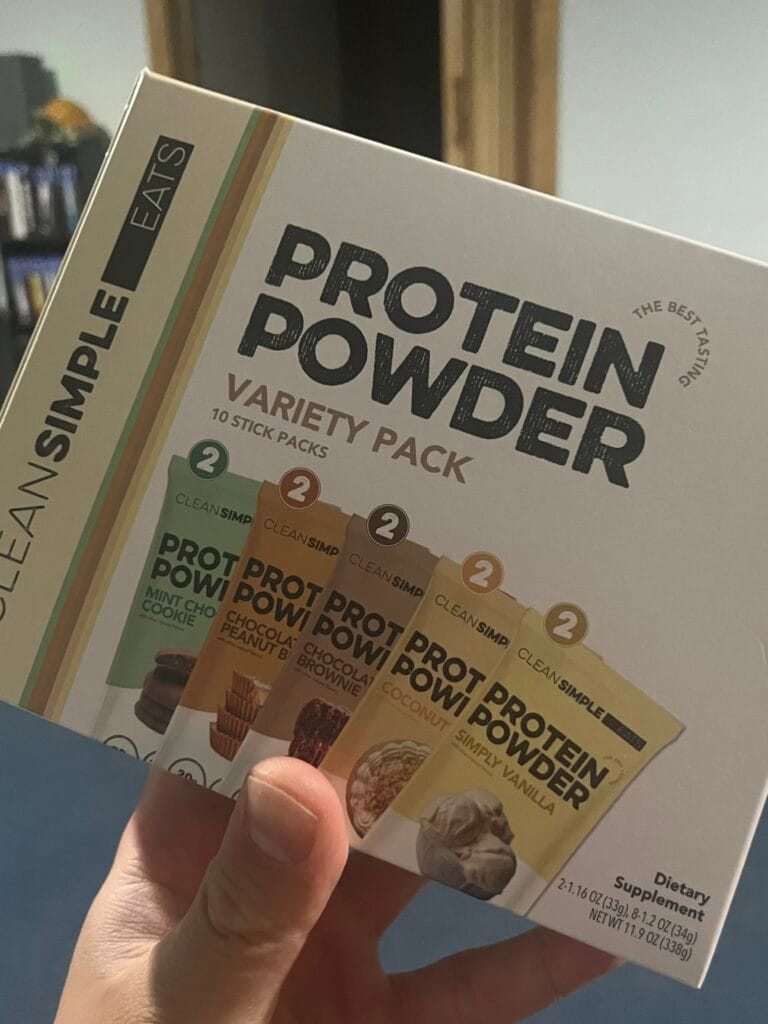
Disclosure: I purchased my tubs through HyVee and Festival Foods, not from Amazon or directly from Clean Simple Eats.
Clean Simple Eats: Where to Buy: Retailers, Stock Status, and Buyer Protections
If you want the full product experience, not the smaller version you can buy in stores, it’s better to buy directly from Clean Simple Eats. The brand site shows you all the flavors and sizes, the full range of products, and the company’s actual policies. Amazon wins on speed, but speed isn’t as appealing when some of the complaints seem to be about older stock and a worse shopping experience.
That matters because Amazon isn’t just a second checkout lane here. It looks like the same thing, but with a smaller, less controlled version. You get faster shipping and handling, but you can only choose from a few flavors and sizes, and you can’t return supplements. Also, it’s not always clear what to do if something arrives old, wrong, or just plain disappointing. The catalog is more in-depth, and the buying experience is more in line with what the brand is currently selling.
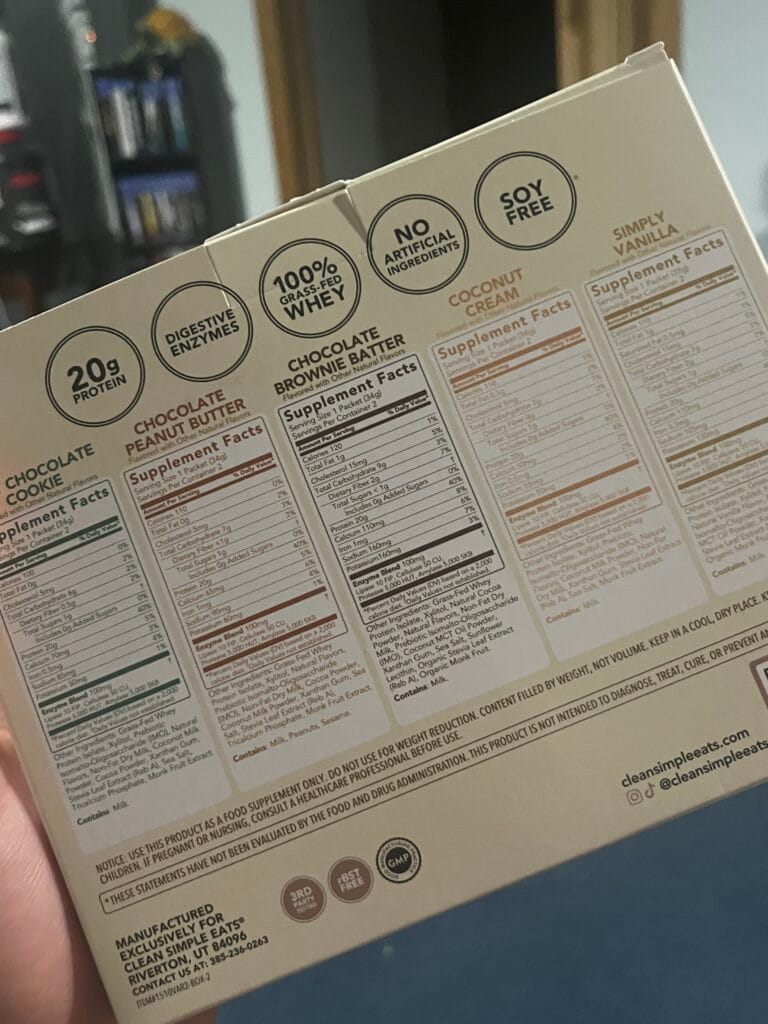
The stock photo doesn’t scream “brand instability,” but it does suggest that retail control isn’t always even. If Amazon is still selling older versions of products while the main site has the newer ones with fewer ingredients, that makes for a split-screen shopping experience that confuses customers and leads to complaints that could have been avoided. That’s not great for a high-end clean protein powder.
| Where To Buy Clean Simple Eats Protein | ||
| Retailer | Clean Simple Eats | Amazon |
| Shipping & Handling | Free S&H on orders $99+ | Prime Members get free 2-day shipping |
| Subscription Savings | 15% | 5% |
| Money-Back Guarantee | None | No returns on supplements |
| Payment Options | Standard payment options and Sezzle | Standard payment options |
| Price | $64.99 per container (30 servings) | $64.99(30 servings) |
| Price per Serving | $2.16 (S&S $1.84) | $2.16 (S&S $1.75) |
Clean Simple Eats Return Policy
In simple terms, this is not a very good return policy. Clean Simple Eats does not accept returns on opened products, according to the brand’s Returns & Shipping page. This means that if you open a bag and hate the flavor or realize the formula isn’t worth the price, that is your protein now. You can return an unopened item, but you have to contact the brand within 30 days of delivery, get their permission, and send the item back within the timeframe they give you.
There are a few problems, and none of them are good. The customer pays for shipping back; the company doesn’t provide return labels, and products that have been opened or damaged are not eligible for return. That means the policy works for sealed orders but not for the kind of real-world supplement problem that buyers really care about: opening the bag and wishing they hadn’t.
The customer service side is more about control than comfort. The brand gives customers a way to get in touch at hello@cleansimpleeats.com, but the overall review shows that when customers ask bigger questions about the product, they tend to get narrow answers and selective details. That doesn’t mean there isn’t any help. It does mean that the experience after the purchase seems more controlled than flexible.
Is the policy real or just for show? For unopened orders, it’s mostly realistic; for opened ones, it’s mostly performative. Verdict: If you buy directly, the experience is fine as long as nothing goes wrong after you break the seal. The safety net goes away quickly if it does.
Value Score: 2.0 out of 10
That is the real reason this part isn’t completely wiped out. Clean Simple Eats tastes amazing, making it useful in real life and helping people stick to their diet. But as soon as the review goes beyond taste, the value story quickly falls apart. The brand charges a lot of money, but it doesn’t back up too many of its bigger claims about quality, sourcing, and verification. This means that the buyer is paying more for the experience than for proof.
Clean Simple Eats Vs: How It Stacks Up Against Competitors (Short Answer)
Clean Simple Eats does well on flavor-first usability and a cleaner-looking formula. Still, it falls behind when the conversation shifts to amino strength, documentation, proof of sourcing, and trust per dollar.
Muscle-Building Power
- AGN Roots
- Optimum Nutrition
- Clean Simple Eats
- FlavCity
Transparency & Trust
- AGN Roots
- Optimum Nutrition
- FlavCity
- Clean Simple Eats
Certification Strength
- AGN Roots
- Optimum Nutrition
- Clean Simple Eats
- FlavCity
Overall Quality
- AGN Roots
- Optimum Nutrition
- Clean Simple Eats
- FlavCity
In short, AGN Roots is the best choice if you want the best proof package and a high-quality grass-fed whey protein isolate with more credible amino acids. For the best reliability and value, Optimum Nutrition is the best choice. Clean Simple Eats is a good choice for people who care most about taste, a cleaner-looking label, and a lighter whey isolate after working out, but it doesn’t have the same level of proof. FlavCity is better for people who want to live a whole-food lifestyle and are okay with giving up some protein quality and value for a wider view of health.
How Clean Simple Eats Stacks Up Against Competitors
When you look at a protein powder on its own, it can seem high-end. When you put it next to brands that are better at disclosing amino acid content, testing, sourcing, or pricing, the story usually changes quickly. That’s why it’s important to compare things. They show if this clean protein powder really delivers on protein quality, transparency, value, and consumer trust, or if it just has a cleaner label than the next tub over.
That’s where the review becomes more helpful for Clean Simple Eats. The formula is better, the panel looks more put-together, and the branding knows how to perform in bright light. The harder question is whether the product still works when a competitor offers stronger leucine data, better third-party verification, more believable proof that the cows were grass-fed, or just a better price for the same job. The matchups below answer that question.
Clean Simple Eats vs AGN Roots
Clean Simple Eats and AGN Roots both talk about premium whey, but they do it in very different ways. Clean Simple Eats puts more emphasis on taste, simple branding, and a well-written label story. AGN Roots puts more emphasis on documentation, amino transparency, sourcing verification, and third-party testing that gives the buyer something more solid than vibes to hold onto.
When it comes to proof, AGN Roots definitely brings more to the table. It has a full amino profile, 3.05 grams of leucine, Informed Protein certification, Truly Grass Fed Irish sourcing, and 86% protein density in the unflavored version. That’s the kind of setup that makes a grass-fed whey protein isolate seem more like a real product and less like a marketing idea.
The label for Clean Simple Eats looks cleaner than the amino math, on the other hand. The unflavored version has 1.84 grams of leucine, 9.2% leucine, 3.99 grams of BCAAs, and 85% protein density, but the leucine return doesn’t seem strong enough for a product that is marketed as a high-quality whey isolate. At that point, the question isn’t if the scoop looks like it will work. The question is whether the protein quality under the brand name is as high as the price suggests.
The table below makes those differences easier to see side by side. For the full breakdown, read my AGN Roots Grass-Fed Whey Protein review.
| Clean Simple Eats vs AGN Roots Whey Protein: Amino Profile and Nutrition Facts Compared | ||||
| Key Differences & Comparison Metrics | Clean Simple Eats Unflavored | %DV | AGN Roots Unflavored | %DV |
| Leucine | 1.84g | 3.05g (Informed Protein Verified) | ||
| Leucine Percent | 9.2% | 12.2% | ||
| Total BCAAs | 3.99g | 6.5g | ||
| Protein Density | 85% | 86% | ||
| Protein per Serving | 25g | 50% | 25g | 50% |
| Carbs per Serving | 0g | 0% | 1g | 0% |
| Fiber per Serving | 0g | 0% | 0g | 0% |
| Total Sugars | 0g | 0% | 0g | — |
| Calories | 100 kcal | 110 kcal | ||
| Serving Size | 29.4g | 29g | ||
| Number of Servings | 30 | 47 | ||
| *April, 2026 | $64.99 | $79.49 | ||
| Price per Serving | $2.16 | $1.69 | ||
| *Amazon pricing — supports my work through affiliate earnings when you shop using my link to buy AGN Roots Grass-Fed Whey on Amazon. | ||||
Clean Simple Eats vs FlavCity
Both Clean Simple Eats and FlavCity sell a polished health-first story, but they do it in different ways. Clean Simple Eats uses a shorter formula, fewer carbs, and a cleaner-looking simple protein powder label. FlavCity, on the other hand, focuses more on lifestyle appeal, minimal-ingredient marketing, and Bobby Approved credibility. Neither of them is a master of openness, but the weak spot is in different places: Clean Simple Eats doesn’t answer as many questions about amino proof and sourcing clarity, and FlavCity asks buyers to accept a much heavier formula that trades protein purity for a broader wellness pitch.
At least FlavCity tells customers what kind of product it wants to be. The new vanilla formula has 28 grams of protein per scoop, 10 grams of collagen, a Prop 65 warning, and fits perfectly into the Bobby Approved App for people who want ingredient lists that are easier to read. That makes it easy to put in place, even if the formula does more than a regular whey product and even if the grass-fed story doesn’t have a well-known grass-fed certification badge to back it up.
The label for Clean Simple Eats makes it look leaner, but the paperwork behind it is thinner. The brand made the formula better, cut the calories, and kept the scoop tighter. However, the amino disclosure is still too narrow, the broader third-party verification story is still incomplete, and the supplier-level sourcing is still too vague. In theory, this clean protein powder seems to work better than FlavCity, but it also gives the buyer more reason to wonder if the protein is as high-quality as the brand says it is.
The table below makes those trade-offs easier to see side by side. For the full breakdown, read my FlavCity Protein Powder Review.
| Clean Simple Eats vs FlavCity: Key Label and Value Differences | ||||
| Key Differences & Comparison Metrics | Clean Simple Eats Simply Vanilla | %DV | FlavCity Vanilla (New Formulation) | %DV |
| Leucine | 1.84g | Emailed, No Reply | ||
| Leucine Percent | 9.2% | Emailed, No Reply | ||
| Total BCAAs | 3.99g | Emailed, No Reply | ||
| Protein Density | 80% | 58% (Total Protein)38% (No Collagen) | ||
| Protein per Serving | 20g | 40% | 25g (16.5g with 10g Collagen) | 33% |
| Carbs per Serving | 1g | 0% | 9g | 3% |
| Fiber per Serving | 0g | 0% | <1g | 3% |
| Total Sugars | <1g | 0% | 5g | — |
| Calories | 90 kcal | 160 kcal | ||
| Serving Size | 25g | 43g | ||
| Number of Servings | 30 | 20 | ||
| *April, 2026 | $64.99 | $59.99 | ||
| Price per Serving | $2.16 | $3.00 | ||
| *Amazon pricing — supports my work through affiliate earnings when you shop using my link to buy FlavCity Protein at Amazon. | ||||
Clean Simple Eats Protein Powder vs Optimum Nutrition
Both Clean Simple Eats and Optimum Nutrition sell mainstream whey convenience, but they build trust in different ways. ON Gold Standard relies on the stability of legacy brands, better amino acid disclosure, wide availability, and well-known third-party testing. Clean Simple Eats has a cleaner-looking label and fewer calories, but its documentation is less clear, its sourcing story is less clear, and its premium image asks for more faith than proof.
At least Optimum Nutrition shows more of its cards. It has 24 grams of protein per scoop, 2.6 grams of leucine, and is certified by Informed Choice. It mixes well and has been a bestseller for a long time, so it has a strong shelf presence. The new catch is that natural and artificial flavors are listed near the top of the label (just like Clean Simple Eats), which takes away from the purity halo a little. ON still makes it easier for customers to know what kind of product they are getting.
On paper, Clean Simple Eats looks cleaner, but the paperwork that goes with it is less reassuring. The brand changed the formula, cut the calories, and made the scoop tighter, but the amino disclosure is still limited, the public CoAs only cover a small part of the line, supplier-level sourcing is still unclear, and the brand’s broader verification story never really catches up to the high prices. It is a leaner clean protein powder, but it hasn’t been tested as much.
The table below makes those differences easier to see side by side. For the full breakdown, read my Optimum Nutrition 100% Gold Standard Whey Protein review.
| Clean Simple Eats Protein Powder vs Optimum Nutrition: Side-by-Side Comparison | ||||
| Key Differences & Comparison Metrics | Clean Simple Eats Simply Vanilla | %DV | ON Gold Standard Vanilla Ice Cream | %DV |
| Leucine | 1.84g | 2.6g | ||
| Leucine Percent | 9.2% | 10.83% | ||
| Total BCAAs | 3.99g | 5.5g | ||
| Protein Density | 80% | 75% | ||
| Protein per Serving | 20g | 40% | 24g | 48% |
| Carbs per Serving | 1g | 0% | 5g | 2% |
| Fiber per Serving | 0g | 0% | 0g | 0% |
| Total Sugars | <1g | 0% | 4g | — |
| Calories | 90 kcal | 130 kcal | ||
| Serving Size | 25g | 32g | ||
| Number of Servings | 30 | 68 | ||
| *April, 2026 | $64.99 | $89.99 | ||
| Price per Serving | $2.16 | $1.34 | ||
| *Amazon pricing — supports my work through affiliate earnings when you shop using my link to buy Optimum Nutrition Gold Standard on Amazon. | ||||
Clean Simple Eats Amazon Reviews: What Real Customers Are Saying (Short Answer)
Clean Simple Eats currently holds a 4.6 out of 5 stars on Amazon from over 1,000 buyers, which tells me the product is doing a lot right for everyday users even before the complaints start rolling in.
5-star excerpts
- “This product is perfectly made. It blends well for smoothies and ninja creami recipes!”
- “I’ve tried a lot of protein powders, and this is hands-down my favorite. It mixes perfectly with just water — no blender needed, no clumps, and no chalky aftertaste like other brands. It keeps me full for hours without upsetting my stomach.”
- “This protein powder is amazing in smoothies or in almond milk. It blends well and dissolves easily in cold liquid. I use it to get my protein intake but also as a thickener in sweet treats.”
1-star excerpts
- “DO NOT PURCHASE THROUGH AMAZON, ITEM IS RANCID.”
- “When I opened the bag it smelled like sour milk. I tried it anyway and it also tasted rotten.”
- “It is the most expensive protein I’ve ever bought… it stays very gritty and does not blend up very well… I just don’t see the hype.”
Professional Take
The pattern of the reviews is pretty clear. Positive reviews always mention the taste, how well it mixes, how well it works in smoothies, and how well it works for people with sensitive stomachs. This fits with the brand’s mainstream appeal. Most of the bad reviews are about bags that smell bad, delivery issues with Amazon, the gritty texture, and being upset about the price.
That fits with the bigger review: Clean Simple Eats tastes great and is easy to use every day, but the complaints won’t go away because of its lack of consistency and value. One important note: Amazon seems to be selling the older version, so people who want the newer version with fewer ingredients and fewer calories should buy it directly from Clean Simple Eats.
Clean Simple Eats Protein Powder Review – Final Thoughts (Before You Buy)
Here’s what you should know before you buy.
- The taste and how well it mixes are two of its best features. This is one of the easier proteins to use every day, which is more important than brands like to admit when consistency is the whole game.
- There is still not enough information about the premium story. The brand fixed the formula, but the amino disclosure, sourcing clarity, and broader verification still don’t matter as much as the price.
- It shouldn’t matter as much as it does. Direct seems like the better choice because Amazon seems to be stuck with old stock, fewer choices, and complaints that make things less clear.
That leads the buyer back to the main question: Is Clean Simple Eats good? Yes, if taste, texture, and ease of use are the most important to you. No, if you want premium proof to go along with premium pricing.
Is Clean Simple Eats Good?
Yes, it’s real. It also costs too much, doesn’t work as well as it should, and is much harder to taste and mix than the kind of documentation a premium protein should have ready at all times.
This is the split-screen version of the product. Clean Simple Eats made the formula better, it mixes very well, and the taste is one of the best reasons people keep buying it. But the trust part isn’t as strong as the branding makes it seem.
The brand still doesn’t have enough information about amino disclosure, sourcing transparency, third-party protein verification, and the kind of current supporting data that would make the premium story feel real instead of rehearsed. The Prop 65 warning page is there, but the public safety record is limited, and the larger proof package still doesn’t match the price.
Who should stay away from it? Anyone who wants more protein credibility, stronger documentation, or a better deal per serving. Who might still be interested? Buyers who care most about taste, how well it mixes, and having a protein they can use every day without dreading the shaker bottle. That is the real lane. There isn’t a lot of information about this clean protein powder. It is the one that makes it easy to follow the rules and then hopes you stop asking harder questions.
Final Score: 28 out of 50 (56%)—Great Taste, Hard to Recommend.Are you looking for more protein reviews? Here are all of JKremmer Fitness unbiased protein powder reviews. Are you looking for a protein review that I haven’t done yet? Email me at my ‘Contact Me’ page, and I’ll do my best to get an unbiased review out in 4 weeks.
Clean Simple Eats Protein Powder Tastes Premium. The Proof Does Not.
Summary
You are not paying for airtight proof when you buy Clean Simple Eats Protein Powder. You are paying for flavor, easy mixing, and everyday convenience. When you shake it up, Clean Simple Eats Protein Powder works like a high-end product: it has a smooth texture, a strong flavor, and no big clumps. But the harder questions never really go away. The amino story changed; leucine support is limited, grass-fed verification is thin, and the brand’s clean image is stronger than its paperwork. If taste and ease of use are more important to you than deep-label transparency, stronger amino receipts, or better value per serving, Clean Simple Eats Protein Powder is the best choice for you.
Pros
- Excellent flavor
- Smooth mixability
- Easy daily-use protein
Cons
- Limited amino verification
- Weak value for the price
- Premium claims outrun documentation
Clean Simple Eats Review Review Round-Up (Score Summary)
It’s clear that the taste, mixability, and the cleaner reformulated ingredient list are what make this product stand out. For premium trust, the key gaps are amino transparency, value, andstronger proof behind the brand’s bigger quality story.
| Category | Score |
| Amino Spiking | 1.5 out of 10 |
| Ingredient List | 8.0 out of 10 |
| Nutrition Facts | 6.5 out of 10 |
| Mixability | 9.0 out of 10 |
| Value | 2.0 out of 10 |
| Overall Score | 27/50, 54%, Great Taste, Tough Recommendation |
FAQ – Clean Simple Eats Review
Not clean enough to get a free pass. The brand does publish some heavy-metal information, and one outside test showed that one flavor had a relatively low lead level. However, the public record remains too limited to say that the entire protein line is fully verified. That means the product has some safety features, but not enough proof to make the clean-label story sound solid.
Yes, or at least enough for the brand to put up a Prop 65 warning page. There are also limited CoAs for Simply Vanilla and Brownie Batter in the public record. One Consumer Reports test found that Chocolate Brownie Batter had a low lead level. That backs up a narrow safety case, not a full clean sweep across the whole line.
Yes, in the areas that most regular buyers notice first: taste and how well it mixes. It mixes very well, the flavor is strong, and it’s easy to use every time. The problem is that the premium proof package that comes with the product is a lot weaker than the daily drinking experience.
The label says to mix it with about 8 ounces of a cold drink, which is the easiest way to use it. It also works well in smoothies, brownies, cakes, oatmeal, and ice cream recipes you can make at home, as mixability is one of the product’s best features.
I didn’t find any direct evidence of amino spiking. This is more of a transparency issue than a clean exoneration because the amino profile changes, there isn’t much public batch documentation, and natural flavors are widely used.
Only if taste and how well it mixes are your top concerns. For this price, buyers should be getting a better mix of proof, transparency, and high-quality signals. The brand’s ability to back up its bigger claims isn’t what makes the product valuable; it’s how easy it is to drink.
Disclosure & Affiliate Information
Some links on this page may be affiliate links. If you choose to purchase through them, I may earn a small commission at no extra cost to you. That support helps keep reviews independent, evidence-driven, and free from brand influence.
Affiliate purchase links are provided below.
Clean Simple Eats, 30 servings, $64.99: https://amzn.to/48RZkpz
AGN Roots, 47 servings, $79.49: https://amzn.to/4oNPCdj
Optimum Nutrition, 68 servings, $89.99: https://amzn.to/3NWN6RX
FlavCity, 20 servings, $59.99: https://amzn.to/4a9XHER
Clean Simple Eats Protein Powder Review Sources
21 CFR 101.36 — Nutrition labeling of dietary supplements. (n.d.). https://www.ecfr.gov/current/title-21/chapter-I/subchapter-B/part-101/subpart-C/section-101.36
Clean Simple Eats. (n.d.-a). Clean Simple Eats Return Policy. https://cleansimpleeats.com/pages/return-policy
Clean Simple Eats. (n.d.-b). Highest ingredient standards. https://cleansimpleeats.com/pages/highest-ingredient-standards
Clean Simple Eats. (n.d.-c). Ingredient Glossary | Discover key ingredients in CSE products. https://cleansimpleeats.com/pages/ingredient-glossary
Clean Simple Eats. (n.d.-d). WARNING. https://cleansimpleeats.com/pages/warning
Inc., E. H. A. & Clean Simple Eats, LLC. (2023). SETTLEMENT AGREEMENT. https://oag.ca.gov/system/files/prop65/settlements/2023-03808S3436.pdf
Kerksick, C. M., Arent, S., Schoenfeld, B. J., Stout, J. R., Campbell, B., Wilborn, C. D., Taylor, L., Kalman, D., Smith-Ryan, A. E., Kreider, R. B., Willoughby, D., Arciero, P. J., VanDusseldorp, T. A., Ormsbee, M. J., Wildman, R., Greenwood, M., Ziegenfuss, T. N., Aragon, A. A., & Antonio, J. (2017). International society of sports nutrition position stand: nutrient timing. Journal of the International Society of Sports Nutrition, 14(1). https://doi.org/10.1186/s12970-017-0189-4
Martineau, P. (2026, January 8). Readers asked us to test these 5 protein powders. All had low levels of lead. Consumer Reports. https://www.consumerreports.org/health/food-safety/these-five-protein-powders-had-low-lead-levels-a1151050701/
Program, H. F. (2024, April 24). Current Good Manufacturing Practices (CGMPs) for food and dietary supplements. U.S. Food And Drug Administration. https://www.fda.gov/food/guidance-regulation-food-and-dietary-supplements/current-good-manufacturing-practices-cgmps-food-and-dietary-supplements
Program, H. F. (2026, March 11). Food allergies. U.S. Food And Drug Administration. https://www.fda.gov/food/nutrition-food-labeling-and-critical-foods/food-allergies
U.S. Food and Drug Administration. (n.d.). Dietary supplement labeling guide: Chapter IV. Nutrition labeling. https://www.fda.gov/food/dietary-supplements-guidance-documents-regulatory-information/dietary-supplement-labeling-guide-chapter-iv-nutrition-labeling
International Organization for Standardization. (n.d.). ISO. https://www.iso.org/home.html
Clean Simple Eats. (2026, February 26). Products vanilla protein powder COA batch 2026-02-26 COA-1 [PDF].https://cdn.shopify.com/s/files/1/0258/0384/9806/files/products_vanilla-protein-powder_coa_batch-2026-02-26-coa-1.pdf?v=1775493758
Clean Simple Eats. (2026, February 24). Products brownie batter protein powder COA batch 2026-02-24 COA-1 [PDF].https://cdn.shopify.com/s/files/1/0258/0384/9806/files/products_brownie-batter-protein-powder_coa_batch-2026-02-24-coa-1.pdf?v=1775494082

Meet James, a decade-long devotee to transforming fitness journeys, both in-person and online. As a virtual and remote personal trainer, he merges passion with expertise to deliver unparalleled fitness guidance. James isn’t just about workouts; he’s a protein powder aficionado, always on the hunt for the next best blend to enhance your gains.
Holding Bachelor’s Degrees in Exercise Sports Science and Pre-Law, James’s academic foundation is as solid as his fitness regimens. His certifications read like a who’s who of fitness excellence: NSCA (CSCS), Precision Nutrition Level 1, Online Trainer Academy (OTA), C-ISSN, and more. Whether you’re looking to overhaul your fitness routine, find the perfect protein, or navigate the intersection of wellness and law, James is your go-to guide for all things fitness.
Leave a Reply