
Is Transparent Labs Protein Good?
Read my full review of Transparent Labs protein for a breakdown of the product, the score, and advice on how to buy it. This article is only about brand-level credibility signals. I’m not giving the product a new score here, and I’m not replacing the standalone review that gives product-specific conclusions, scores, and buying advice.
People who are looking for “is Transparent Labs protein good?” are usually asking a bigger question than just taste or how well it mixes. They want to know whether Transparent Labs is a good brand of supplements, whether it is real, and whether the proof behind the protein is still there when you take off the shiny label.
TL;DR — Is Transparent Labs Protein Good?
Based on my review, Transparent Labs seems more credible than many other supplement brands because it provides more evidence than most. The brand now provides easy access to amino acid data, useful third-party testing related to protein integrity, and public batch-level COAs and toxicology reports.
Not every quality signal is equally clear, which makes the brand look less than fully airtight. The protein information is better than it was before, but the label still leaves room for questions. For example, the 28-gram protein claim doesn’t align with the 25-gram %DV calculation, and the use of vague terms like “natural flavors” is also unclear. Transparent Labs looks strongest when the proof is clear and weaker when the branding suggests more than the documentation fully explains.
How I’m Approaching the Question of Whether Transparent Labs Is Good
As a certified strength and conditioning specialist (NSCA) and sports nutrition professional (CISSN), I always use the same evidence-first framework for every brand-level analysis I publish. I’m not adding any new lab work or outside tests to this. I’m reviewing the patterns already set up in my long-form protein reviews for this brand.
I don’t want to give a final decision, score, or buying advice in this article. It’s to see how consistently the brand shares information, backs up its claims, and deals with the parts of trust that serious buyers care about. The full standalone protein reviews still have product-specific conclusions, scores, and advice on what to buy.
If you want to see this same evidence-driven approach applied on video, you can find my full supplement breakdowns and brand discussions on YouTube: https://www.youtube.com/@jkremmerfitness
This article contains no affiliate links.
Table of contents
- Is Transparent Labs Protein Good?
- TL;DR — Is Transparent Labs Protein Good?
- How I’m Approaching the Question of Whether Transparent Labs Is Good
- What I’m Looking At in This Is Transparent Labs Legit
- What the Brand Label Makes Clear, and What It Doesn’t
- Testing, Verification, and What Is Actually Confirmed
- Sourcing and Manufacturing Claims in Context
- Ingredient Disclosure and Formulation Consistency
- Safety, Prop 65, and Disclosure History
- Brands Readers Commonly Compare to Transparent Labs
- Why Transparent Labs Can Look Strong or Incomplete Depending on Your Standard
- Is Transparent Labs A Good Supplement Brand?
- Is Transparent Labs Protein Good: FAQ
What I’m Looking At in This Is Transparent Labs Legit
I’m only looking at patterns that have already been set in my long-form review work for Transparent Labs. I’m not adding new lab tests, outside research, or guesswork to make the article sound more exciting. It’s not that simple. I want to look at what Transparent Labs has said, what has been independently verified, and where the company still wants buyers to accept more than what the documentation fully shows.

That includes more than just testing badges and brand names. It also includes whether the label math is correct, whether the most important parts of the formula are clearly shown, and whether the claims most important to buyers align well with the details below them. That’s where the real world tests legitimacy.
That’s important because “Is Transparent Labs legit?” isn’t really a single question. It is a bunch of smaller questions dressed up as a trench coat. Is the protein formula clear enough? Is the test real? When you look at the numbers on the label, do they look clean? Are the trust signals up to date? Are the broader quality claims backed up at the same level? That is what I’m looking at here.
What the Brand Label Makes Clear, and What It Doesn’t
This is where the conversation has to start if you want to know if Transparent Labs protein is good: what the label says it supports and what it still asks the buyer to trust.
One of the best things about the brand is that Transparent Labs no longer makes buyers guess about the amino side of the formula. The amino acid profile is easy to find, and leucine is easy to see. This is more than just the usual clean-label fairy dust for serious shoppers. That matters because brands that don’t show amino data usually want people to believe them instead of look closely.
But the label isn’t as complete as the branding suggests. Transparent Labs says each serving has 28 grams of protein, but the percent Daily Value calculation suggests it’s closer to 25 grams. That doesn’t mean the product isn’t working, but it does mean the headline number and the regulatory math aren’t as neat as the claim on the front of the product suggests. That kind of gap needs to be looked at for a brand that is all about being open.
There is also a problem with the disclosure of flavors. “Natural flavors” may be okay by law, but it’s still a vague term that doesn’t tell the buyer much about what is actually making the flavor system work. Transparent Labs is better than many protein brands at disclosing amino acids and basic protein information, but the label still uses vague language in some places where a truly transparent brand could be clearer.
That’s really the split in this part. Transparent Labs looks best when the numbers are easy to see and check. It looks weaker than the branding suggests, but the label still uses vague terms and cleaner-looking claims that don’t fully explain themselves.
Testing, Verification, and What Is Actually Confirmed
This is the most important part to read if you want to know if Transparent Labs is real.

Many protein brands don’t have as strong of a verification stack as Transparent Labs does. Informed Protein is important because it deals with issues of protein integrity and amino-spiking. Informed Choice is still valid, but it has a different purpose now. It has more to do with banned-substance style screening than with proving all of the protein-quality or sourcing claims that buyers may think about the brand. Those badges are helpful, but you can’t switch them out for each other. Supplement marketing gets away with murder in broad daylight by treating them like one big halo.
With Dyad Labs, Transparent Labs now offers match-batched COAs and toxicology reporting. This raises the credibility floor in a big way. Serious buyers want public batch-level documentation because it makes “tested” more than just a slogan; it’s something that can be checked. That doesn’t answer every question about quality, but it does make the brand look a lot stronger than brands that make vague promises and then disappear when you ask for proof.
Sourcing and Manufacturing Claims in Context
Here, Transparent Labs looks better than some protein brands, but it isn’t as complete as its branding might suggest.
One good thing about the brand is that the product doesn’t have a label that says “made in the USA with domestic and international ingredients.” That’s a good sign because it doesn’t show one of the more common signs that a brand might be mixing imported sourcing into a front label to make it sound cleaner. That is important information for a buyer who wants to know whether Transparent Labs is a good supplement brand.
But it still doesn’t close the loop.
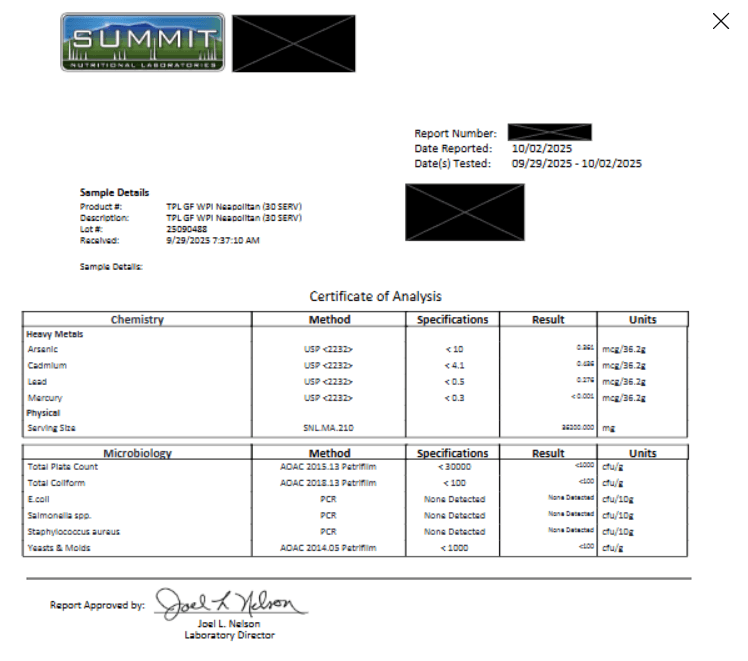
Transparent Labs uses language in its sourcing that points buyers toward a story about American dairy and grass-fed quality, but the brand doesn’t fully back up that story with a recognized grass-fed certification. That is the main point in this part. Not having an international ingredient statement is a good sign. It’s not the same as a claim of fully verified sourcing.
That difference is important. A brand can sound high-end and clean without giving the buyer the best independent proof for every sourcing claim. When I look at Transparent Labs in this area, I see a company that gives buyers some reasons to trust it, but not the kind of certification-backed sourcing clarity that would make the question go away completely.
Ingredient Disclosure and Formulation Consistency
One of the best things about the Transparent Labs case is that it tells you what ingredients are in it. However, it is not perfect.
The Transparent Labs protein formula seemed like a simple whey isolate setup with no artificial sweeteners, dyes, or obvious filler clutter. This is important. The label is more accurate than most protein powders, which look like a chemistry test with a wellness slogan on top. On basic formulation structure, Transparent Labs looks cleaner than most of the competition.
But this is also where the brand’s name calls for a higher standard. It’s still a weak point for a company that is based on the idea of being open and honest to use “natural flavors.” That word might be okay to use on a label, but it doesn’t tell the buyer what’s really going on with the flavor system. So, even though the formula looks cleaner than a lot of other proteins, I wouldn’t say that vague flavor language is very clear just because it follows labeling rules.
At least the sweetener system is easier to understand. Stevia is part of the experience, and whether someone likes it is a matter of taste, not disclosure. From a credibility standpoint, the most important thing is consistency. Transparent Labs looks best when the formula is clear and can be checked, and less impressive when the label uses vague language that doesn’t give as much information as the branding suggests.

Safety, Prop 65, and Disclosure History
When it comes to safety disclosure, many brands suddenly become vague, philosophical, and very interested in changing the subject.
Now that public toxicology reporting is part of the picture, Transparent Labs looks even better. Having batch-linked toxicology access through Dyad Labs is a real sign of credibility. That doesn’t mean the buyer should stop thinking. It does mean the brand is putting more of the conversation where it belongs: in clear writing rather than a cloud of comforting words.
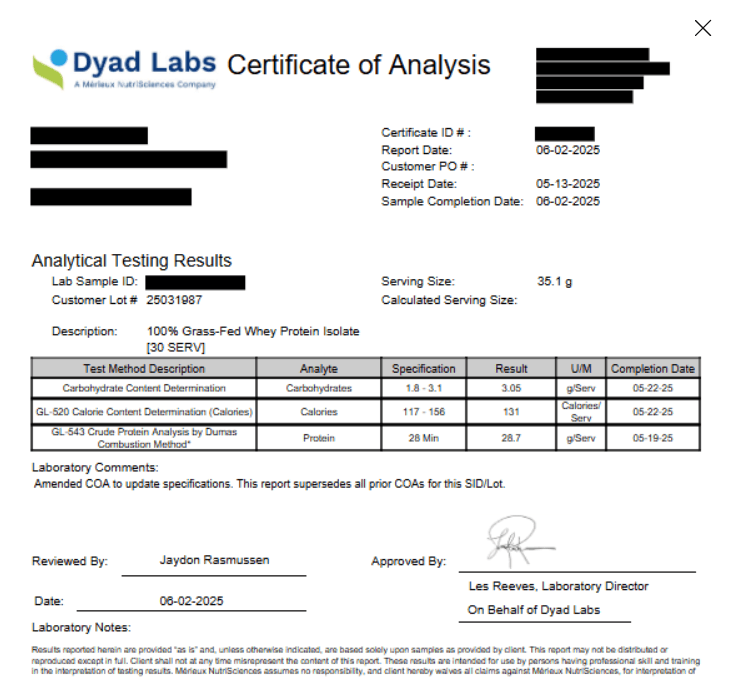
For readers wondering whether Transparent Labs is real, that is a good point for the brand. Real brands don’t just say their products are tested. They make it easier to check the tests.
Brands Readers Commonly Compare to Transparent Labs
People don’t usually ask if Transparent Labs is high quality, good, or real without any context. They are trying to see how trust signals, protein verification, sourcing clarity, formulation style, and the price-to-proof ratio stack up against some more well-known options.
That’s why the next step is usually a side-by-side comparison and not another paragraph of philosophy. If you’re trying to compare Transparent Labs to another protein in terms of testing depth, amino disclosure, or sourcing credibility, the best thing to do is read the comparison article instead of making this page do something it wasn’t made to do. This article shows how trust varies by brand. The comparison pages help buyers make better choices.
- Kirkland vs Transparent Labs
- Swolverine vs Transparent Labs
- Heart & Soil vs Transparent Labs
- PeScience vs Transparent Labs
- Transparent Labs vs Naked Whey
- Transparent Labs vs Naked Whey Isolate
- AGN Roots vs Transparent Labs
- Ascent vs Transparent Labs
- Dymatize vs Transparent Labs
- Equip vs Transparent Labs
- Earth Fed Muscle vs Transparent Labs
- Evogen vs Transparent Labs
- FlavCity vs Transparent Labs
- First Phorm vs Transparent Labs
- Isopure vs Transparent Labs
- Jocko Protein vs Transparent Labs
- Just Ingredients vs Transparent Labs
- Kaged vs Transparent Labs Protein
- Klean vs Transparent Labs
- Levels vs Transparent Labs
- Legion vs Transparent Labs
- Momentous vs Transparent Labs
- Nutricost vs Transparent Labs
- Nutrabio vs Transparent Labs
- Orgain vs Transparent Labs
- Promix vs Transparent Labs
- Promix Isolate vs Transparent Labs
- Transparent Labs vs Thorne
- Xwerks vs Transparent Labs
- 1st Phorm Protein vs Transparent Labs
Why Transparent Labs Can Look Strong or Incomplete Depending on Your Standard
Even if they type something similar into Google, not every buyer is asking the same thing. Some people want to know if the protein has a clean formula and enough real protein in each serving to make the price worth it. Some people want to know whether the brand provides enough information to be trusted. Some people are really wondering if the marketing is still good after the strongest claims and proof have been separated.
There are different standards, which is why the same evidence can lead to different conclusions. When the standard is amino acid disclosure, protein integrity, batch-level COAs, and visible toxicology reporting, Transparent Labs looks better. It seems less certain when the standard is whether every broader quality and sourcing implication has the highest level of independent verification that a cautious buyer might want. The proof stays the same. The standard does.
Is Transparent Labs A Good Supplement Brand?
When you consider only what can be proven, Transparent Labs looks better than many other supplement brands. The brand gives customers more than just shiny promises and influencer hype. There is meaningful third-party verification linked to protein integrity, the amino acid profile is available, and batch-level COAs and toxicology reports raise the bar for what buyers can check.
That doesn’t mean that all quality signals are equally important, though. When the conversation stays focused on protein disclosure, testing, and visible documentation, Transparent Labs looks the most convincing. It becomes more debatable when buyers extend that trust to every broader sourcing or premium-brand implication surrounding the product.
So, when people ask if Transparent Labs is a good brand of supplements, the answer really depends on what they mean by “good.” If their standard is more than average openness and real documentation, the brand has a good case. If their standard is the highest level of independent verification for every major quality claim, it is easier to see the gaps.
Is Transparent Labs Protein Good: FAQ
Based on its testing, protein verification, and available documentation, it seems that Transparent Labs is a fairly safe supplement brand. The main problem isn’t basic safety. It is whether all of the brand’s claims about the quality and sourcing of its products are checked to the same standard as the products’ protein integrity.
Yes. Third-party tests are done on Transparent Labs products. According to what I’ve found, the brand uses Informed Protein to verify protein integrity, Informed Choice to check for banned substances, and Dyad Labs to make batch COAs and toxicology reports available to the public.
No. According to my research, AGN Roots is the cleanest protein powder I’ve reviewed. Transparent Labs has a cleaner formula than many popular protein powders and provides useful documentation, but I wouldn’t say it’s cleaner, more trustworthy, or more reliable than AGN Roots.

Meet James, a decade-long devotee to transforming fitness journeys, both in-person and online. As a virtual and remote personal trainer, he merges passion with expertise to deliver unparalleled fitness guidance. James isn’t just about workouts; he’s a protein powder aficionado, always on the hunt for the next best blend to enhance your gains.
Holding Bachelor’s Degrees in Exercise Sports Science and Pre-Law, James’s academic foundation is as solid as his fitness regimens. His certifications read like a who’s who of fitness excellence: NSCA (CSCS), Precision Nutrition Level 1, Online Trainer Academy (OTA), C-ISSN, and more. Whether you’re looking to overhaul your fitness routine, find the perfect protein, or navigate the intersection of wellness and law, James is your go-to guide for all things fitness.
Leave a Reply